During the seven months between the release of discussion-draft legislation that would establish one or more self-regulatory organizations for investment advisers and the introduction of a formal bill, adviser advocates were hoping they could secure some changes that would make the measure more palatable to them.
Instead, they're choking on the
final product, which they said could pave the way for the
Financial Industry Regulatory Authority Inc. to become the adviser SRO.
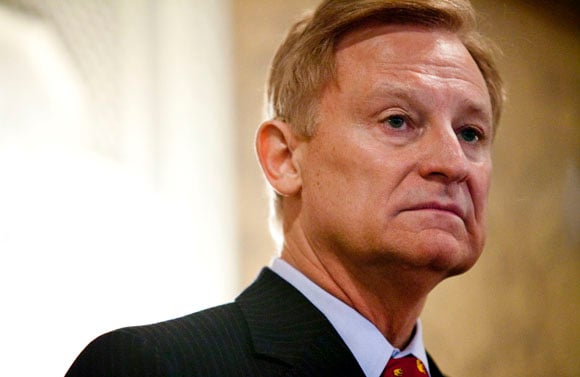
The bill's author, House Financial Services Committee Chairman Spencer Bachus, R-Ala., asserts the measure will strengthen investor protection by increasing the frequency of adviser examinations. Advisers worry that an SRO would be an additional layer of costly, misguided regulation. They say they're better off under their current regulator, the Securities and Exchange Commission.
A couple adviser groups seemed to have an “in” with Mr. Bachus -- or at least reported getting one or multiple sit-downs with him and his top staffers – to make their points. But it was to no avail.
“Either my meetings were not as effective as I thought they were, or the chairman has a short memory,” said Brian Hamburger, managing director of MarketCounsel, a business and compliance consulting firm. “[The bill] might as well directly appoint Finra as the SRO.”
In October, Mr. Hamburger announced at a
MarketCounsel conference in Coral Gables, Fla., that the group had met with Mr. Bachus to discuss its concerns about the draft bill. In addition, Mr. Bachus' top aide,
Larry Lavender, the chief of staff of the House Financial Services Committee, flew in to visit with conference attendees.
One of the people Mr. Lavender may have seen in Miami was Joseph Borg, Alabama Securities Commissioner. It was thought that Mr. Borg would be influential with his fellow Alabama public official, Mr. Bachus, in conveying state regulators' deep misgivings about the draft SRO bill.
If Mr. Borg and Mr. Bachus talked, the results were not borne out in the formal legislation.
The House financial committee's statement said the bill “recognizes the authority given to the states over small investment advisers” in the Dodd-Frank financial reform law “by preserving state authority over investment advisers with fewer than $100 million in assets under management, so long as the state conducts periodic on-site examinations.”
That wasn't good enough for the North American Securities Administrators Association.
“There has never been any evidence to suggest that states have failed in their mission of regulating smaller investment advisers,” NASAA said in a statement last week. “Nonetheless, this bill dictates how each state should regulate smaller advisers and requires state-regulated advisers to join an SRO. The Bachus bill is an astonishing attack on our system of federalism with no demonstrated justification.”
It was an unusually sharp rejoinder, considering NASAA may have to work with Mr. Bachus on future legislation. His staff fired back.
“Judging from their press release, if NASAA had its way, a state would continue to have sole authority over advisers even if the state never examines advisers,” Jeff Emerson, a spokesman for the House Financial Services Committee, wrote in an email. “If the state is doing exams at least once every four years, then state-registered advisers would not be subject to routine examinations from an SRO under this bipartisan bill.”
It remains to be seen how that last point pans out. Mr. Bachus introduced the SRO bill with Rep. Carolyn McCarthy, D-N.Y. But as of today, it has only two other cosponsors – both of whom are Republicans.
The ranking Democrat on the committee, Rep. Barney Frank, D-Mass.,
opposes the legislation. His Democratic colleagues on the panel, except maybe those from New York and Connecticut, where the financial industry influence is strongest, may follow his lead.
When Congress comes back into session next week, NASAA and MarketCounsel will have to drum up opposition to the bill after their entreaties to Mr. Bachus fell short. The good news for them is that the
Senate hasn't expressed interest in this measure.