
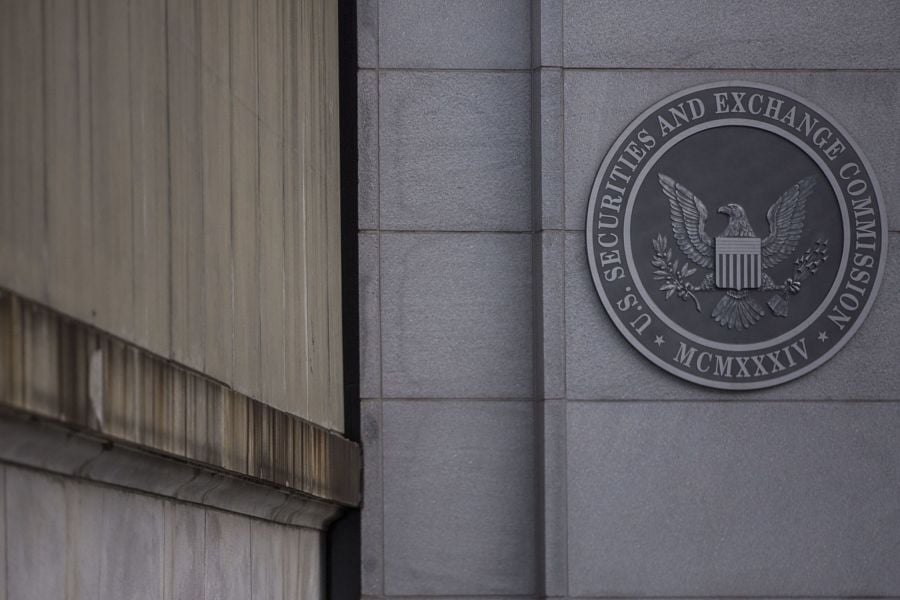
Ripple Labs Inc. and its top executives were accused by the Securities and Exchange Commission of misleading investors in XRP, the world’s third-largest cryptocurrency, by selling more than $1 billion of the virtual tokens without registering with the agency.
Ripple co-founder Christian Larsen and Chief Executive Bradley Garlinghouse “created an information vacuum” that allowed them to sell XRP into a market that only had information they chose to share, the SEC said in a lawsuit filed Tuesday in New York. The two men ignored legal advice that the cryptocurrency could be considered an investment contract and therefore was a security, the agency said.
“From a financial perspective, the strategy worked,” raising at least $1.38 billion “over a years-long unregistered offering of securities,” the SEC said. “Ripple used this money to fund its operations without disclosing how it was doing so, or the full extent of its payments to others to assist in its efforts to develop a ‘use’ for XRP and maintain XRP secondary trading markets.”
XRP declined as much as 16% to 44 cents Tuesday. The digital token has still more than doubled this year with a market value of about $21 billion. Only Bitcoin and Ether are bigger cryptocurrencies.
The SEC says Larsen and Garlinghouse personally profited by about $600 million. Garlinghouse is accused of touting that he was “very long” on the cryptocurrency while not disclosing his sales.
On Monday, the CEO disclosed that the regulators had “inexplicably decided to sue Ripple” but he didn’t specify the nature of the allegations. Garlinghouse said XRP is a currency and “does not have to be registered as an investment contract,” adding that the SEC “has permitted XRP to function as a currency for over eight years.”
In July 2017, the SEC said companies raising money through the sale of digital assets must adhere to federal securities laws.
Ripple will challenge the suit in the courts “to get clear rules of the road for the entire industry in the U.S.,” Garlinghouse said.
The case is Securities and Exchange Commission v. Ripple Labs Inc., 20-cv-10832, U.S. District Court, Southern District of New York.

Meanwhile, DPL Financial Partners adds two annuity executives and Prime Capital Financial hires a Mid-Atlantic retirement plan consultant

Andrew Komarow pleaded guilty Thursday in federal court in Hartford to defrauding three financial services companies of close to $3.3 million.

Elsewhere, Cetera picks up a $210 million Connecticut team from MML, while Wells Fargo FiNet adds a San Diego family practice from LPL

Celebrity endorsements, $500M in claimed assets, and a state regulator stepping in.

“We needed to become a more agile and efficient organization,” said American Express CEO Stephen Squeri.
Knighthead Life entered the market with a competitive MYGA. A strong launch earned advisor confidence and paved the way for FIAs.
As AI makes financial information more accessible than ever, Lana Hock explains why human judgment, trust, and empathy remain the qualities clients value most in a financial advisor

