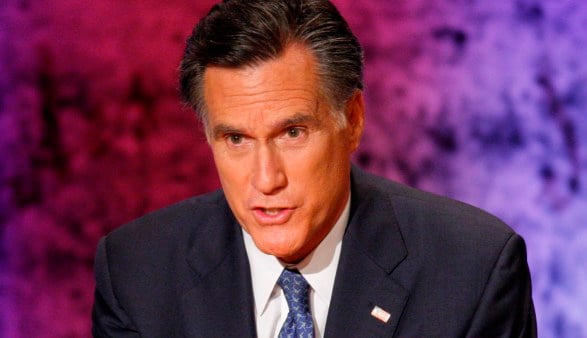
In the first presidential debate on Wednesday night, Republican presidential nominee Mitt Romney did something that he's resisted since he began his quest for the White House 18 months ago. He embraced his Inner Massachusetts. That moved him to the political center, where investment advisers reside.
In the first presidential debate on Wednesday night, Republican presidential nominee Mitt Romney did something that he's resisted since he began his quest for the White House 18 months ago. He embraced his Inner Massachusetts.
During an exchange with President Barack Obama about health care reform, Mr. Romney defended the health care law passed in Massachusetts while he was governor by contrasting the Bay State legislative process with the one that occurred in Washington when so-called Obamacare was approved.
“I like the way we did it in Massachusetts,” Mr. Romney said to Mr. Obama. “I like the fact that in my state we had Republicans and Democrats come together and work together. What you did instead was to push through a plan without a single Republican vote.”
Mr. Romney said that only two of the 200 members of the Massachusetts state legislature, which he said was 87% Democratic, opposed his health care reform plan.
“So entirely on a partisan basis, instead of bringing America together and having a discussion on this important topic, you pushed through something that you and [then-House Speaker] Nancy Pelosi and [Senate Majority Leader] Harry Reid thought was the best answer, and drove it through,” Mr. Romney said.
This was the best answer that Mr. Romney has given about health care reform during the campaign. Rather than trying to curry favor with conservatives, he brandished his moderate credentials that sustained him as the Republican governor of one of the bluest states in the nation.
In doing so, he came back toward the political center where most investment advisers can be found. Whenever I ask advisers what outcome they want to see in the election, I get some variation of the same answer. They want a Congress and presidential administration that is willing to work together and compromise.
Of course, Republicans are just as much to blame for gridlock in Washington as Democrats. Mr. Obama wasn't in the mood to let Mr. Romney off the hook for the behavior of his party.
“And I agree that the Democratic legislators in Massachusetts might have given some advice to Republicans in Congress about how to cooperate,” Mr. Obama said.
During the debate, Mr. Obama criticized Mr. Romney for not providing details about his policy plans.
“The problem is he hasn't described what exactly we'd replace it with, other than saying we're going to leave it to the states,” Mr. Obama said of Mr. Romney's position on health care reform.
Indeed, by being so vague and leaving so many details up to the split Congress he would likely inherit if elected, Mr. Romney will need to use all the skills he has as a consensus-builder.
On tax reform, for instance, he said: “I'm going to work together with Congress to say, okay, what are the various ways we can bring down deductions, for instance. One way, for instance, would be to have a single number – make up a number -- $25,000, $50,000 – anybody could have deductions up to that amount. And then that number disappears for high-income people.”
Wow. Coming to a bipartisan agreement on that kind of tax policy would require world-class negotiations. Mr. Romney better keep channeling his Inner Massachusetts.