
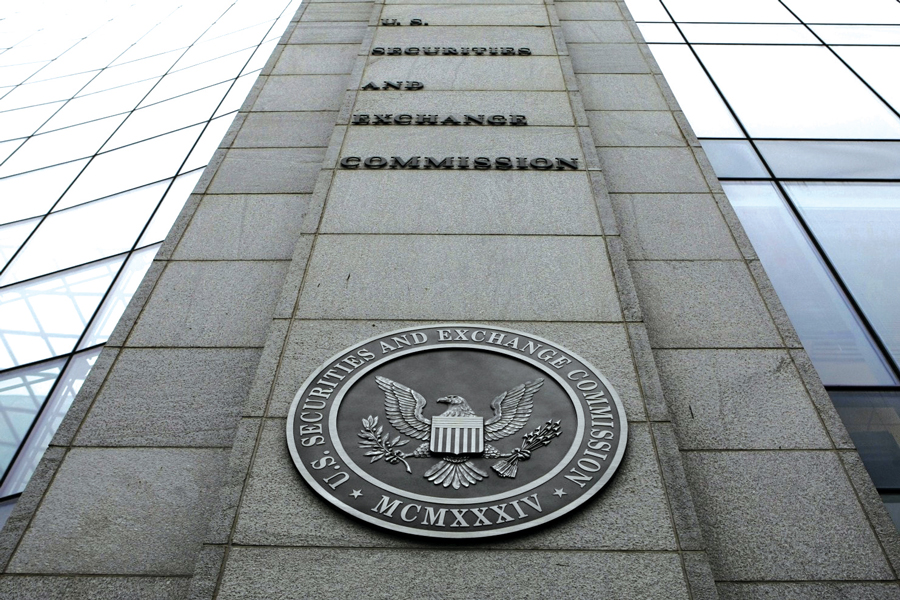
A former Wells Fargo advisor who admitted to stealing more than $3 million from clients has been barred from the securities industry by the Securities and Exchange Commission.
In an order dated Feb. 13, the SEC barred Kenneth A. Welsh, 44, from associating with any broker, dealer, investment adviser, municipal securities dealer, municipal advisor, transfer agent or nationally recognized statistical rating organization. The action follows his criminal conviction and a civil injunction tied to a yearslong fraud scheme targeting five clients.
Welsh, of River Edge, New Jersey, was a registered representative and investment adviser representative at Wells Fargo Clearing Services from September 2012 until the firm terminated him in June 2021.
According to an SEC complaint filing civil charges in 2021, Welsh funneled client funds from brokerage and advisory accounts, redirecting the money to other accounts he controlled.
The SEC order stated that Welsh “misappropriated customer and client account funds to pay funds owed on credit card accounts held in the name of his own wife and parents, which he used for his personal benefit.”
It also said he caused checks to be fraudulently drawn on client accounts to buy gold coins and other precious metals, as well as cover personal expenses.
In a November 2024 statement, the Department of Justice said that from July 2017 through March 2021, he “misappropriated at least $3 million from five clients” while employed as an investment advisor at a large brokerage firm. Prosecutors said Welsh used the stolen money to fund gambling and purchase high-end luxury items.
Welsh pleaded guilty in November 2024 in federal court in Trenton, New Jersey, to four counts of wire fraud and one count of investment adviser fraud. He was sentenced in July last year to 44 months in prison, according to the SEC order.
Acting on an offer of settlement he submitted, the commission found it appropriate and in the public interest to remove him from the industry. The bar covers both brokerage and advisory roles and applies across a broad range of SEC-regulated entities.
Welsh’s misconduct first became public in 2021, when he was arrested and charged with stealing more than $2.8 million from five clients while at Wells Fargo Advisors in Fairfield, New Jersey. At the time, authorities alleged he had carried out at least 137 fraudulent transactions.
Apart from civil and criminal charges, Welsh's investment advisor record with the SEC includes more than a half-dozen customer disputes between 2021 and 2022, with settlement amounts from $20,000 to $5,850,000.
In the largest settlement, which went through arbitration, the claimant alleged Welsh recommended annuity contracts that weren't suitable for her situation. Her representing attorney reported 76 unauthorized withdrawals from his client's brokerage account over a 27-month period.
Under the SEC order, Welsh can submit a request to reenter the industry, which could be granted based on factors including compliance with the commission’s orders and payment of court-ordered disgorgement, civil penalties, arbitration awards, or restitution tied to his conduct.

Advisors say record balances aren't a retirement income plan and urge clients to benchmark their lives, not an index

Wealth enterprises are leaving revenue on the table - a new PureFacts and Ascentix partnership aims to help firms take it back.

What if one investment decision could create tax-saving opportunities across your entire portfolio? Chris Vizzi shares how the Stacking Strategy helps investors align tax planning, portfolio construction, and wealth preservation to maximize long-term outcomes while keeping more of what they earn.

Buyers spending on AI may treat less efficient sellers as overstaffed and price the cost of rightsizing into lower offers
Kenneth Leech pleaded guilty in June to one obstruction charge, and could face six to 12 months in prison.
Knighthead Life entered the market with a competitive MYGA. A strong launch earned advisor confidence and paved the way for FIAs.
As AI makes financial information more accessible than ever, Lana Hock explains why human judgment, trust, and empathy remain the qualities clients value most in a financial advisor

