
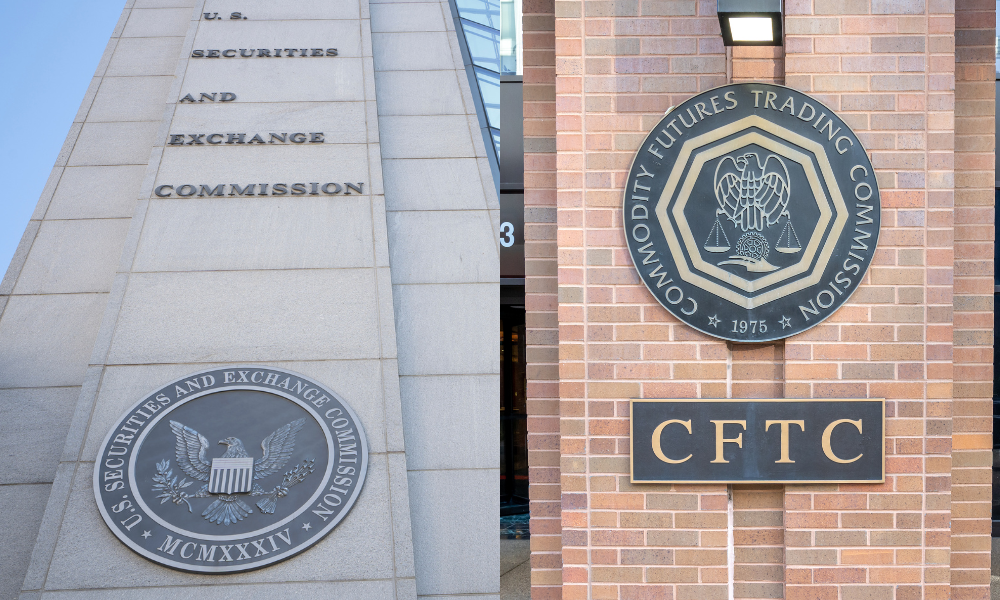
Financial regulators including the SEC and CFTC are subject to a level of scrutiny from today (April 21) as an executive order signed by President Trump in February is implemented.
New guidance had been issued by the Office of Information and Regulatory Affairs that requires around 20 boards and agencies to involve the White House in rulemaking, effectively restricting their independence.
While several regulatory agencies that operate under the executive branch have a long history of doing so with high levels of independence, Trump interprets his powers under the constitution as being unitary with the authority to supervise the entire executive branch.
His executive order states that these “regulatory agencies currently exercise substantial executive authority without sufficient accountability to the President, and through him, to the American people.” It adds that they “have been permitted to promulgate significant regulations without review by the President” and that this is inconsistent with an elected president.
The OIRA guidance comes as the Trump administration’s attempt to slash the power of the Consumer Financial Protection Bureau through layoffs of most of its staff has been paused by a federal judge.
US District Judge Amy Berman Jackson said Friday that she was concerned that cutting the CFPB’s staff by 1500 to leave only around 200 would “decimate the agency and render it unable to comply with its statutory duties.”
The pause will remain until at least April 28 when the judge will hear testimony from officials who worked on the reduction in force.
Democrat Senator Elizabeth Warren, one of the architects of the CFPB, said that consumers and markets would be more vulnerable to fraud and corruption from moves against federal regulatory agencies.
“Trump at every turn is trying to put deregulators in place across the whole financial services space, and that is really dangerous,” she told Bloomberg News.
The president has also been taking aim at Fed chair Jerome Powell for not cutting interest rates fast enough.
According to Kevin Hassett, director of the National Economic Council, in response to a reporter who asked if the president could consider removing Powell: “The president and his team will continue to study that,” adding that “The policy of this Federal Reserve was to raise rates the minute President Trump was elected last time, to say that the supply-side tax cuts that were going to be inflationary.”
“We’re already paying a huge price for every hour that goes by that he gets out there and rattles his sabers about firing the chairman of the Fed,” Warren added, referring to the turbulence in the bond markets.

CFP, CFA and CPA holders could gain accredited investor status as regulators weigh wider private market access for advisory clients

DeepVest, Vanilla and Libretto roll out tools to help financial advisors launch firms, close estate plans and sharpen planning skills

“People aren't effectively using their wealth in retirement,” said David Blanchett of Prudential.

Second-generation NFL ref Shawn Hochuli co-founded IWM Partners in Irvine, California, a wealth management practice with more than $500M in client assets

U.S. seniors lose $28.3 billion annually as a result of financial exploitation, according to a 2023 AARP study.
As AI makes financial information more accessible than ever, Lana Hock explains why human judgment, trust, and empathy remain the qualities clients value most in a financial advisor
Northern Trust’s Ken Lassner shows advisors how to convert volatility into after-tax portfolio gains

