
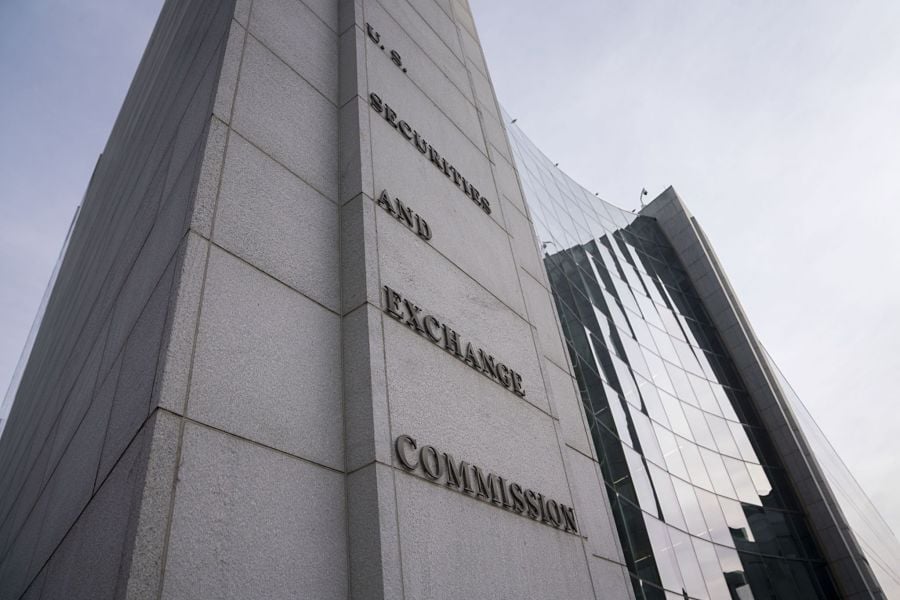
The Securities and Exchange Commission has charged Buttonwood Financial Group, a Kansas City, Missouri-based registered investment adviser, and Jon Michael McGraw, its president, chief compliance officer and majority owner, with investing client assets in generally more expensive mutual funds so that Buttonwood could avoid paying certain transaction costs.
According to the SEC's complaint, most Buttonwood clients were in wrap accounts, for which, the firm agreed to pay all client transaction costs as part of its wrap-fee agreement. Instead, the SEC charged that from at least 2014 until 2019, Buttonwood took steps to avoid paying transaction costs by focusing client investments in more expensive mutual funds, for which, its unaffiliated broker did not charge Buttonwood a transaction fee.
In many cases, the SEC charged, Buttonwood could have invested clients in a lower-cost share class of the exact same mutual fund, in which case Buttonwood would have paid a transaction fee.
Buttonwood countered that investing clients in no transaction fee class mutual fund shares allowed the firm to maintain low fee rates.
“Even accounting for the slightly higher internal fund cost of NTFs compared to the corresponding institutional share class fund, Buttonwood's clients enjoyed average pricing for investment services that was in the lowest 10% of fee rates charged in the entire industry,” the firm said in a statement. “The SEC complaint's blinkered focus on the slightly higher internal cost of the NTF share class funds ignores the larger benefit that using those funds provided for Buttonwood's clients: the savings generated by avoiding transaction fees were passed along to clients in the form of very low advisory fee rates.”
Buttonwood, its employees, officers and affiliates did not receive 12b-1 fees or other revenue sharing from any party for its use of no-transaction-fee share classes, the firm asserted.
“The claim that Buttonwood used NTFs for its own benefit or to the detriment of its clients is simply false,” the firm said.
The complaint seeks permanent injunctions, disgorgement with prejudgment interest and civil penalties.

Daejon Love and Taylor Chan's $1.3 million romance fraud scheme exposes how AI search engines can be manipulated by fabricated online identities

“It was a third party scam,” said the attorney representing the claimants.

Meanwhile, &Partners draws another Commonwealth practice, and Wealthcare welcomes a $550 million planning practice in the Northeast.

Palo Alto AI platform recruits RIA and fintech leaders as industry data show AI adoption reshaping advisor staffing.

Meanwhile, Raymond James, Wedbush, and LPL recruited veteran advisors from across Texas, North Carolina, and California.
Northern Trust’s Ken Lassner shows advisors how to convert volatility into after-tax portfolio gains
Dan Biagini of American Equity says the steady decline of pensions, longer lifespans and a reset in interest rates are rewriting how advisors build retirement income

