
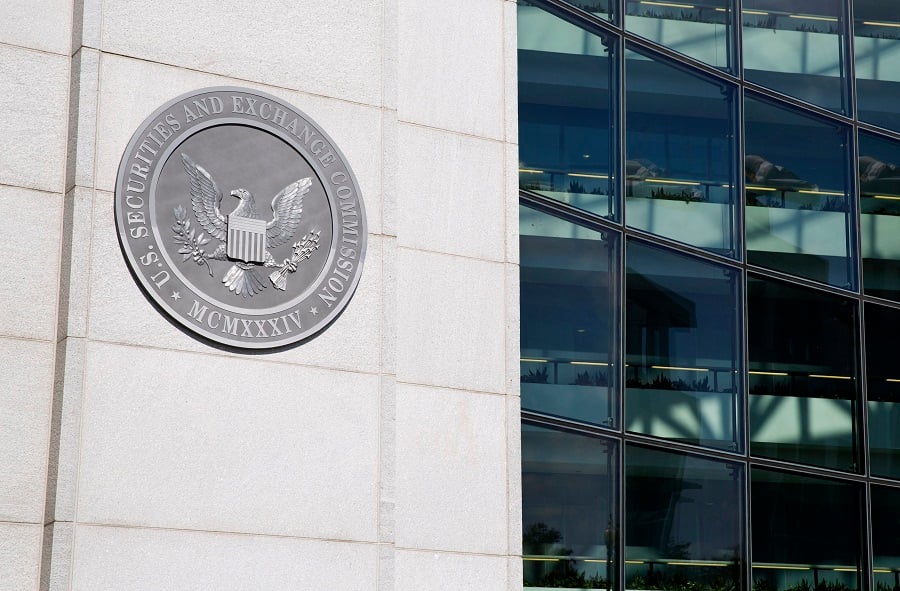
The Securities and Exchange Commission has scrapped a decades-old policy that barred defendants from publicly disputing the agency's allegations as a condition of settling enforcement actions in a move that raises fresh questions about how settlements will play out going forward.
The SEC rescinded Rule 202.5(e) of its informal rules of procedures, which had required settling defendants to agree not to publicly deny the allegations against them. The policy had been in place for more than half a century.
The commission said the change aligns it with the vast majority of federal agencies that never had such a requirement and gives it more flexibility in resolving enforcement cases, which it said conserves resources and can speed the return of money to harmed investors.
"For more than 50 years, the Commission has conditioned settlement on a defendant's promise not to publicly deny the Commission's allegations. I am pleased that we are rescinding the no-deny policy today," said SEC Chairman Paul S. Atkins. "Speech critical of the government is an important part of the American tradition. This recission ends the policy prohibiting such criticism by settling defendants."
According to the American Securities Association, the rule suppressed the speech of an estimated 2,700 individuals and businesses between 2017 and 2023 alone. The ASA, which had filed an amicus brief with the US Supreme Court in Powell v. SEC urging the court to strike down the policy as unconstitutional, was quick to welcome the change.
"ASA applauds Chairman Atkins for rescinding the Gag Rule and recognizing that the government may enforce the law, but it cannot permanently extinguish the First Amendment rights of every individual that feels forced to settle rather than fight," said ASA President and CEO Chris Iacovella.
The ASA had long argued the policy created a perverse outcome of a defendant who took their case to trial and lost retained more freedom to speak publicly than one who chose to settle.
The commission also confirmed it will not pursue enforcement of no-deny provisions already embedded in existing settlement agreements. If a defendant breaches such a clause, the SEC will not seek to have a court vacate the settlement or reopen any proceeding.
Importantly, the rescission does not touch the commission's separate practices around admissions. The SEC generally does not require settling defendants to admit to allegations, and that approach remains unchanged. The agency retains discretion to settle with parties who neither admit nor deny facts, as well as to negotiate for admissions when it deems appropriate.
The practical fallout for the industry, however, may be more complex than a simple expansion of free speech.
Nelson Mullins partner Scott Sherman and associate Josh Lewin, writing in the National Law Review, cautioned that settlement outcomes may begin to resemble a two-track process, with legal resolution occurring alongside ongoing public disagreement about the underlying facts.
They noted that decisions about whether, when, and how to respond publicly to SEC allegations will take on increased importance and may carry legal, regulatory, and reputational consequences.
The ability to publicly push back against SEC findings could serve as a reputational lifeline in some cases, but it also introduces new risks around how public denials are perceived by clients, regulators, and courts in any parallel proceedings.

As Robinhood and Schwab roll out AI agents and assistants, a new survey finds advisors still edge out chatbots in terms of client trust.

See which platforms and providers earned 5-Star recognition this year

Meanwhile, a multigenerational Cambridge team has hopped to LPL in Michigan, and Cetera's run of Commonwealth recruitment continues in New Jersey.

TIAA survey finds 53% of Americans worry about running out of money, as AI and medical advances scramble retirement income planning.

Two wirehouse veterans choose advisor-owned model as independents target ultra-high-net-worth clients beyond portfolio management.
As AI makes financial information more accessible than ever, Lana Hock explains why human judgment, trust, and empathy remain the qualities clients value most in a financial advisor
Northern Trust’s Ken Lassner shows advisors how to convert volatility into after-tax portfolio gains

