
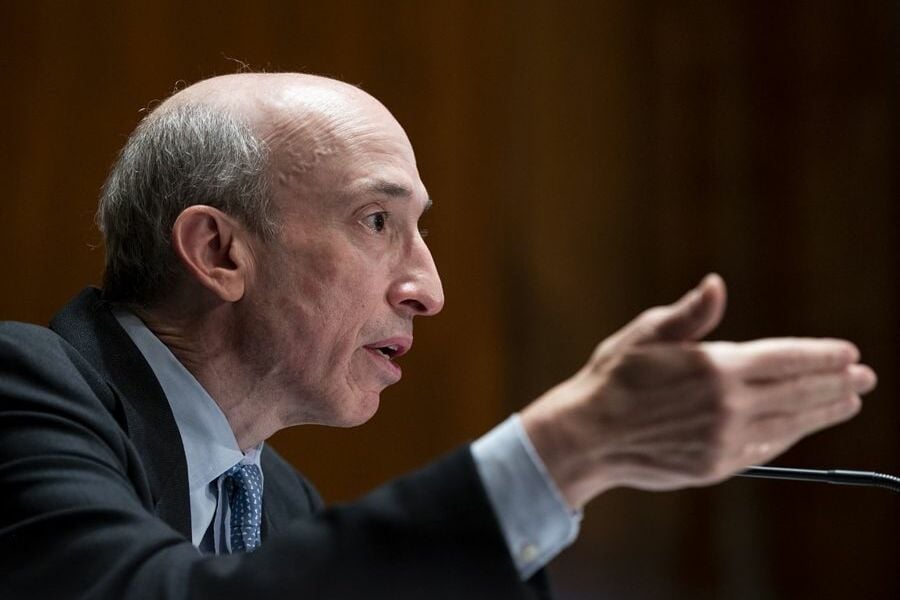
U.S. regulators will take the first step Wednesday toward the most widespread revamp in more than a decade of the way stocks are traded, a move that the agency says will spur better prices for investors and direct more business to traditional exchanges.
The Securities and Exchange Commission laid out four proposals that Chair Gary Gensler says would boost transparency and competition. They delve into the guts of how the $43 trillion market works and affect everything from order routing to pricing and disclosures that brokers must make to clients.
The SEC’s plans, which will be debated by commissioners during an agency meeting, represent a direct response to many of the issues that were spotlighted by last year’s meme-stock-trading craze. Over the past year, the contours of the effort have been a source of significant angst for the industry as Gensler signaled that major overhauls loomed.
On Wednesday, the SEC chief doubled down. “Today’s markets are not as fair and competitive as possible for individual investors — everyday retail investors,” Gensler said in remarks ahead of the meeting. Taken together, the rule changes would be the biggest since 2005.
Broadly, the plans could lead to more stock orders filled on exchanges like Nasdaq and the New York Stock Exchange. Currently, a significant chunk of retail trades are handled by wholesale brokerages like Virtu Financial Inc. and Citadel Securities, which pay to process customer trades from firms like Charles Schwab Corp. and Robinhood Markets Inc.
Virtu shares fell by as much as 7.5% in New York trading, the biggest intraday decline since April, while Robinhood dropped by as much as 4.4% before rebounding.
Gensler has frequently criticized the arrangement, which is commonly known as payment for order flow, as creating conflicts of interest for brokers and had floated banning the practice. Meanwhile, wholesale brokerages like Virtu and Citadel Securities have pushed back, arguing that it’s beneficial to retail traders and allows them to get the best price and have trades efficiently filled.
Backers of payment for order flow also say it’s responsible for widespread commission-free trading in the U.S.
Since 2019, most major online brokerages haven’t charged retail clients fees for their transactions, following a model made popular by Robinhood. Legions of traders who put money in the market for the first time during the Covid-19 pandemic have known nothing else.
Notably, the SEC won’t call for banning the practice. Instead, the proposals would require market participants to engage in auctions for the right to process many orders within milliseconds. That requirement would apply to most market-making firms and major stock exchanges.
In another planned change, the regulator also wants to reduce the rebates that exchanges can offer brokers in their own bid to pull more trades onto those platforms. Platform operators would have to start making their fees publicly known in advance, rather than after the fact based on volume within a given month.
The SEC estimates that the auctions could save retail investors $1.5 billion annually.
If implemented, the auctions could directly affect market-making firms that have built algorithms and technology to process trades quickly and provide what they say is the best deal for customers. The changes would also alter exchanges’ existing business models, which involve charging for data and access to their venues for trading.
In a statement, the Wall Street trade group known as SIFMA, said that the SEC should be mindful of possible fallout from its plans. “The substantial changes proposed today by the SEC are incredibly complex with material impact to all market participants, but particularly to investors,” Kenneth Bentsen, the group’s leader, said in a statement. “We strongly believe the SEC needs to be extremely careful in its approach.”
Hester Peirce, one of the agency’s two Republicans, also pushed back during the meeting. “There is no emergency in our markets that demands a comprehensive revamping of how market makers and broker dealers handle order flows,” she said.
Venues would also need to start allowing stocks to trade at smaller price increments on and off exchanges. The move, according to the SEC, would increase competition to fill orders and lower costs. The agency is also proposing to reduce other fees, which could drive more trading to the platforms.
Once a majority of the SEC’s five commissioners vote to propose the changes on Wednesday, the agency will take comments through March. Staff will then take those recommendations and write a final plan that the commissioners will have to approve for the regulations to take effect.
At Wednesday’s meeting, the SEC finalized a rule to restrict stock trading by corporate executives. The measure requires company directors and officers to await at least 90 days between scheduling a trade and selling shares. Companies will also have to disclose their executives’ use of trading plans in quarterly reports.

Daejon Love and Taylor Chan's $1.3 million romance fraud scheme exposes how AI search engines can be manipulated by fabricated online identities

“It was a third party scam,” said the attorney representing the claimants.

Meanwhile, &Partners draws another Commonwealth practice, and Wealthcare welcomes a $550 million planning practice in the Northeast.

Palo Alto AI platform recruits RIA and fintech leaders as industry data show AI adoption reshaping advisor staffing.

Meanwhile, Raymond James, Wedbush, and LPL recruited veteran advisors from across Texas, North Carolina, and California.
Northern Trust’s Ken Lassner shows advisors how to convert volatility into after-tax portfolio gains
Dan Biagini of American Equity says the steady decline of pensions, longer lifespans and a reset in interest rates are rewriting how advisors build retirement income

