
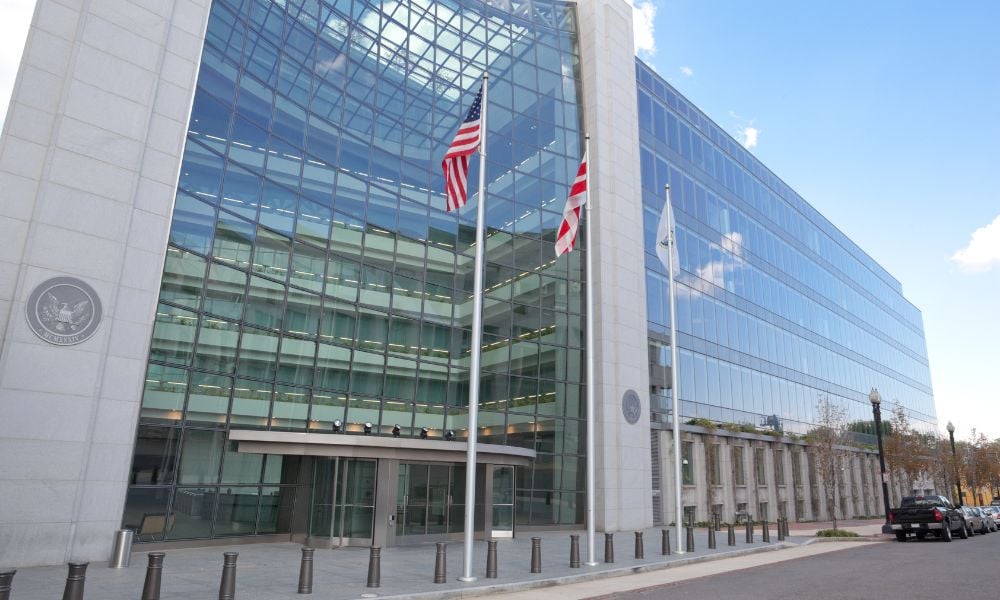
A single SEC commissioner can now act for the whole agency whenever every other sitting commissioner is disqualified from a matter. The proposals on the agency’s desk include one that would let RIAs collect performance fees of up to 20%.
The Securities and Exchange Commission (SEC) adopted the final rule amending its 31-year-old quorum requirement on Sept. 30, 2026, effective Oct. 2. That was the day Commissioner Hester Peirce left, a departure InvestmentNews flagged back in May 2026. It leaves the agency with two members, Chair Paul Atkins and Commissioner Mark Uyeda.
Benjamin Schiffrin, director of securities policy at Better Markets in Washington, D.C., said registered investment advisors (RIAs) will feel the change through the pace of SEC rulemaking, not through their daily work. “If one of the two remaining commissioners can’t participate in a matter because they’re disqualified from participating due to some type of conflict of interest, the one remaining commissioner can still act on behalf of the commission,” Schiffrin said.
At the same Sept. 30 meeting, the SEC proposed letting advisors to registered funds and business development companies (BDCs), which are closed-end funds that invest in private companies, charge performance fees of up to 20% of net gains, Gibson Dunn reported. It also proposed redefining “qualified client,” the status that decides who can be charged performance fees, to include any accredited investor. A companion proposal would loosen the rules for interval funds, which let investors redeem shares only at set intervals.
The package also weighs letting CFPs, CFA charterholders and CPAs qualify as accredited investors, InvestmentNews reported. Liquidity is already a live issue for advisors, as RIAs seeking lending options when private market lockups hit shows. Better Markets, a nonprofit, advocates for stronger financial regulation.
Under the old rule, a quorum required three commissioners, or fewer if fewer held office, Schiffrin said. With two in office and one disqualified, the commission could not act.
“Now one commissioner; whether it’s Chair Atkins who would have the disqualification or Commissioner Uyeda, that doesn’t matter,” he said. If either faces a conflict on a rule already proposed, “that one commissioner can now go forward on behalf of the entire commission with the rule if that’s what that one commissioner wants to do.”
The old rule already let a lone commissioner act when only one held office. The Commodity Futures Trading Commission (CFTC) works that way now with a single member, Chair Michael Selig. The SEC’s new rule extends the power to cases where two commissioners hold office but one can’t participate.
Schiffrin named two kinds of conflict. A financial conflict arises when a commissioner owns stock in a company a rule could directly affect. A personal conflict arises when a commissioner previously worked for or represented an affected firm. SEC ethics staff screen for both, and commissioners can divest assets before taking office to reduce financial conflicts.
“The personal conflicts are harder,” Schiffrin said, because past client work can’t be undone. “Normally that’s a big deal in the sense that the commission loses the benefit of that particular commissioner’s views,” he said. “But if there’s five commissioners and one of them can’t participate, it’s usually not the end of the world,” he continued.
With two seats filled, that cushion is gone.
Schiffrin does not expect the rule to change an advisor’s day-to-day practice. It does remove a possible stall on proposing and finalizing rules, and on voting in enforcement cases. That matters to advisors tracking the performance-fee proposal and the shift in who qualifies to pay those fees.
He also doubts the rule will change outcomes. The two remaining commissioners “seem to be pretty in lockstep with the current commission’s agenda.” Atkins has pressed ahead with a proposed shift to semiannual reporting despite opposition from retail investors, and with a proposed rescission of the trade-through rule, which requires trades to execute at the best displayed price, despite opposition from large financial firms, Schiffrin said.
“My guess is this (quorum rule) is another potential obstacle that he saw fit to eliminate,” he said.
Uyeda addressed the criticism in a Financial Times opinion column, saying the change clarifies that a quorum can exist when all but one commissioner is disqualified.
Schiffrin was unmoved. “Given that the SEC is intended to be a five-person commission, there really shouldn’t be that many situations where one person can act on behalf of the commission,” he said.
He noted that a commission considered this same change in 1995 and declined. That commission let a lone commissioner act only when just one held office, he said, “because otherwise the Commission can never do anything,” but it drew the line where two commissioners held office and one was disqualified.
“Clearly a previous commission (said) ‘that’s a bridge too far for us’,” Schiffrin said. “And I don’t think this commission did a good job of explaining why it wasn’t a bridge too far for them.”

The senior recruiter position at LPL Financial can lead to future success and industry leadership.

Hackers are already probing two bugs in software that runs most of the web. European Government and other major sites have already been taken down for emergency patches.

Unclaimed auto accounts can’t take family money, so advisors face questions on 529s, divorce terms, employer funding and stock gifts.

Devenir finds 52% of HSA assets are now invested, reshaping how clients can plan for retirement health care costs.

Donated SpaceX stock generally can’t be refused or sold for years, leaving advisors to explain concentration risk to families
Knighthead Life entered the market with a competitive MYGA. A strong launch earned advisor confidence and paved the way for FIAs.
As AI makes financial information more accessible than ever, Lana Hock explains why human judgment, trust, and empathy remain the qualities clients value most in a financial advisor

