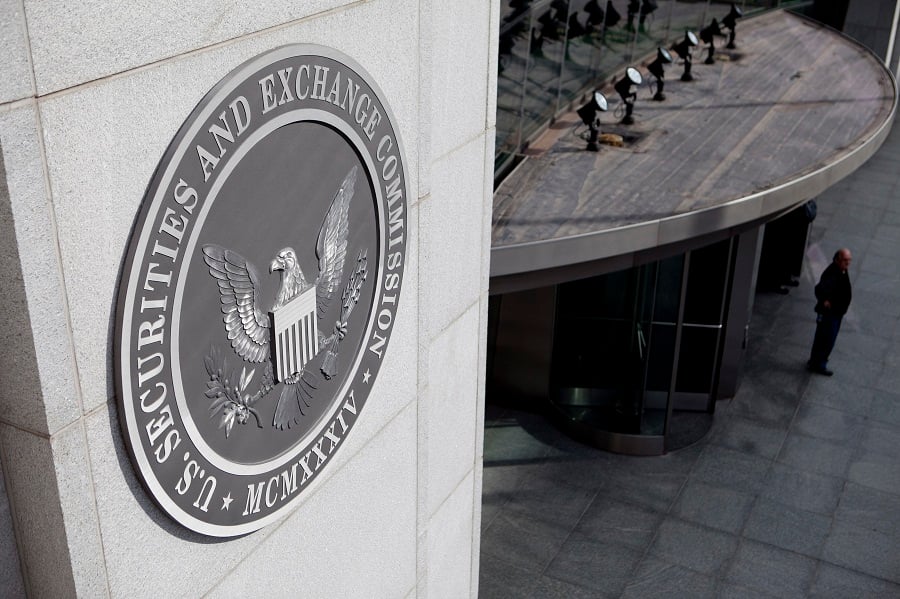
A new study claims the SEC double counts some cases and loads up in September to boost fiscal year numbers.
The federal agency that polices public companies' bookkeeping appears to be doing some fuzzy math of its own.
It's an open secret that the Securities and Exchange Commission has long rolled out a high number of enforcement actions in September, the last month of its fiscal year, to try to beat the previous year's tally. That fact isn't lost on defense attorneys, several of whom said in interviews that the agency is motivated to settle cases as the U.S. calendar moves from summer to fall.
But the SEC's drive could be more than harmless numbers padding. It's giving a misleading impression of how effective the agency is in policing financial markets, according to Urska Velikonja, a law professor at Emory University in Atlanta, who studied more than a decade of the regulator's enforcement statistics.
“These statistics often show up in the press and in Congress,” Ms. Velikonja said in a telephone interview, explaining the results from her paper, which will be published in the Cornell Law Review next year. “They ought to be accurate.”
The SEC enforcement numbers — provided to the press, lawmakers and the public — are inflated in several ways, Ms. Velikonja said. The agency counts actions against the same people two or three times, tallies cases against companies and their executives separately and brings a high number of cases that barely require any investigation at all. For example, instances in which the SEC penalized companies for submitting their quarterly financial statements late made up 20% of the agency's cases in 2013, up from 2% 10 years earlier.
“We are still reviewing the study, but from our preliminary review, we disagree with a number of its observations,” SEC Enforcement Director Andrew Ceresney said in an emailed statement. “We have consistently and transparently reported our enforcement numbers for years, but as we have emphasized, first and foremost is the quality of our cases, which span the securities industry, include first-of-their kind actions, aggressive use of industry and other types of bars, and demonstrate successful pursuit of wrongdoers.”
One statistic in the SEC's favor is that monetary penalties stemming from its cases have increasingly gone up. In its latest fiscal year, the agency assessed $4.16 billion in disgorgement and fines, up from $488 million in 2000, according to its annual reports.
IMPRESSING CONGRESS
The push to report an increase in enforcement actions each year partly stems from a frenzy to impress U.S. lawmakers. Unlike the Federal Reserve, which oversees banks, the SEC's annual funding is set by Congress. The regulator of brokers, exchanges, asset managers and public company disclosures currently has a budget of $1.5 billion that supports more than 4,000 employees.
“The SEC is under tremendous pressure from Congress to deliver more cases,” Ms. Velikonja said. “They have to ask for more money each year regardless of what's going on in the economy.”
Ms. Velikonja analyzed 9,679 SEC enforcement actions over 15 years through fiscal 2014, which ended last September. Her examination showed that the number of cases brought in September is more than double the average for the other 11 months of the year.
“It's like a company trying to get sales done before the end of the quarter,” Thomas Zaccaro, a former SEC enforcement attorney and now at Zaccaro Morgan, said by phone. “They're like any organization: They want the numbers that they're measured by to look as good as possible.”
The SEC reported 755 enforcement cases in 2014, a 50% jump from 14 years earlier. But once Ms. Velikonja said she stripped out delinquent filer actions and derivative cases — those tied to a single investigation that had already led to earlier sanctions against companies or individuals — the number of original enforcement actions has been relatively flat since 2002.
For example, an investigation into Robert A. Gist, an Atlanta lawyer who was sued in 2013 for acting as an unregistered broker-dealer and for defrauding his customers, resulted in three separate enforcement actions. The cases included an industry bar and a suspension from being able to appear before the SEC as an attorney.
DOUBLE COUNTING
All told, between 23% and 34% of enforcement actions the SEC brought each year had already been counted at least once, Ms. Velikonja found. The repetition is especially apparent in the SEC's policing of broker-dealers, where almost 60% of the cases involved double counting.
In other instances, Ms. Velikonja found the SEC had reclassified enforcement cases into certain categories. In 2014, for example, the agency was playing up its clampdown on accounting fraud. It broke with precedent that year by classifying five cases involving companies' failures to file periodic reports as “issuer reporting and disclosure,” an accounting infraction, instead of “delinquent filing” cases. The move, along with the counting of actions that piggy-backed on earlier ones, resulted in the SEC reporting a rise in accounting cases from the previous year, Ms. Velikonja found.
She notes that the SEC is far from alone among federal agencies in having an incentive to use statistics to burnish its image.
“Multiple reporting statutes authorize Congress to cut agencies' budgets for failing to meet performance targets,” she writes in her study. “In response, agencies report flawed metrics to protect their ability to continue enforcing the law.”