The overhaul of the U.S. financial system took a big step toward becoming law Wednesday evening when the House passed reform legislation 237-192. As a result, it's also looking more likely that brokers may soon be held to the same standard of care as investment advisers.
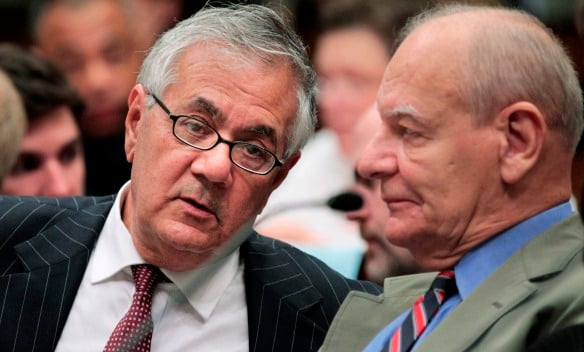
Indeed, just before the House vote, Rep. Barney Frank, D-Mass., highlighted the fiduciary duty section of the bill — a proposal Mr. Frank championed during two weeks of House-Senate negotiations on the final legislation.
The bill empowers the Securities and Exchange Commission to impose the same fiduciary duty on broker-dealers and insurance agents currently met by investment advisers. If the regulator chooses, it can require anyone providing personalized investment advice to retail clients to act in the client's best interests and to disclose any conflicts of interest.
“We gave the SEC the power to do it,” Mr. Frank said during the House floor debate. “And they're going to do it.”
Of course, the Senate still has to pass the bill — and that's hardly a lock. The upper chamber won't act on the 2,600-page measure, a combination of previously approved House and Senate bills, until after the weeklong congressional Independence Day recess. The fate of the measure in the Senate has been complicated by the death this week of Sen. Robert Byrd, D-W.Va.
The Senate Democratic caucus now numbers 58, two senators short of the number to overcome a Republican filibuster. Senate leaders this week have been working to secure the backing of all four GOP members who supported the original Senate bill in late May. Their votes are crucial because two Democrats opposed that measure.
The massive final bill, which touches on nearly every facet of the financial sector, must be approved by the Senate before it can be sent on to President Barack Obama to be signed into law.
The measure creates a mechanism for liquidating large institutions that pose a systemic threat to the economy, establishes a new consumer protection agency and imposes new rules for derivatives trading. It has been officially renamed the Dodd-Frank Wall Street Reform and Consumer Protection Act of 2010.
“Today's House vote puts us on the cusp of passing a law that will give consumers greater protection and safeguard our economy against future financial crises,” Mr. Obama said following the House action. “It will put an end to the idea that any financial firm is too big to fail and therefore entitled to taxpayer bailouts.”
All but three House Republicans voted against the bill. Most GOP legislators criticized it for creating new government bureaucracies, increasing federal spending and taxes, restricting credit and failing to address the fundamental problems that caused the near collapse of the financial markets in 2008.
“Under the guise of financial reform, Democrats are pushing yet another bill that will kill jobs, raise taxes and make bailouts permanent,” Rep. Mike Pence, R-Ind., the third-ranking House Republican, said in a floor speech. “This legislation codifies the notion of ‘too big to fail.'”
To win over wavering Republican senators, the House-Senate conference was briefly reopened this week to remove a $19 billion fee on large banks to pay for the legislation.
Lawmakers replaced the tax with funds generated by shutting down the Troubled Asset Relief Program. That move is expected to raise about $11 billion. The rest of the bill would be financed by increasing the Federal Deposit Insurance Corp.'s assessment on insured deposits in financial institutions with more than $10 billion in assets. The
FDIC would have until 2020 to ratchet up the charge from its current 1.15% level to 1.35%.
The change has not yet persuaded Sen. Scott Brown, R-Mass., to back the final bill. Mr. Brown supported the original Senate version.
“I appreciate the conference committee revisiting the Wall Street reform bill and removing the $19 billion tax,” Mr. Brown said in a June 30 statement. “Over the July recess, I will continue to review this important bill. I remain committed to putting in place safeguards to prevent another financial meltdown, ensure that consumers are protected and that this bill is paid for without new taxes.”