
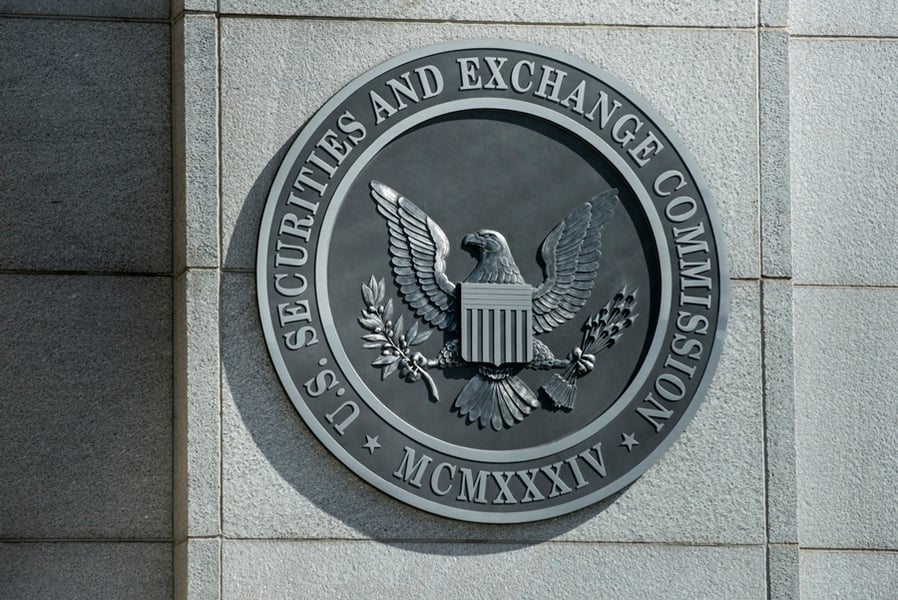
SEC Commissioner Caroline Crenshaw, the last Democrat on what should be a five-member panel, has left the agency after her term expired, handing full control of the commission’s agenda to a trio of Republican appointees with a distinctly more deregulatory and crypto-friendly outlook.
Crenshaw’s departure, effective early this month, leaves Chair Paul Atkins, along with commissioners Hester Peirce and Mark Uyeda, as the three remaining members of the SEC's leadership.
Under federal law, no more than three commissioners can belong to the same political party, which means the White House and Senate must agree on a non-Republican nominee before the balance shifts again.
In a joint statement Friday, Atkins, Peirce, and Uyeda credited Crenshaw with a long record of public service. They said she had “devoted more than a decade of distinguished service” and described her as “a steadfast advocate for the agency’s mission.”
Crenshaw’s exit follows the Senate Banking Committee’s decision in late 2024 to cancel a vote on her renomination, ending her path to a second term. Crypto industry groups and digital asset advocates had campaigned aggressively against her return, citing her opposition to a series of crypto policy moves and enforcement settlements.
In the months leading up to her departure, Crenshaw had stood as the commission’s most consistent skeptic of digital assets and market deregulation. She dissented from the SEC’s approval of spot bitcoin ETFs in January 2024, calling the decision “unsound and ahistorical” and warning it would “put us on a wayward path that could further sacrifice investor protection.”
She also objected to crypto-focused enforcement shifts, including the SEC’s settlement with Ripple Labs, and repeatedly argued that loosening market rules risked weakening core investor protections that have underpinned the public markets for decades.
In a December interview with Politico, Crenshaw argued that the current policy trajectory echoes earlier eras of light-touch oversight. “I certainly wouldn’t be alone in analogizing the trend toward deregulation in this current environment to the period immediately prior to the stock market crash in 1929,” she said.
Crenshaw also warned that the line between investing and speculation is blurring as new products and platforms proliferate. “I worry people are going to get hurt in the short term, and that in the long term the country is going to have to figure out a solution,” she said.
Her departure comes as the SEC continues to weigh new rules on digital assets, private markets, and disclosure, as well as enforcement priorities around tokenization, trading platforms and retail access to complex strategies. With an all-Republican commission in place, market observers expect Atkins to move more quickly on initiatives that emphasize capital formation and market access, including for crypto, over additional guardrails.
For RIAs and brokerages, the near-term impact is likely to show up in how aggressively the SEC pursues enforcement, how it approaches disclosure requirements, and how it supervises emerging crypto products pitched to retail investors and retirement savers.
The agency has already made known its enforcement priorities for 2026, highlighting fiduciary standards, complex investment products, and fintechs among other items in a laundry list of focus areas. But beyond that, the currently all-Republican commission now has more than a potential opportunity to set the tone for regulation and compliance – at least, until another person from the other side of the political divide comes in.

Just over 10% of advisors' wealth clients come from defined contribution plans, as capacity, data and technology gaps block the bridge to wealth

Deal creates a $20B-plus custody platform for private market investing in IRAs, months after Schwab closed its Forge Global purchase

Despite the good times, advisors should tread carefully, said one veteran industry executive.

Gallagher data reveals a huge gap in financial confidence between employees who work with an advisor and those who don't.

PEP assets hit $34bn at year-end 2025 as advisors navigate mandate deadlines and a 48% employer interest rate.
Knighthead Life entered the market with a competitive MYGA. A strong launch earned advisor confidence and paved the way for FIAs.
As AI makes financial information more accessible than ever, Lana Hock explains why human judgment, trust, and empathy remain the qualities clients value most in a financial advisor

