
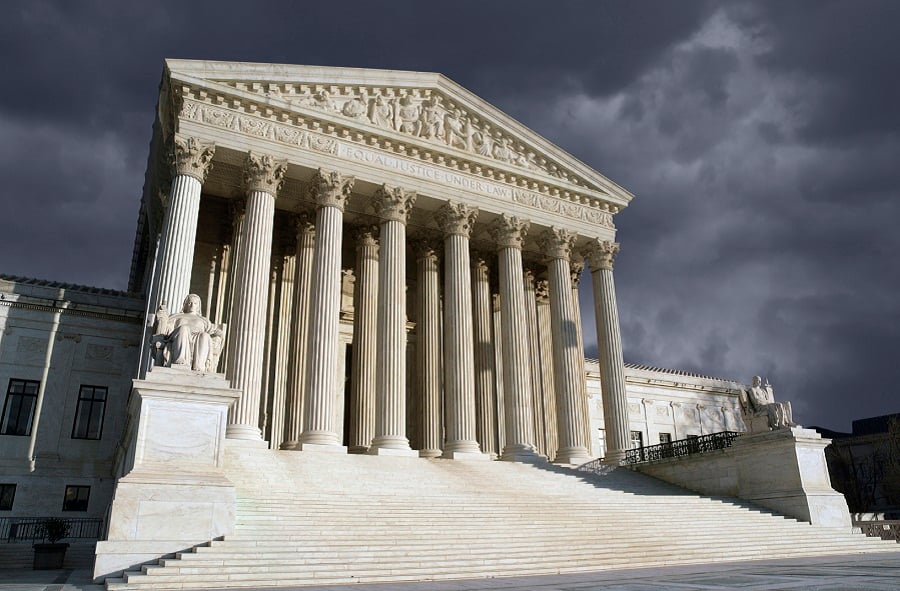
The Supreme Court tossed out President Joe Biden’s plan to slash the student debt of more than 40 million people, rejecting one of his signature initiatives as exceeding his power.
The justices, voting 6-3 along ideological lines, sided with six Republican-led states that sued to challenge the program, which by one estimate would have cost $400 billion over 30 years.
Writing for the court, Chief Justice John Roberts said the administration was “seizing the power of the legislature” by trying to cancel more than $400 billion of student debt.
Biden is likely to face renewed pressure from lawmakers and advocates of loan relief to find an alternative way to cancel debt, possibly using a different legal rationale. For now, the high court ruling strips him of an accomplishment as he looks toward his reelection bid next year.
Student loan payments are set to resume in late August after a three-year pause. Millions of people could fall behind on their debt.
The three liberals said the court should have concluded the states lacked the legal right to challenge the loan relief. “In every respect, the court today exceeds its proper, limited role in our nation’s governance,” Justice Elena Kagan wrote for the dissenters.
The conservative-dominated Supreme Court has thwarted Biden’s agenda on multiple occasions. The court stopped Biden from blocking evictions during the pandemic and requiring workers to get Covid vaccines or regular tests. The justices have also slashed the Environmental Protection Agency’s power to address climate change and protect wetlands.
Biden’s plan would have forgiven as much as $20,000 in federal loans for certain borrowers making less than $125,000 per year, $250,000 for households.
The administration contended the student-loan program was authorized by a 2003 law that gives the education secretary special powers when responding to national emergencies. The law, known as the Heroes Act, says the secretary can “waive or modify” provisions to ensure that debtors “are not placed in a worse position financially” because of a national emergency.
The case is Biden v. Nebraska, 22-506.
[More: Sharing the student debt load]

Cullen marks the fourth firm the New York-based RIA aggregator has bought in 2026 as deal volume heads for a record year.

The quality of AI ROI measurement depends on pre-deployment decisions around business outcomes, leadership alignment, and establishing trusted information, among other factors.

A state-by-state analysis of retail investor behavior reveals AI-powered research tools are reshaping how clients approach investment decisions.

LPL picks up $1.1B from Wells Fargo's independent channel as the wirehouse gains a $410M family team from UBS.

Most Americans want to age at home but few have a financial plan to pay for it, according to new research.
Knighthead Life entered the market with a competitive MYGA. A strong launch earned advisor confidence and paved the way for FIAs.
As AI makes financial information more accessible than ever, Lana Hock explains why human judgment, trust, and empathy remain the qualities clients value most in a financial advisor

