
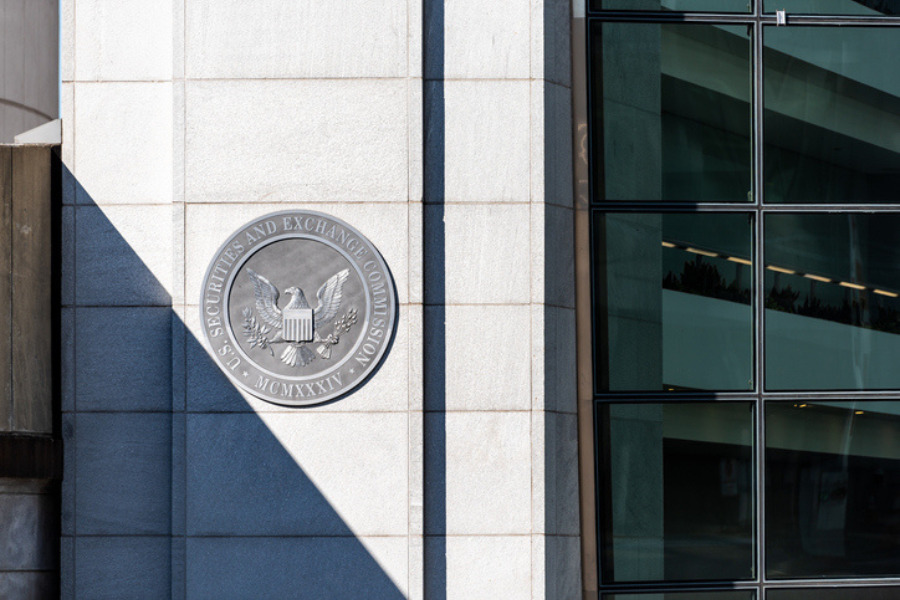
Employees at the SEC are growing increasingly anxious about potential job cuts as the Trump administration moves forward with efforts to shrink the federal workforce.
Amid a broader effort ostensibly aimed at government efficiency, the Securities and Exchange Commission have been asked to provide lists of employees still within their probationary periods, which would make them easier to lay off.
The SEC, which employs roughly 5,000 people overseeing the $110 trillion US capital markets, has not disclosed how many of its staff fall into this category. A February 5 memo from the SEC’s Office of Human Resources offers a sliver of clarity, according to Reuters, which reported attorneys in trial periods do not need to be included in these lists.
The memo also reminded employees of a resignation program introduced by the Office of Personnel Management, which offers certain staff the option to resign voluntarily in exchange for continued pay through September. Initially set to expire on February 6, the program has been temporarily halted by a federal judge, with a hearing scheduled for Monday.
The uncertainty surrounding potential job cuts has unsettled SEC employees. Multiple staff members who attended a town hall meeting held on January 29 – a day after the Office of Personnel Management's memo "Fork in the Road" set off shockwaves across the federal bureaucracy – said acting SEC chair Mark Uyeda did not address the issue, instead primarily discussing his own career path.
Speaking to Reuters, one SEC official described the remarks as “tone deaf,” given the widespread concerns among employees about their future at the agency and policy shifts under the Trump administration. Another acknowledged that while Uyeda did not sugarcoat his comments, he refrained from making statements that could be viewed as inflammatory.
Beyond staffing concerns, changes to the SEC’s operations are already in motion. Several current and former SEC officials highlighted moves by the administration to centralize decision-making among Republican commissioners and relax enforcement efforts in the cryptocurrency sector in favor of more formal regulation.
Daniel Taylor, a professor at the University of Pennsylvania’s Wharton School who specializes in corporate disclosures and insider trading, noted that while some aspects of government agencies may be inefficient, abrupt staffing changes could be counterproductive.
“Everyone agrees these agencies are large, bureaucratic, inefficient, and there is much to be desired,” Taylor told Reuters. “But you don’t improve the agency by threatening its workforce, having mass layoffs, and making changes without explaining them.”
Many market observers are awaiting the arrival of Paul Atkins, President Donald Trump's nominee for SEC chair, to better understand the agency’s future direction. Based on an AI-driven analysis of Atkins' previous statements including speeches, articles, and congressional testimonies, compliance consultancy firm Iron Road Partners said the former SEC commissioner is likely to adopt a friendlier stance for businesses and industry representatives.
"An Atkins Commission would likely take a less supportive stance on certain enforcement cases and adopt a more skeptical view of imposing penalties, especially for publicly traded companies," the firm told clients in a December note. "As a result, enforcement activity, particularly in the institutional sector, would probably decrease, and cases that do proceed may receive less public attention."
Jill Fisch, a professor of business law at the University of Pennsylvania, said Atkins will likely want to support the US economy by protecting capital markets.
"I don't see Paul Atkins as wanting to destroy that," Fisch told Reuters, adding that he will "have a real problem" with that agenda "if there's some sort of massive [move] pushing" staff out of the SEC.

Meanwhile, DPL Financial Partners adds two annuity executives and Prime Capital Financial hires a Mid-Atlantic retirement plan consultant

Andrew Komarow pleaded guilty Thursday in federal court in Hartford to defrauding three financial services companies of close to $3.3 million.

Elsewhere, Cetera picks up a $210 million Connecticut team from MML, while Wells Fargo FiNet adds a San Diego family practice from LPL

Celebrity endorsements, $500M in claimed assets, and a state regulator stepping in.

“We needed to become a more agile and efficient organization,” said American Express CEO Stephen Squeri.
Knighthead Life entered the market with a competitive MYGA. A strong launch earned advisor confidence and paved the way for FIAs.
As AI makes financial information more accessible than ever, Lana Hock explains why human judgment, trust, and empathy remain the qualities clients value most in a financial advisor

