
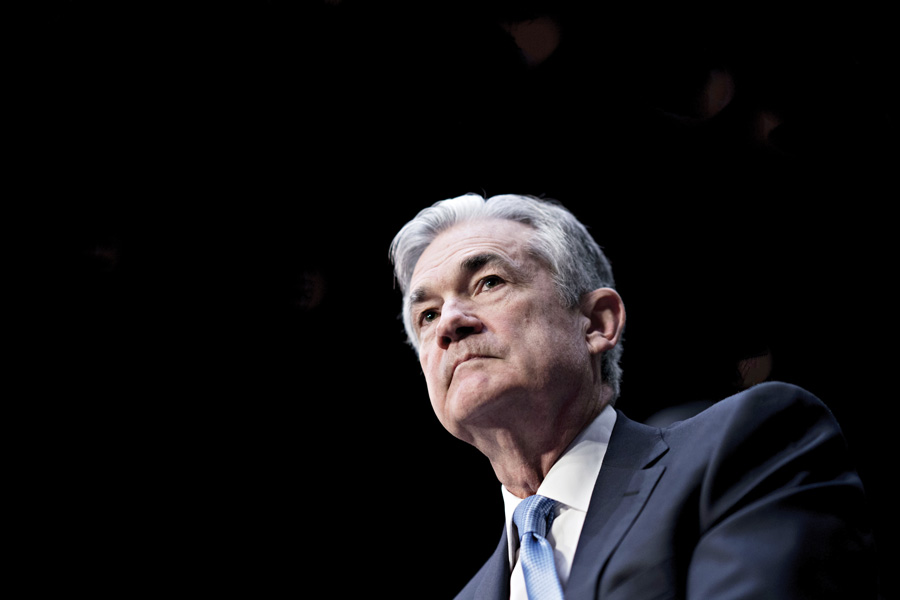
President Donald Trump on Wednesday again threatened to fire Federal Reserve chair Jerome Powell, saying he would remove him from the central bank not only if Powell remains as chair beyond May 15, but also if he continues serving as a Fed governor after his successor is confirmed – a move that would test the legal boundaries protecting Fed officials from presidential dismissal.
In a morning interview on Fox Business with host Maria Bartiromo, Trump was asked about the possibility of Powell remaining at the Fed after his term as chair expires on May 15.
"Then I'll have to fire him," Trump said, adding that he had previously restrained himself: "I've held back firing him. I've wanted to fire him, but I hate to be controversial."
The remarks underscore what has become a prolonged standoff between the White House and the central bank. Trump has been vocal about his desire for lower interest rates and has grown increasingly focused on a Department of Justice criminal investigation into the Fed's approximately $2.5 billion renovation of its Washington, DC, headquarters – a project Trump has described as incompetent, wasteful, and potentially corrupt.
Powell, for his part, has drawn a clear line. He said last month that he has "no intention of leaving the Board until the investigation is well and truly over with transparency and finality." The Fed has attributed cost overruns on the renovation project to unforeseen structural issues, including asbestos, soil contamination, and a higher-than-expected water table.
The legal picture complicating Trump's threat is significant for financial advisors and their clients watching the central bank's future. Fed officials are protected under a federal statute that limits the grounds for their removal. The Supreme Court is currently weighing the scope of that statute in a separate but related case stemming from Trump's earlier attempt to remove another Fed official, Governor Lisa Cook.
Powell's term as chair expires May 15, but his term as a member of the Fed's board of governors runs through January 2028. He has not said publicly whether he intends to remain as governor. It's not clear whether Trump understands that nuance, but his threat to remove Powell from the Fed appears to extend to the scenario of Powell staying on as governor, according to reporting by CNBC.
Under Fed regulations, if Powell's nominated successor – former Fed governor Kevin Warsh – has not yet been confirmed by the Senate by that date, Powell could continue serving as chair on a pro tempore basis. Powell himself acknowledged this at a press briefing in March, noting that "the law calls for" that arrangement and that it had occurred "on several occasions" in the past.
The Senate Banking Committee has scheduled a confirmation hearing for Warsh on April 21. But Sen. Thom Tillis of North Carolina, a Republican on the committee, has said he will not vote to advance Warsh's nomination until the DOJ investigation into Powell has concluded. That probe, led by US Attorney for the District of Columbia Jeanine Pirro, recently hit a legal snag when a judge rejected her attempt to subpoena Powell over the renovation — a decision Pirro said she would appeal.
Sen. Tim Scott of South Carolina, the chairman of the Senate Banking Committee, projected optimism on Tuesday that the situation would resolve itself, suggesting in a separate Fox Business interview that the investigation could conclude within weeks. When pressed on the basis for that timeline, however, Scott acknowledged he had none.
The confirmation delay creates a potential bottleneck that could leave the Fed's leadership in limbo at a critical juncture for monetary policy. Trump said Wednesday he was hopeful Tillis would vote to advance Warsh's nomination, saying the senator "is an American; he knows what to do" – but acknowledged the probe could yet stall the process. He added that he remains committed to seeing the investigation through, regardless of the consequences for the timeline.

Retiring RIA seller David Laidlaw alleges the Carnegie valued his stake on $11.7 million EBITA while pitching potential buyers on $21.3 million.

New tool gives RIAs and family offices AI help vetting private market deals, with some users reportedly halving review time.

Investors got projected returns dressed up as real ones, SEC says

Parents must still act to get the $1,000 federal seed and employer contributions, giving financial advisors a role in the rollout.

FINRA booted Rudy Anguiano from the industry for “conversion - the intentional and unauthorized taking of another person’s property.”
As AI makes financial information more accessible than ever, Lana Hock explains why human judgment, trust, and empathy remain the qualities clients value most in a financial advisor
Northern Trust’s Ken Lassner shows advisors how to convert volatility into after-tax portfolio gains

