
Wealth managers and financial advisors are calculating how their wealthy clients could be impacted by President Donald Trump’s proposed One Big Beautiful Bill Act, which the nonpartisan Congressional Budget Office estimates will drive $3.75 trillion in tax cuts but add $2.4 trillion over 10 years to the national debt, should the bill get enacted.
The tax cuts would be partially offset by reduced federal spending on Medicaid and food assistance, such as the Supplemental Nutrition Assistance Program (SNAP), expected to be reduced by $230 billion over 10 years.
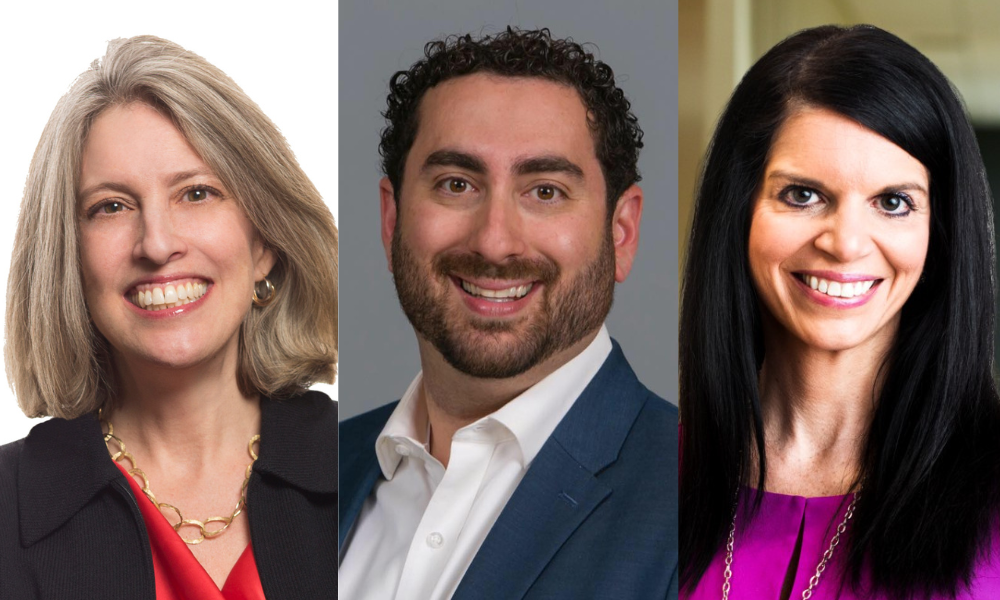
“Given the proposed cuts in Medicaid and SNAP, we believe it will hurt lower income consumers disproportionately,” Ellen Hazen, chief market strategist and portfolio manager at F.L.Putnam, told InvestmentNews. “We are making sure to pivot away from any companies who are disproportionately exposed to the lower-end consumer, because their income will be hit by 1.5% to 2% as proposed. To the extent that we own any consumer related names, we want to focus on those that are serving the middle and higher end of the income distribution, rather than the lower end.”
Massachusetts-based F.L.Putnam is an RIA with more than $8 billion in assets under management. Hazen mentioned Costco (NASDAQ: COST) as a consumer brand that would likely be immune to impacts from proposed cuts to SNAP. London-headquartered investment firm J Stern & Co has listed French beauty brand L’Oréal, Swiss chemicals manufacturer SIKA, Abbott Laboratories, and Nvidia as all being resilient investments to tariffs.
Hazen added that F.L.Putnam expects to lower fixed income allocations in a higher interest rate environment that would be anticipated as a result of the One Big Beautiful Bill Act being passed, which was a point of view also shared by Emily Shacklett, a practice group leader and wealth advisor at Ohio-based Fairport Wealth.
“It is expected to increase the national debt. It is potentially going to create some interest rate type concerns, and so it could on a long term basis impact investors with government debt or bond investing. I think there are interest rate sensitive sectors of the market that could be impacted, like REITs,” said Shacklett, whose firm is owned by RIA aggregator Hightower.
Shacklett, a CPA, says clients with a net worth of $5 to $20 million are her average base at Fairport Wealth. From a tax planning perspective, Trump’s One Big Beautiful Bill Act is largely seen as an extension of his Tax Cuts and Jobs Act signed in 2017, and making many of those provisions permanent while proposing ending taxes on tips and overtime.
“There's not a lot of big changes or planning that people are doing now. We were actually talking with people back before the election,” said Shacklett. “This bill is just making these things permanent, and so we're kind of settling into this comfort of we're going to continue in this current tax regime that we've been used to.”
Bill Connor, partner at New Jersey-based RIA Sax Wealth Advisors, expects One Big Beautiful Bill would have a positive impact on corporate M&A. “The fact that you know what the rules of the road are, it removes uncertainty,” he said. “It just makes your job easier, and you know that is likely to lead to a better environment for IPOs and other types of corporate activity.”
Trump’s proposed legislation would increase the estate tax exemption to $15 million for single people and $30 million for couples in 2026. Gabriel Shahin, founder of California-based RIA Falcon Wealth Planning, criticizes the economics of the estate planning exemption despite his clients standing to benefit from the clause, which doubled in 2017 TCJA.
“This is something that is a very big part of our revenue, estate tax is 40%. We've had clients that come to us saying, I have this $20 million estate tax for my parents inheritance, is there any way around it,” said Shahin. “It’s unnecessary, America loses. Literally the only people that win are 1% of the people that have $30 million liquid. That generates a lot of tax revenue, just disappointing [the loss of estate taxes].”

Meanwhile, a deal in the Midwest gives NorthRock Partners a new office in Wisconsin, while two teams join OnePoint BFG in Georgia and Atlanta.

These challenges are “changing the economics we see retirement savers face,” said Christopher Ceder of Goldman Sachs Asset Management

Richardson firm joins as Kestra builds out its platform with new leadership, technology, and expanded planning tools.

Retiring RIA seller David Laidlaw alleges the Carnegie valued his stake on $11.7 million EBITA while pitching potential buyers on $21.3 million.

New tool gives RIAs and family offices AI help vetting private market deals, with some users reportedly halving review time.
As AI makes financial information more accessible than ever, Lana Hock explains why human judgment, trust, and empathy remain the qualities clients value most in a financial advisor
Northern Trust’s Ken Lassner shows advisors how to convert volatility into after-tax portfolio gains

