
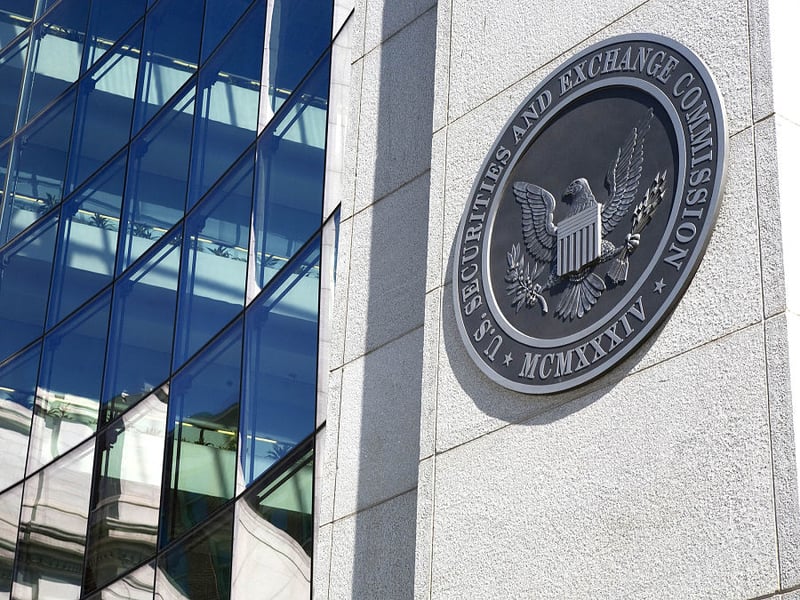
A long-standing fight over who should pay for an expansive market-surveillance system intensified Wednesday as the Securities and Exchange Commission stuck brokers with most of the bill.
The plan, approved by three of the five commissioners, faces stiff opposition from industry trade groups and heavyweight players like Citadel Securities and Virtu Financial Inc. Banks and others that act as brokers or asset managers have complained that they will face the bulk of the fees.
The system, known as the Consolidated Audit Trail, or CAT, is designed to track billions of daily equities and options trades a day. It’s intended to help the SEC catch manipulators and diagnose the causes of market turmoil. It has been billed, in part, as a response to the infamous May 2010 flash crash, one of the worst routs in stock market history.
Fees will vary depending on whether they’re assessed on equities, options or over-the-counter equities. They’re based on share volumes, though some industry groups have said a percentage of notional value would be a fairer way to assess the fees. The measure replaces an earlier method of calculating fees based on market share.
SEC Chair Gary Gensler said the new fee plan is the result of years of work by exchanges and is “based upon significant engagement with market participants and the public.”
The SEC initially approved the creation of the database in 2012, but implementation was delayed by the pandemic as well squabbles among exchanges, banks and brokerages over security, infrastructure, funding and other issues.
The contours of the system were primarily drafted by exchange operators, including the New York Stock Exchange and Nasdaq Inc., that will also pay fees. The Financial Industry Regulatory Authority Inc. also provided input.
The Securities Industry and Financial Markets Association, the trade group representing brokers, filed new comments on Tuesday asking the regulator to essentially delay Wednesday’s vote until asset managers get clarity on how the fees, likely to be passed along to retail and other traders, will affect investment returns.
Sifma also flagged the new system’s mounting tab — estimated at $500 million at the end of last year — as another cause for concern and called for an independent party to review the database’s costs.
On Wednesday, Sifma and the American Securities Association fired back at the SEC’s approval.
In an emailed statement, ASA President and Chief Executive Chris Iacovella called the fees “a tax on American investors” and said the association views the system as an “unconstitutional collection” of investors’ personal and financial data. Sifma said the measure was an “unfair allocation of CAT costs” on brokers.
Hester Peirce, one of the SEC’s two Republican commissioners, said the agency had failed “to grapple with the need to establish a realistic constraint on CAT costs.”
Brokers are already doing much of the required trade reporting but haven’t been paying the fees needed to launch the database. Exchanges have been footing the bill for the audit-trail system so far.

Launch of Direct AI follows a model portfolio tie-up with Envestnet as advisors juggle AI adoption and private-market due diligence.

Meanwhile, Cetera's streak of Commonwealth recruitment continues in Washington, and an LPL advisor hops over to Raymond James in Maine.

The Sussex County wealth firm, built around business-owner clients, extends the California-based aggregator's footprint in the East Coast.

The Kestra-owned RIA acquirer merges the planning firm into KDI Wealth Management, creating a majority woman-led advisor team

Eight in 10 pre-retirees say the US retirement system wasn't built for them and most still haven't planned how to make their money last.
Knighthead Life entered the market with a competitive MYGA. A strong launch earned advisor confidence and paved the way for FIAs.
As AI makes financial information more accessible than ever, Lana Hock explains why human judgment, trust, and empathy remain the qualities clients value most in a financial advisor

