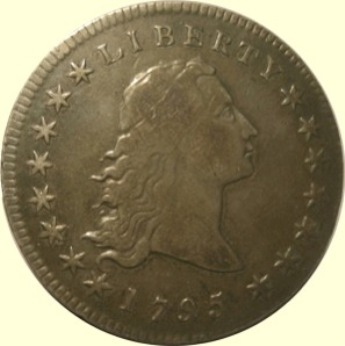
This morning, Joe Weisenthal and I took our message in favor of minting a trillion-dollar platinum coin to "Bloomberg Surveillance," where we were met with the usual shock and horror from hosts Tom Keene and Sara Eisen. Platinum coin opponents are so distressed that one, Republican Representative Greg Walden, has said he will introduce legislation to ban the coin, citing my post from last week as a dangerous instigation.
Walden, Keene and Eisen are all wrong. Here are my responses to the most common objections we are getting to the platinum coin proposal, in increasing order of persuasiveness:
1. "That's silly/zany/juvenile!" This is probably true, but it's not a dispositive objection. Republican intransigence over the debt ceiling is juvenile. There is no particular reason that the president should not use a juvenile strategy in response.
The key question to ask about the platinum coin is not "is it juvenile?" but "will it work?" Minting the coin will allow the federal government to continue to meet its spending obligations despite hitting the debt ceiling. It will allow President Barack Obama to pressure Congress to repeal the debt ceiling. That -- not whether it seems silly -- is the important thing.
2. "Where will we get all the platinum?" I'm honestly surprised by this question, but I'm hearing it a lot, including from the Guardian's Heidi Moore and from Keene this morning.
To be clear: We do not need a trillion dollars' worth of platinum to make the trillion-dollar coin -- less than an ounce will do. This is not a move to a "platinum standard," and it shouldn't even have any impact on the markets in platinum. There will be no need for dump trucks full of precious metal to head toward the mint.
3. "But that will be inflationary!" This is a more serious objection, and it gets at what the platinum coin strategy really is -- financing the federal government's operations by printing money instead of borrowing it. The trillion- dollar coin will never circulate, but it will be used to back cash payments coming from the Treasury that would have otherwise been financed by bond purchases.
If the government financed itself this way in general, that would absolutely be inflationary. But the president can hold inflation expectations steady by making absolutely clear that the policy will not lead to a net change in the money supply over the long term. Obama should pledge that once Congress authorizes additional borrowing, he will direct the Treasury to issue bonds to cover the government's coin-backed spending and then to melt the coin.
The concern about inflation actually gets at why the platinum coin strategy will work to defuse the debt-ceiling crisis. Minting a platinum coin will demonstrate that Congress accidentally gave the president direct control over monetary policy, allowing him to inflate if he wishes. The need to neutralize that threat will motivate Republicans to raise the debt ceiling.
Like the debt ceiling itself, the platinum coin exercise is an asymmetrical, negative-sum game. Nobody wants to hit the debt ceiling, but it bothers conservatives less because they view increasing government dysfunction as useful for achieving their policy goals. Nobody wants the president to pay the government's bills by printing money, but it bothers conservatives more because they are more afraid of inflation.
If the president is clear about his lack of any long-term intention to interfere with the money supply, I don't expect the platinum coin to cause a spike in prices. But if it does, that will only add more motivation for Congress to end the crisis by passing a law that both removes the president's authority to print money and abolishes the debt ceiling.
4. "This will undermine confidence in the U.S. government/dollar/central bank." Well, it's all relative. The best solution, from a confidence perspective, would be for Congress to simply repeal the debt limit, or at least increase it without conditions, thus eliminating this manufactured "crisis" and any need for a trillion-dollar coin.
That's what Matt Cooper calls for, but it's not going to happen. Remember, the Republican conference is a bunch of babies.
Instead, we need to compare the platinum coin option against others on the table. For example, we could hit the debt ceiling and the government could start leaving about 40 percent of its bills unpaid.
The president could accede to Republican demands for near-term spending cuts (of an as-yet-unspecified nature) in addition to the amounts from the Budget Control Act sequesters, which would cause another
recession.
Or he could assert authority under the 14th Amendment to continue issuing debt, notwithstanding the debt ceiling, which would lead to court battles and probably impeachment. (The 14th Amendment play sounds less "silly" than the platinum coin, but it's actually on much shakier legal ground.)
Minting the platinum coin would be less economically damaging than any of the above options, which is why Obama should announce he will pursue it if the debt ceiling is not raised. Hopefully, inflation hawks will be so alarmed by the president's intention to use his direct monetary authority that they will choose to cut a deal and we'll never actually get to the minting stage.
But if Republicans call Obama's bluff, he should be ready to mint that coin - - and to save the economy by doing so.
--Bloomberg News--
(Josh Barro is lead writer for the Ticker. The views expressed are his own)