
A Missouri woman was sentenced Thursday to nine years in federal prison for a grain fraud scheme that bilked 179 farmers out of a combined $27.4 million and earned her the nickname the "Madoff of the Midwest."
Finding accusations "speculative and flimsy," a judge has dismissed civil securities fraud charges against a New York brokerage firm and its executives that resulted from a probe into Bernard Madoff's epic fraud.
Two plaintiffs claimed that brokerages were misled about NASD's merger with the NYSE's regulatory unit. Apparently, Judge Jed Rakoff wasn't moved by their arguments.
The Financial Industry Regulatory Authority Inc. has a tough task ahead of it in searching for the right person to replace Robert Errico in running its member regulation division.
Head of member regulation will be leaving the financial industry watchdog at the end of March.
Last week, Securities America Inc. was tagged with a lawsuit from Massachusetts regulators alleging that the firm misled investors who were sold high-risk private placements.
<i>The following is an excerpt of commentary from Peter Schiff, president of Euro Pacific Capital and author of tCrash Proof 2.0 regarding, President Obama's announcement today about the regulation of banks.</I>
Legislation that would require that all fees be disclosed to 401(k) plan participants in simplified form is needed, most of the panelists at a hearing on the legislation today testified.
Delaware attorneys have drafted a bill to address the lack of a federal estate tax, joining a slew of states taking this matter into their own hands.
Faced with the prospect of gaining jurisdiction over 4,200 registered investment advisory firms, state regulators are scrambling to make sure they have the resources to handle a handoff.
State securities regulators are gaining ground in their battle to regain authority to oversee private-placement offerings.
SEC Chairman Mary Schapiro's comments on Thursday that all financial advisers who provide personalized advice should come under “meaningful” fiduciary standards has drawn heat from a group representing state securities regulators.

State securities regulators are pushing to get House support for legislation allowing states to have greater oversight over private-placement offerings.
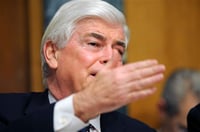
Bankers. Business groups. Consumer advocates. They all lined up to bash the Conn. Senator's latest proposal for financial reform.
Sen. Tim Johnson, D-S.D., is circulating legislative language that would delete a requirement that brokers acting as advisers be registered investment advisers.
Senate Banking Committee Chairman Christopher Dodd, D-Conn., said today he will work with Sen. Bob Corker, R-Tenn., a member of the Banking Committee, to write a new draft of the financial-services reform legislation the committee has been considering.
President Barack Obama is going to the heart of Wall Street on the first anniversary of Lehman Brothers' collapse to outline changes needed to prevent a future crisis like the one that sent the global economy into a tailspin last year.
The Labor Dept. is readying a proposal that would force service providers to make more plan info available. Meanwhile, a House committee is said to be unveiling similar legislation this week
The Senate Special Committee on Aging is considering proposing legislation that would require all managers of qualified default investment alternatives to act as fiduciaries under ERISA.
