
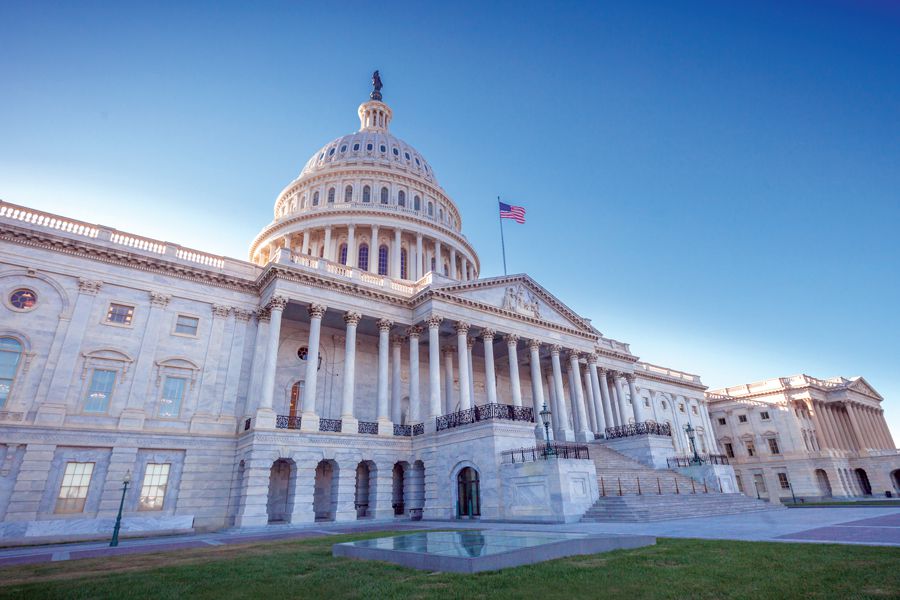
Republicans in the House and Senate are seeking to overturn the Department of Labor’s ESG rule for retirement plans, after announcing plans on Wednesday to file joint bills that would invalidate it.
That effort is likely more about showing support for an anti-ESG agenda than an expectation of defeating the Department of Labor’s new rule. Although Republicans have a majority in the House, they have a thin minority in the Senate, making the bills likely to pass in both sides of Congress. And if the legislation did gain enough support to pass Congress, President Biden would all but certainly veto it, given his direction for the DOL to draft the rule, which supersedes a Trump-era legislation that was never enforced.
The Senators introducing their bill cast the DOL’s rule as “politiciz[ing] millions of Americans’ retirement investments to favor Biden’s ideological preferences rather than getting the best returns for Americans,” according to an announcement of the legislation.
The rule, which took effect this week, was finalized by the DOL late last year. It does not require retirement plan fiduciaries to consider ESG factors in choosing investments, but it allows them to. That differs from a rule passed in the final days of the Trump administration that was considered to have a chilling effect on the use of ESG data in retirement plans, and that rule specifically barred default investment options such as target-date funds from using ESG factors.
The legislation announcement comes days after Republican leaders in 25 states filed a federal lawsuit against the DOL over the ESG rule. Prominent lawyers specializing in employee benefits, including a former head of the Employee Benefits Security Administration, have said the DOL’s rule will likely withstand legal challenges, given the agency’s tempered stance in crafting it.
Nonetheless, the forthcoming bills in both sides of Congress hint at a direction that conservatives would likely go in 2025, if the next presidential administration is Republican.
The legislation is supported by every Republican in the Senate, along with Democrat Sen. Joe Manchin of West Virginia, who has supported fossil fuel interests in his state.
Meanwhile, congressional Democrats have started a response to the anti-ESG push by Republicans. Last week, a group of seven Democrats launched the Sustainable Investment Caucus, which will seek to counter “distortion of facts” around sustainable and responsible investing.
This story was originally published on ESG Clarity.

Morgan Stanley sought to claw back recruiting bonus money from Darryl Cohen.

Referrals from centers of influence may open the door, but the real key to success for advisors comes from clarity about their ideal clients and where they want to show up.

Three advisor groups overseeing more than $700M in combined client assets head to new firms.

New research finds most Americans fear a US retirement crisis, while skepticism grows toward AI financial advice and crypto in retirement plans.

Getting a client into a fund has never been easier – but after that, the hardest part is yet to come.
Northern Trust’s Ken Lassner shows advisors how to convert volatility into after-tax portfolio gains
Dan Biagini of American Equity says the steady decline of pensions, longer lifespans and a reset in interest rates are rewriting how advisors build retirement income

