
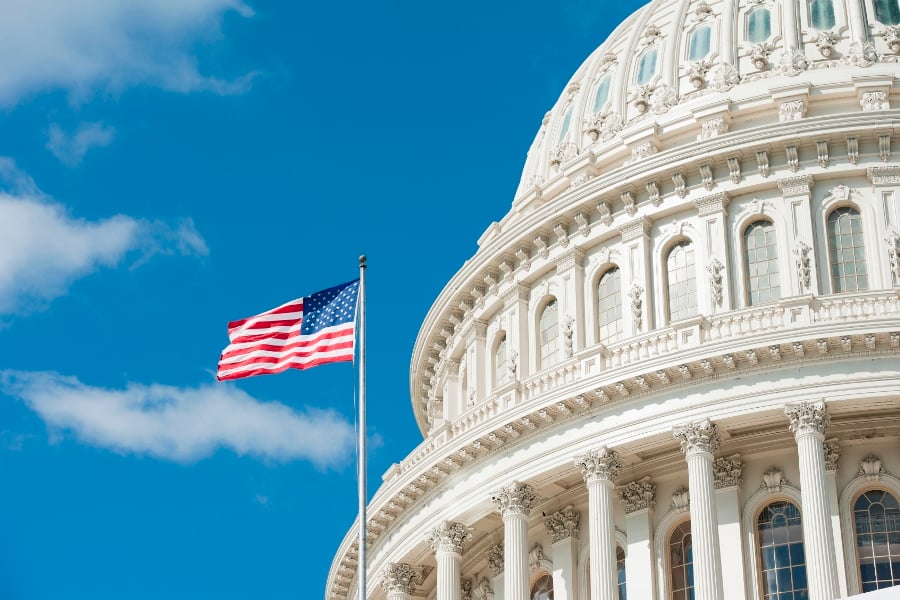
The House will vote next week on a Republican resolution to overturn a Department of Labor ESG rule for retirement plans, while Democratic lawmakers recently introduced legislation to protect the regulation. Neither effort is likely to overcome Capitol Hill gridlock.
In November, the DOL promulgated a regulation that allows plan fiduciaries to consider environmental, social and governance factors when selecting investments. The measure replaced a Trump administration rule that critics said would have had a chilling effect on the use of ESG in retirement accounts.
Republican lawmakers earlier this month introduced legislation under the Congressional Review Act to kill the rule, arguing that it advances climate-related political goals to the detriment of retirement savings. In addition, GOP leaders in 25 states have filed a lawsuit against the Biden DOL ESG rule.
In response, Democrats moved to codify the Biden rule through the Freedom to Invest in a Sustainable Future Act. Sen. Tina Smith, D-Minn., wrote the Senate version, while the House companion bill was introduced by Reps. Suzan DelBene, D-Wash., Sean Casten, D-Ill., Juan Vargas, D-Calif., and other members of the Congressional Sustainable Investment Caucus.
The Democrats said the bill is required to address the shifting legal environment around ESG investing that's influenced by whichever party controls the White House and Congress.
“The [legislation] would eliminate this uncertainty, providing retirement plans the freedom to decide whether to include ESG issues in their investment decisions or to provide ESG investment options to plan participants,” the caucus said in a statement.
The challenge for the Republican resolution and the Democratic bill is that neither party has enough political strengthen to get them over the legislative finish line and signed into law. Republicans hold a slim majority in the House; Democrats control the Senate by two seats. President Joe Biden waits in the White House with a veto pen in hand if Republican legislation he doesn’t like somehow gets through Congress.
“There are some political realities on Capitol Hill,” said Bryan McGannon, managing director of U.S. SIF The Forum for Sustainable and Responsible Investment. “Not a lot of legislation will get done.”
Nonetheless, the Senate vote on the CRA resolution to strike down the DOL ESG rule likely will be close because Sen. Joe Manchin of West Virginia is poised to vote for it. But even with his support, the Senate would deadlock 50-50, assuming all other Democrats oppose the legislation. Vice President Kamala Harris would cast the tie-breaking vote against the resolution. A CRA measure is not subject to filibuster rules.
The Democratic legislation to bolster the DOL ESG rule would have obtain 60 votes to overcome a filibuster, creating a big obstacle to its advancing out of the Senate. If it gets through that gauntlet, it has almost no hope of getting a House vote in a chamber controlled by Republicans.
If bipartisan Senate approval can be achieved, the bill could be attached to other must-pass legislation later in the congressional session, McGannon said. That’s also a long shot.
Still, getting the bill through the Senate would lay down a marker for the next Congress, which could have a different political makeup after the 2024 elections.
“You have a track record built, and the legislation potentially could move in the new Congress,” McGannon said.
If the GOP is successful in getting the resolution to kill the DOL ESG rule through Congress, it would lay the groundwork for redoing retirement savings regulations if the 2024 vote puts the party in power on Capitol Hill and in the White House.
For now, it doesn’t look as if the DOL ESG rule will be scuttled or fortified by congressional action. But uncertainty could return in a couple of years.

New survey data show record contributions and investing gains, even as employer education on retirement use stays limited

Phoenix-based Brookwood Investment Group taps the AI-native wealthtech firm as its advisor count and AUM keep climbing

To achieve contentment, advisors should think twice before selling their firms for the biggest dollar amount.

San Diego broker-dealer giant picks up California-based Sierra Ridge and its roughly 40 advisors, who had been affiliated with LPL for just over a year.

Advisors chase asset transfer, but the next generation decides whether the relationship survives it too
Northern Trust’s Ken Lassner shows advisors how to convert volatility into after-tax portfolio gains
Dan Biagini of American Equity says the steady decline of pensions, longer lifespans and a reset in interest rates are rewriting how advisors build retirement income

