
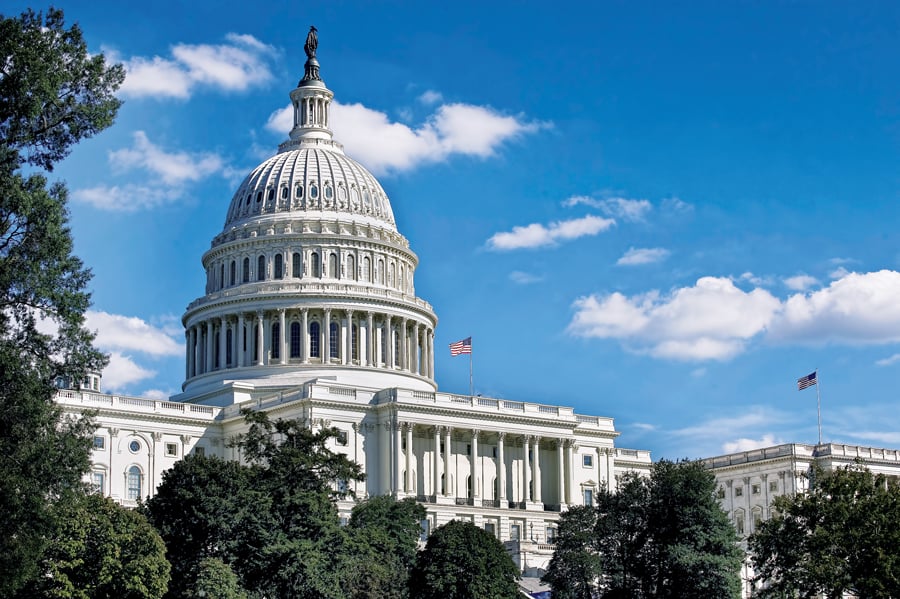
The House of Representatives passed the Retire Through Ownership Act by a 401-14 vote on Wednesday, sending long-sought valuation standards for employee stock ownership plans to President Trump's desk.
The bill, which cleared the Senate unanimously in October last year, seeks to give ESOP fiduciaries a defined process for determining what privately held company stock is worth – a question that has generated litigation and uncertainty for decades.
For financial advisors who work with business owners weighing an exit, the legislation would remove a structural obstacle that has made some hesitant to pursue ESOPs as a retirement and succession tool in the first place.
According to the ESOP Association, the Department of Labor has never issued a formal rule defining "adequate consideration" for privately held ESOP stock, even though the concept sits at the center of ERISA's fiduciary duties. That's created confusion among many fiduciaries handling such plans.
Under the new law, an ESOP fiduciary may rely in good faith on a valuation prepared by an independent professional appraiser who applies the methodology laid out in IRS Revenue Ruling 59-60, a longstanding framework for valuing closely held businesses.
"At its core, the Retire Through Ownership Act is about protecting employee owners and their retirement security," said James Bonham, president and CEO of the ESOP Association, in a statement announcing the vote.
ESOPs remain a niche but important corner of the succession-planning conversation for American entrepreneurs. Roughly 18% of US employees – about 25 million workers – hold some form of ownership stake in their employer, and roughly 11 million of them participate in a formal ESOP today, according to an Aspen Institute research brief citing 2022 survey data.
ESOPs have also emerged as a succession vehicle inside the advisory industry itself. Berger Financial Group has used an ESOP to remain roughly 35% employee-owned following an outside investment, an approach that mirrors how employee stock ownership becomes a succession plan for RIAs navigating founder transitions.
Other firms have pursued employee ownership through different structures. Creative Planning has opened direct equity stakes to about 10% of its workforce, and Edelman Financial Engines recently granted equity to more than 360 planners. As of last year, Mercer boasted an employee ownership rate of more than 50%.
“You have employees that are acting like owners because they are," CEO Dave Mercer told InvestmentNews at the time.
For RIA principals specifically, an ESOP functions as both a succession mechanism and a tax-advantaged transaction structure. As noted by national accounting and consulting firm Wipfli, sellers can potentially defer capital gains under Section 1042 of the Internal Revenue Code by reinvesting proceeds into qualifying replacement securities, while S-corporation firms can shield the ESOP-owned portion of the business from federal income tax.
"By providing employees with a direct stake in the company’s success, ESOPs can serve as a powerful retention tool," wrote Dan Pastron, a partner in Wipfli’s tax and small business services groups. "This ownership mentality can be particularly valuable in an industry where personal relationships are paramount."
Traditionally, the tradeoff to that move has been complexity. Firms that use ESOPs take on repurchase obligations to buy back departing employees' shares, and valuations – already tricky for advisory practices built on intangible client relationships – must be refreshed annually by an outside appraiser.
"The initial setup and ongoing administration of an ESOP can be expensive, potentially making it less suitable for smaller firms," Pastron noted.

The breakaway-focused platform's senior hires from Wells Fargo, Bluespring and Hightower deepen its bench for growth and succession planning.

New leadership lines unify succession consulting, acquisitions and capital funding as advisor retirement wave nears.

More than 1,000 employees have signed a union-backed letter opposing the bank's new three-day office mandate.

The release addresses account-level suitability gaps, consolidates trade management, and extends single sign-on to the Addepar client portal.

T. Rowe Price's sixth annual study reveals how retirement advisors are embracing AI, private credit, and personalized plan design.
Northern Trust’s Ken Lassner shows advisors how to convert volatility into after-tax portfolio gains
Dan Biagini of American Equity says the steady decline of pensions, longer lifespans and a reset in interest rates are rewriting how advisors build retirement income

