

Wall Street pros are famously still at loggerheads over the fate of the trillion-dollar 60/40 complex — only this time the balanced investment strategy is posting losses on a scale that’s shocking even its biggest critics.
With stocks and Treasuries tumbling anew thanks to the Federal Reserve’s increasingly hawkish policy direction, the time-honored method of allocating 60% to equities and 40% to fixed income has plunged about 14% so far this quarter. That’s a worse quarterly showing than in depths of the global financial crisis and during the once-in-a-century pandemic rout, according to data compiled by Bloomberg.
It’s the latest sign that the hedging power of bonds continues to vanish in the inflation era, sparking wealth destruction across American pension funds.
God help those paid to figure out if the asset class will break out of its existential funk or founder. It’s an increasingly high-stakes bet on whether the world succumbs to yet-more inflation, a recession or even stagflation.
Goldman Sachs Group Inc., for its part, thinks Treasuries remain dead as a hedge as central bankers tighten policy big time. By contrast, the likes of JPMorgan Asset Management reckon yields at multiyear highs will help bonds deliver the goods in the next crash.
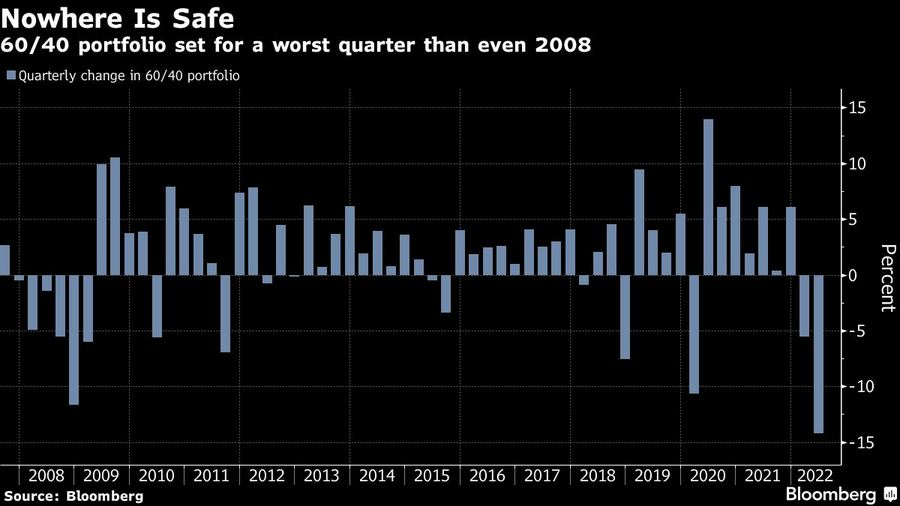
“During 2008-2009, the utter collapse of stocks was a brutal hit to performance,” Bespoke Investment Group analysts wrote in a note. “But despite an enormous surge in credit spreads, bonds didn’t drop very far or for very long.”
Over the past decade, the likes of pension funds invested on the conviction that bonds would reliably keep producing steady income to offset equity losses in any market downturn. It largely worked, with the 60/40 strategy only ending down in two of the past 15 years — all while posting modest volatility to boot. Even in the throes of the financial crisis, when stocks sapped performance, rallying Treasuries softened portfolio losses.
But this year, inflation has become a risk too big to hedge, hitting both bonds and equities together. The cross-asset sell-off intensified in the past week thanks to the biggest Fed interest-rate increase since 1994, with another jumbo hike in the offing. All that is hurting American pension funds to a degree that few saw possible even just weeks ago.
The good news is that a Bloomberg survey of economists suggests consumer price growth will slow to around 6.5% by the fourth quarter and to 3.5% by the middle of next year. Meanwhile JPMorgan Asset reckons government debt now looks enticing after staging one of the biggest plunges in history.
The thinking goes that with odds of a recession rising, yields have room to fall going forward. While that’s far from great news for risk assets like stocks, sovereign debt can help buffer portfolios in the next downturn.
“If people are worried about growth, then bonds, at current yield levels, are now becoming a much better diversifier,” said John Bilton, head of global multi-asset strategy at JPMorgan Asset Management. “When you stop worrying too much about inflation and go back to worrying a bit more about where growth lands, bonds are important for a portfolio.”
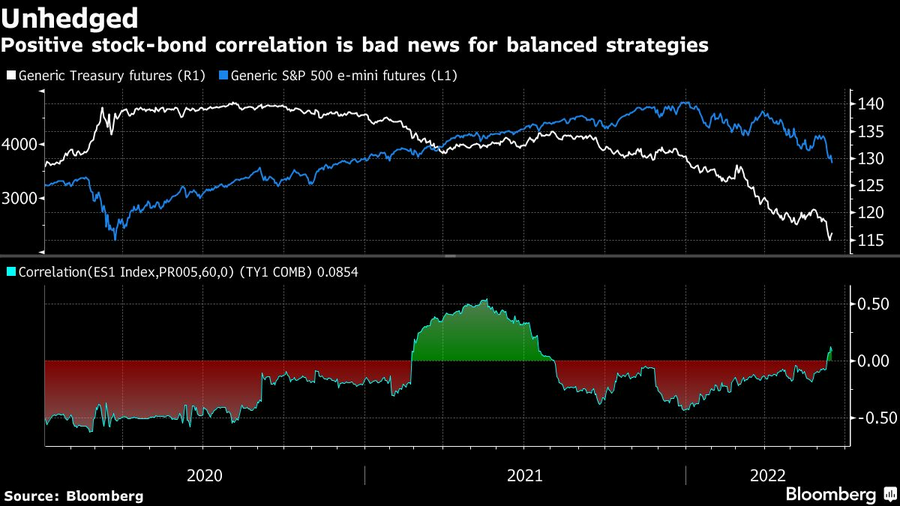
The alternative view is that, with Fed officials on a mission to tighten financial conditions, a case continues to build that 10-year yields will rise to 4% and beyond — suggesting Treasury holders risk nursing more pain from here.
“There is still potential for a bearish shock for Treasury yields,” said Christian Mueller-Glissmann, head of portfolio strategy and asset allocation at Goldman Sachs. “You need to come up with new ways to protect your portfolio and stop relying only on bonds.”
Among safe alternatives touted by Goldman are trades that go long the dollar and so-called option overlay strategies.
A third scenario raises an even more insidious threat for balanced portfolios: An economic downturn with stubborn inflation as the Fed proves powerless to moderate price pressures caused by the supply-side crisis.
“The supposedly all-weather 60/40 portfolio is not ready for stagflation,” said Nancy Davis, founder of Quadratic Capital Management.

A Nationwide survey finds 47% of GLP-1 users have never discussed the drugs’ financial impact with an advisor, even as many dip into savings.

The hundreds of millions of dollars from a sale of Inspired Healthcare properties does not mean an immediate windfall for investors.

Its SEC filings said one thing - a congressional probe said another.

Sham agreements allegedly padded revenue by 345%.

"Most pre-retirees are uncomfortable making key retirement income decisions without an advisor's help," said Chris Bailey of Cerulli.
Knighthead Life entered the market with a competitive MYGA. A strong launch earned advisor confidence and paved the way for FIAs.
As AI makes financial information more accessible than ever, Lana Hock explains why human judgment, trust, and empathy remain the qualities clients value most in a financial advisor

