
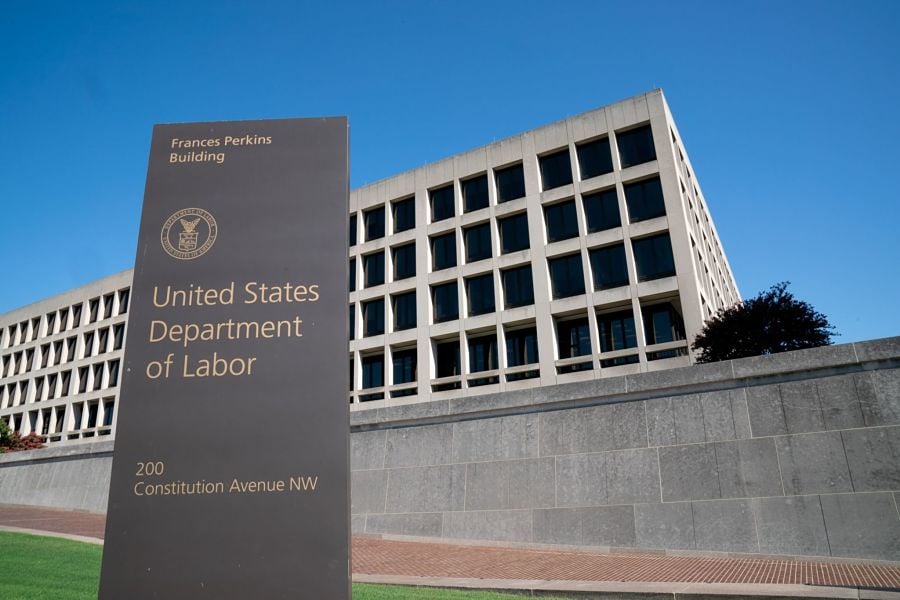
The Department of Labor recovered a record of more than $3.1 billion in fiscal year 2020 for retirement plan beneficiaries, the agency reported Tuesday.
That is roughly double the $1.6 billion the DOL collected from employers in its fiscal 2018 and significantly higher than the $2.6 billion in 2019, according to data from the agency. The recoveries represent assets restored to plans as result of investigations, voluntary plan corrections, the regulator’s abandoned-plan program and informal complaint resolution.
More than $2.6 billion of the assets returned to plans came through DOL investigations, the agency reported. In one recent case, the Employee Benefits Security Administration examined several instances of alleged theft between 2016 and 2018 from a Kentucky plumbing company’s benefits programs by the firm’s controller. That case led to prosecution, and the controller had to repay about $32,000 to the company’s 401(k) plan, in addition to other restitution of more than $800,000.
EBSA closed a reported 1,122 civil investigations during fiscal 2020, with about two-thirds ending with either financial restitution to plans or corrective action, such as removal of a plan fiduciary, appointment of an independent one or establishing new procedures, the DOL stated.
Much of that involved financial recovery for participants who were vested in a defined-benefit pension plan, but were terminated from employment, according to the agency. About $1.5 billion of the recovery fell into that category, with payments going to nearly 30,000 plan participants, the DOL reported.
Seventy people faced indictment as a result of EBSA investigations in fiscal 2020, “including plan officials, corporate officers and service providers — for offenses related to employee benefit plans,” the agency stated.

The financial advice industry has been facing inquiries into its cash sweep programs for years now.

Investor money allegedly went to strip clubs, exotic cars, and landscaping

Procyon adds $415 million in assets under management in New Jersey while Savant picks up a $213 million Southern California planning firm

With a growing number of real estate-rich Baby Boomers aging into retirement, some advisors may be failing to consider all the options available for those clients' assets.

Cornerstone Advisors study reveals compliance bottlenecks stall campaigns weeks after customer opportunities close.
As AI makes financial information more accessible than ever, Lana Hock explains why human judgment, trust, and empathy remain the qualities clients value most in a financial advisor
Northern Trust’s Ken Lassner shows advisors how to convert volatility into after-tax portfolio gains

