
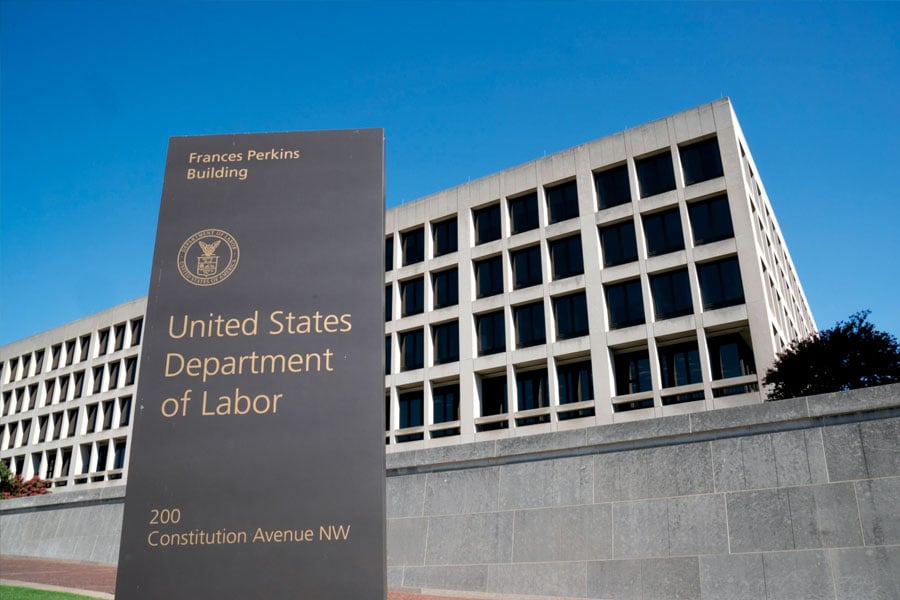
The Department of Labor has effectively finished its ESG rule for retirement plans and sent it to the White House Thursday for final approval.
The final version of that rule, which has been in the works since last year, likely will not be published until next month.
The proposed version of the rule came out in October 2021. It essentially walked back provisions of two Trump-era rules that had a chilling effect on the use of ESG criteria in 401(k)s and other employer-sponsored retirement plans. A final DOL rule would solidify permissiveness on ESG that previously was vague or had varied as administrations changed.
The Biden DOL’s proposed rule, “Prudence and Loyalty in Selecting Plan Investments and Exercising Shareholder Rights,” clarified that ESG factors can be considered financially material in investment selection and that sustainable funds can be used as the default investments on plan menus. The latter was prohibited under the Trump rules.
By allowing 401(k)s to include ESG-themed investments as the default, the DOL would make it possible for target-date funds and other asset-allocation products to widely incorporate sustainability factors and not run afoul of regulations. For the sustainable investing world, that would be a massive change, as target-date funds, managed accounts and other all-in-one products are the most widely used products in retirement plans. Participants in 401(k)s tend not to adjust their investments from the default options, meaning that those funds easily collect new assets.
The proposed rule also sought to clarify that climate change can be a material factor for pension funds to consider when voting on shareholder resolutions.
The final rule is arriving at a time of political polarization on ESG, with numerous Republican-led states taking measures to limit its use in the assets they oversee. That has included steps ranging from blacklisting sustainable investment managers to considering legislation modeled on the Trump-era DOL rules.
The final version of the DOL's rule will likely be published in mid-November, Bryan McGannon, director of policy and programs for US SIF, said in an email.
This story was originally published on ESG Clarity.

Retiring RIA seller David Laidlaw alleges the Carnegie valued his stake on $11.7 million EBITA while pitching potential buyers on $21.3 million.

New tool gives RIAs and family offices AI help vetting private market deals, with some users reportedly halving review time.

Investors got projected returns dressed up as real ones, SEC says

Parents must still act to get the $1,000 federal seed and employer contributions, giving financial advisors a role in the rollout.

FINRA booted Rudy Anguiano from the industry for “conversion - the intentional and unauthorized taking of another person’s property.”
As AI makes financial information more accessible than ever, Lana Hock explains why human judgment, trust, and empathy remain the qualities clients value most in a financial advisor
Northern Trust’s Ken Lassner shows advisors how to convert volatility into after-tax portfolio gains

