
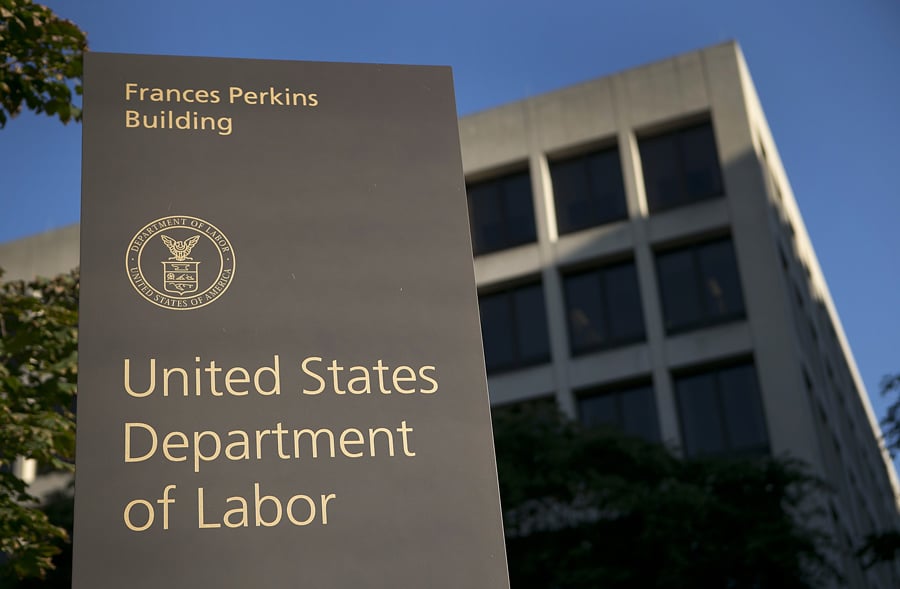
A revised Department of Labor rule that would that would raise investment advice standards for retirement accounts appears to be on its way despite the imminent departure of the official most directly connected to the effort.
Last week, the DOL announced Preston Rutledge, assistant secretary and head of the Employee Benefits Security Administration, is going to leave his post at the end of May. One of the major unfinished pieces of business during his tenure is a rewrite of the fiduciary rule that was approved by the Obama administration but vacated by a federal appeals court in 2018.
A new proposed rule was supposed to have been released by the end of last year. That timeline has slipped and observers are still waiting for an update to DOL’s regulatory agenda.
“The rule is under development,” a Labor Department spokesperson said.
The fiduciary rewrite has run into the buzzsaw of the COVID-19 pandemic, which has forced the agency to deal with issues surrounding relief for unemployed workers and shuttered business.
“I’m not sure where in the hierarchy the fiduciary rule has landed,” said Brad Campbell, a partner at Faegre Drinker Biddle & Reath. “It’s clearly not on the front burner. I don’t think they’ve abandoned the fiduciary rule. Other things have overtaken it.”
As head of EBSA, Rutledge is the point person on the DOL rule. Phyllis Borzi, who had the same position as Rutledge in the Obama Administration, was known as the architect of the DOL rule.
Rutledge would not have left the DOL rewrite hanging, said Brian Graff, chief executive of the American Retirement Association.
“Most of the big initiatives are far enough along that he felt comfortable leaving,” Graff said. “They’re not going to miss much of a beat.”
The regulation, which would have required brokers working with retirement accounts to act as fiduciaries to their clients, was fiercely opposed by the brokerage industry. The Trump administration started to chip away at the rule not long after it came into power and finally stopped defending it in court against an industry lawsuit.
In the meantime, the Securities and Exchange Commission took the lead on raising the investment-advice standard for brokers by promulgating last summer Regulation Best Interest, which must be implemented by June 30.
The revised DOL fiduciary rule could include an exemption that says that brokers who comply with Reg BI, as it’s known, are also in compliance with the DOL rule for retirement accounts. It also could focus on broker requirements for rollovers from 401(k) retirement plans to individual retirement accounts.
The new rule won’t be as long or complex as the previous one, said George Michael Gerstein, counsel at Stradley Ronon Stevens & Young.
“I would not anticipate anything close to resembling the 2016 fiduciary rule,” Gerstein said. “They’re going to be more surgical about how they address conflicts of interest and how it dovetails with Regulation Best Interest.”
Graff also anticipates the revised DOL rule will complement Reg BI.
“I’ve got to believe that a lot of it is going to rely on Reg BI, which makes sense to have it out by the end of June,” Graff said.
Even on that timeline, the rule may not go final until late this year. It first has to be reviewed by the Office of Management and Budget and then put out for comment.
It’s reaching the point where “it’s difficult for them to complete the fiduciary regulation without a second term,” said Campbell, who held Rutledge’s position in the George W. Bush administration.
By the time the new fiduciary rule is wrapped up, it also could be vulnerable to being overturned by Congress, if Democrats hold the House and take over the Senate in November's election.
Before joining DOL in 2017, Rutledge, served as tax and benefits counsel for the Senate Finance Committee and previously worked with the Internal Revenue Service’s tax-exempt and government entities division in Washington.
Although he’s leaving the federal government, “he plans to remain active in employee benefits policy both nationally and internationally,” the DOL spokesperson said.

CFP, CFA and CPA holders could gain accredited investor status as regulators weigh wider private market access for advisory clients

DeepVest, Vanilla and Libretto roll out tools to help financial advisors launch firms, close estate plans and sharpen planning skills

“People aren't effectively using their wealth in retirement,” said David Blanchett of Prudential.

Second-generation NFL ref Shawn Hochuli co-founded IWM Partners in Irvine, California, a wealth management practice with more than $500M in client assets

U.S. seniors lose $28.3 billion annually as a result of financial exploitation, according to a 2023 AARP study.
As AI makes financial information more accessible than ever, Lana Hock explains why human judgment, trust, and empathy remain the qualities clients value most in a financial advisor
Northern Trust’s Ken Lassner shows advisors how to convert volatility into after-tax portfolio gains

