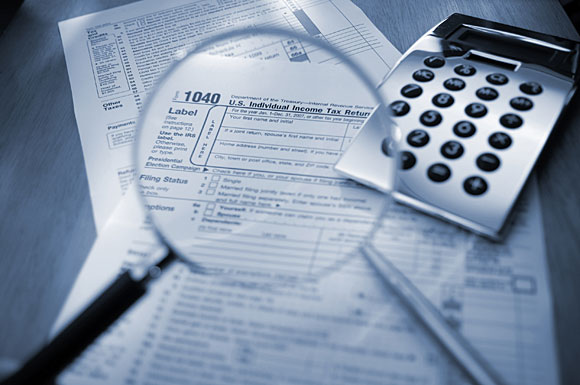
A U.S. Treasury Department watchdog said 2.1 million taxpayers may have received “erroneous” education-related tax credits totaling about $3.2 billion.
A report released today by the Treasury Inspector General for Tax Administration found that the
Internal Revenue Service didn't do enough to make sure that taxpayers claiming the credit were eligible.
The report said that 1.7 million taxpayers received an estimated $2.6 billion in education credits even though the IRS had no documentation that they attended eligible schools.
Almost 371,000 taxpayers who didn't attend enough classes claimed the credit, almost 85,000 taxpayers didn't have a valid
Social Security number and 250 prisoners received $255,879 in credits, according to the report.
“Based on the results of our review, the IRS does not have effective processes to identify taxpayers who claim erroneous education credits,” said J. Russell George, the Treasury inspector general for tax administration. “If not addressed, this could result in up to $12.8 billion in potentially erroneous refunds over four years.”
IRS ‘Disputes' Findings
In an e-mailed statement, IRS spokesman Terry Lemons said the agency “strongly disputes the findings” which it said were based on “a flawed and superficial analysis.” The report “substantially overstates the number of erroneous claims,” he said.
The inspector general incorrectly assumed that the inability to match tax returns with forms filed by colleges and universities is proof of ineligibility, Lemons said in the statement.
He said in the statement that it was “inaccurate and unfair” for the inspector general to say the forms appear to be erroneous because of a lack of information-reporting by an educational institution or because of data discrepancies in what the educational institution and the taxpayer reported.
His statement also disputed the inspector general's characterization that the IRS agreed that it expects an increase in the percentage of credits found to be erroneous.
Comments “attributed to IRS management about the expected overall trend of erroneous AOTC returns are factually incorrect,” Lemons said in the statement.
The American Opportunity Tax Credit, part of the 2009 stimulus law, was intended to help taxpayers shoulder the cost of higher education.
Cooperation Urged
The inspector general urged the IRS to, among other things, revise the credit and work more closely with the Department of Education.
The American Opportunity credit is worth up to $2,500 annually for a maximum of four years.
Up to $1,000 of the credit is refundable, meaning that the portion of the credit that exceeds a tax liability is paid to the taxpayer.
The potential for abuse of refundable tax credits has been a source of concern both to George and to some lawmakers.
“In essence, individuals can obtain money that they did not earn and to which they are not entitled simply by claiming a refundable tax credit,” George said in testimony in May before a House Ways and Means subcommittee. “Refundable credits can result in tax refunds even if no income tax is withheld or paid; that is, the credits can exceed the liability for the tax.”
Improper Payments
In his testimony, George cited IRS estimates that improper payments for the refundable earned income tax credit total between $11 billion and $13 billion annually.
On Sept. 1, the Treasury Inspector General for Tax Administration released a report showing that the IRS awarded $4.2 billion in refundable additional child tax credits to people with taxpayer identification numbers rather than Social Security numbers.
That report prompted the Democratic chairman and the top two Republicans on the Senate Finance Committee to ask the Obama administration for information on tax credits paid to workers who may be ineligible to work in the U.S.
Taxpayer identification numbers are provided by the IRS so that people who don't have work authorization needed for a Social Security number can still comply with tax law. Even money earned illegally in the U.S. is subject to taxation.
--Bloomberg News--