
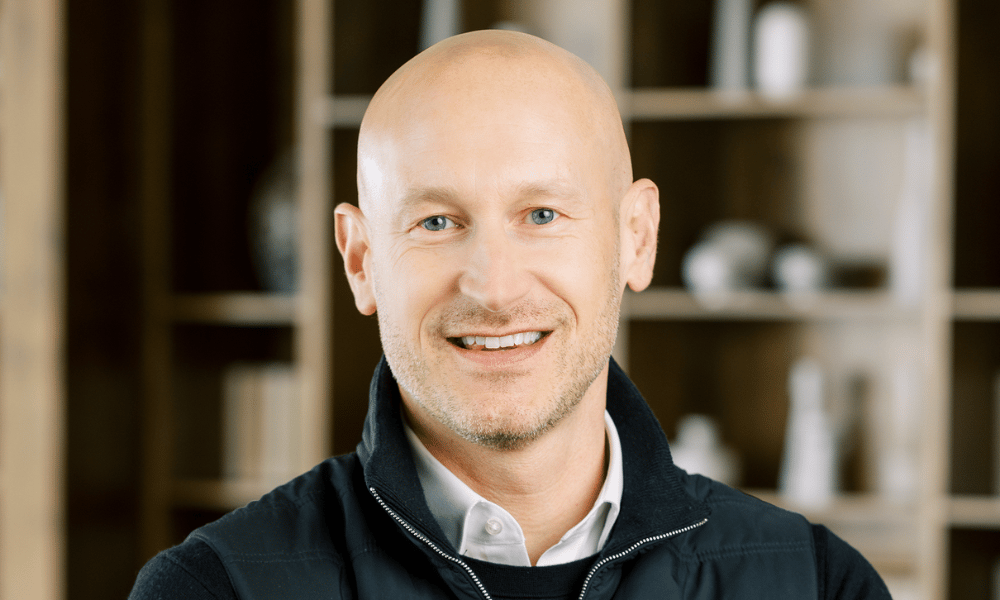
Vestwell has turned profitable as the New York-based retirement fintech powers the workplace savings programs for more than 750,000 employers and many of Wall Street’s biggest firms.
“We sell more in a day now than we used to sell in an entire year in the early days of Vestwell,” founder and CEO Aaron Schumm tells InvestmentNews. “We have plenty of cash; we’re profitable now. We can continue to fund the business in a self-sustaining way.”
Annual recurring revenue for Vestwell has surpassed $200 million as the company nears its 10-year mark since launching in late 2016. Vestwell now has more than 2.55 million active savers with $56 billion in assets saved across its platform, equating to roughly $22,000 in assets per active saver.
Some of the financial giants relying on Vestwell’s savings infrastructure to help their advisors serve clients include JPMorgan Chase, Morgan Stanley at Work, BlackRock, Franklin Templeton, and TIAA, as well as what Schumm describes as “hundreds if not thousands” of RIA firms, including Carson Group, Mariner, OneDigital, and Savvy Wealth.
In February, Vestwell added 30,000 employers spanning 350,000 employee accounts through its acquisition of Accrue 401k. Accrue 401k previously was part of retirement provider Guideline before Guideline was bought by the HR and payroll platform Gusto, signaling an active M&A market that Vestwell expects to remain part of.
“We say no 95 percent of the time. But occasionally, something shows up as a really interesting asset and makes a lot of sense,” says Schumm. “But I’m sure we’ll make another acquisition or two or three or five, or I don’t know how many.”
Vestwell also partners with payroll providers such as Paylocity, Toast, and QuickBooks to serve as the 401(k) engine for the small businesses that use those platforms. Vestwell has expanded beyond 401(k) to include workplace-linked accounts across various retirement plans, education and disability accounts, emergency and child savings, and student debt repayment programs.
Schumm previously co-founded FolioDynamix, the advisor technology platform that sold in 2014 to Actua for about $200 million. Schumm recalls that the 401(k) program he tried to set up for his employees at FolioDynamix was “really clunky, super expensive, just very outdated,” becoming an experience that spurred him to pursue building Vestwell.
“I recognized that the underlying infrastructure was really flawed. It was 30, 40 years old at this time,” says Schumm. “People would put stuff on the peripheral to offer as part of that savings program, but it wasn’t really solving the core issue of how do you actually process someone’s savings, how do you get money from a paycheck in a tax-deferred way into a system that can help people save for the long term? And then when they need that money out, how do you transfer that out? So, that was the initial idea.”
A recent growing portion of Vestwell’s business has been government savings programs. Vestwell powers 16 out of the 17 states that enacted state-sponsored mandatory retirement savings programs for workers. As of July 31, 2026, state auto-IRA programs had amassed more than $3.27 billion in retirement assets across more than 1.36 million funded accounts, according to Georgetown University’s Center for Retirement Initiatives.
“When the states put something in place that says you need to do something as an employer, we see the rising tide of the private sector,” says Schumm. “You see a huge spike in the private sector population in 401(k) plans when the states have an initiative that’s rolled out alongside.”
Vestwell has grown to 547 full-time employees following the firm’s $385 million Series E funding round in February. The round was led by Blue Owl Capital and Sixth Street Growth, bringing Vestwell’s total capital raised to $660 million at a $2 billion valuation.
The capital will help fuel Vestwell’s development of AI features, including a “true next best dollar engine” that will leverage data from more than 200 payroll provider integrations to craft AI-generated allocation suggestions for individuals.
“Should it go to that emergency bucket? Should it go to their kids’ education, or should it go to their retirement? We can start to help show people where those dollars should go, and plan for those future savings needs,” says Schumm.
Vestwell has assembled an extraordinary roster of investors spanning asset managers, private-markets giants, and financial institutions − including Blue Owl Capital, Sixth Street, Franklin Templeton, Point 72 Ventures, Neuberger Berman, Silver Lake Waterman, HarbourVest, Morgan Stanley, and Goldman Sachs. Many of these firms could benefit from the Trump administration’s push to expand exposure to private equity and other alternative investments in 401(k) plans.
“Obviously, for the alternative asset managers, they all want additional product distribution,” Schumm says. “And I think there’s a lot of great alternative assets out there that the private sector should have access to. A lot of them are getting super close to having products that I think are going to be really well consumed by the overall population.”
But Schumm says expanding access will require asset managers to adapt their products to the economics of workplace retirement plans, particularly by lowering fees.
“The products themselves have to be constructed in a way that’s more palatable for a defined contribution long-term retirement asset,” he says. “The fees have to come down in offering it, because right now if you’re in a pure alt asset class, it [is] more expensive than someone should be paying within their retirement program, because those will erode the upside that someone’s going to have, and ultimately what they save over time.”

Bill would make PE firms liable for portfolio company debts and close carried interest loophole as alternatives push into 401(k)s.

While technical expertise is necessary, sustainable trust is only possible for advisors who know how and when to lean on the emotional side of advice.

Betterment, F2 Strategy and WealthReach push AI deeper into advisory firm operations with three deals this week.

Retirement expectations widen from reality, according to Natixis Investment Managers' annual Global Retirement Index.

Half of planners have seen clients raid retirement savings or cut contributions as affordability pressures mount, CFP Board finds
As AI makes financial information more accessible than ever, Lana Hock explains why human judgment, trust, and empathy remain the qualities clients value most in a financial advisor
Northern Trust’s Ken Lassner shows advisors how to convert volatility into after-tax portfolio gains

