
The small business retirement plan market is growing faster than at any point in the past decade and the financial advisors positioned to capture it are those who understand why employers are suddenly so eager for expert help.
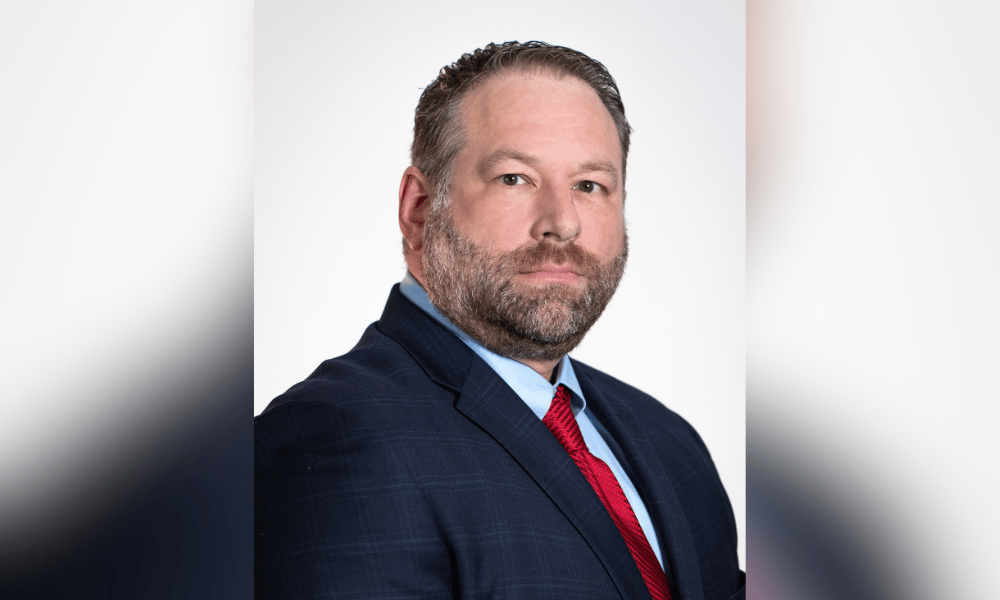
Aaron Tallen, VP and Head of Distribution Operations and 401 Defined Contributions at Security Benefit in Topeka, Kansas, has spent 25 years working at the intersection of retirement plan distribution and advisor practice development. His read on the current moment is unambiguous.
"One thing that hasn't changed is when it comes to individuals' money, it comes to retirement, their nest egg, there's always going to be a people element," Tallen told InvestmentNews. "And that's why we love working with financial advisors and making sure that they're prepared for timely topics."
The catalyst is policy, and the numbers reflect it. According to HR platform Gusto, small business retirement plan adoption has grown approximately 60 percent since 2019, with almost one third of small businesses now offering a plan - a surge driven directly by state-mandated retirement programs pushing small business owners toward advisors for SEP, SIMPLE, solo K, and small 401(k) plans rather than defaulting to government-run alternatives.
For financial advisors with small business owner clients this is not an abstract market trend, but a conversation that is almost certainly already happening across your book. The question is whether you are the one having it, or whether a benefits broker or a competing advisory firm is stepping into that gap first.
"State-mandated retirement plans are really driving, at least in the micro plan segment, a huge growth in small business retirement," Tallen said. "The change in policy is attracting a lot of very small business owners to advisors to help set up their own retirement plan versus doing a government-mandated plan."
The consolidation dynamic compounds the opportunity. Small business owners are actively looking to reduce the number of advisors they work with - combining retirement, wealth, tax, and benefits guidance under fewer relationships wherever possible. "You can absolutely see that just bringing it all in-house and kind of consolidating it really gets rid of the clutter," Tallen said.
For advisors already managing a small business owner's personal wealth or business finances, a retirement plan conversation is not a cold pitch. It is a natural extension of a relationship that already exists.
Tallen articulated the financial advisor's value proposition to plan sponsors in terms that translate directly into a business development conversation.
"Advisors are attractive in this space because they simplify something that's complicated," he said. "They give structure to something that typically people, business owners, don't have knowledge in. And they share the load - they can offload the administrative burdens, the investment fiduciary obligations."
Simplify. Structure. Share the load. That is a pitch any advisor can deliver to a small business owner client - and the Fidelity Plan Sponsor Attitude Survey, which Tallen cited as a key industry benchmark, shows the market is ready to hear it.
The data shows significant and growing employer willingness to pay for outsourced administration - a direct revenue signal for advisors who have been uncertain whether the employer plan market justifies the investment of time and expertise. It does, and plan sponsors are increasingly prepared to confirm that with their budgets.
The complexity driving that willingness to pay is accelerating. The number-one plan sponsor priority in the Fidelity survey is adding target date funds with an annuity or income rider - a decision requiring fiduciary analysis, portability evaluation, and product comparisons under the Employee Retirement Income Security Act (ERISA) that most business owners cannot navigate independently.
Add to that a growing industry conversation around alternative investments and digital currencies inside retirement plans, and the scope of what plan sponsors need from a financial advisor has expanded well beyond basic plan administration.
"If plan sponsors are weighing adding those to the plan, they need experts to guide them through that process and weigh the pros and cons," Tallen said.
For advisors with relevant credentials - accredited investment fiduciary, certified financial planner, or equivalent - this is where differentiation lives. The plan sponsor who needs to evaluate an annuity rider inside a target date fund structure is not going to trust a generalist.
The most important long-term signal in Tallen's account is what happens after the plan is in place. Plan sponsors and participants are increasingly asking their retirement advisors for guidance that extends well beyond investment decisions.
"We're getting questions about providing education content for things that aren't necessarily 401 or retirement plan related," Tallen said. "Things like college savings strategies are top of mind. Inflation impact. The unique investments being talked about with alts and privates."
He described a "reawakening" - plan sponsors re-engaging with the retirement industry after a period of relative inertia, actively seeking advisors who can speak to the full financial picture of their workforce.
For financial advisors thinking about practice growth, the compounding logic here is worth mapping explicitly. The employer plan relationship creates access to participants. Participant relationships built through education sessions, financial wellness programs, and one-on-one guidance, create individual wealth management opportunities over time. The employer who brought you in for a SIMPLE plan becomes the pathway to a book of individual clients who already know and trust your firm.
"How do advisors get rid of the complexity?" Tallen asked. "They make sure that the plan's there for the company to grow and they can grow into. And then how do they get their participants on track for a dignified retirement? Those three things are going to be so important for plan sponsors, and the financial advisor is going to sit in the center of all three."
For advisors evaluating recordkeeper relationships to support a move into the small business retirement market, Tallen offered specific intelligence worth noting.
Security Benefit specializes in SEP, SIMPLE, and solo K plans for the very small business segment - the exact segment where state mandate growth is most concentrated - and distributes exclusively through financial advisors. "We believe profoundly that advisors are the difference between a good retirement plan and a great retirement plan," Tallen said.
The firm's platform is designed to offload recordkeeping and administration so advisors can focus on plan sponsor and participant relationships. "We build our platforms designed to give plan sponsors time back in their day and offload the administrative burdens of the advisor so the advisor has that time to talk to the plan sponsor and participants," Tallen said.
Security Benefit also partners with Mesro Financial, which can serve as a 3(38) or 3(21) investment advisor on its platforms - a practical mechanism for advisors who want to expand into the employer plan market without absorbing disproportionate fiduciary exposure under ERISA.
On the product side, the firm recently launched Roth contribution capability for SIMPLE plans - positioning itself as one of the first recordkeepers to offer this following changes to the IRS Form 5304 document - and is rolling out an AI-powered financial wellness solution in Q1 2027, designed to let participants ask plain-language questions about budgeting, mortgage planning, and retirement savings without needing to speak in financial industry terms.
One risk to manage: the Fidelity data shows that advisor personnel changes and firm mergers are the trigger that most reliably causes plan sponsors to put their plan out to bid. Advisors growing through acquisition or firm consolidation should build proactive client communication strategies around transitions; the employer plan relationship rewards consistency, and the advisor who stays steady through change is the one who retains the book.
The small business retirement market is not waiting. The state mandates are in place, the employers are re-engaging, and the plan design complexity that makes expert advice essential is only growing. The advisors who move now with the right framework, the right platform partner, and the right participant engagement strategy, are the ones who will own those relationships for decades.

New LIMRA data reveal a stubborn advice gap that financial professionals are well-positioned to close.

“Today’s actions send a clear message that even the biggest financial institutions are not above the law,” said Treasury Secretary Scott Bessent.

To build a truly self-sustaining practice, enterprising advisors have to start with a vision of what they want to be – and accept the realities that come with building toward it.

Serial acquirers add a 35-year-old Oregon wealth manager and a New York practice focused on women navigating life transitions.

Mara Glassel and Julie Fox will co-lead the fast-growing hybrid RIA’s ultra-high-net-worth and private wealth businesses.
Knighthead Life entered the market with a competitive MYGA. A strong launch earned advisor confidence and paved the way for FIAs.
As AI makes financial information more accessible than ever, Lana Hock explains why human judgment, trust, and empathy remain the qualities clients value most in a financial advisor

