
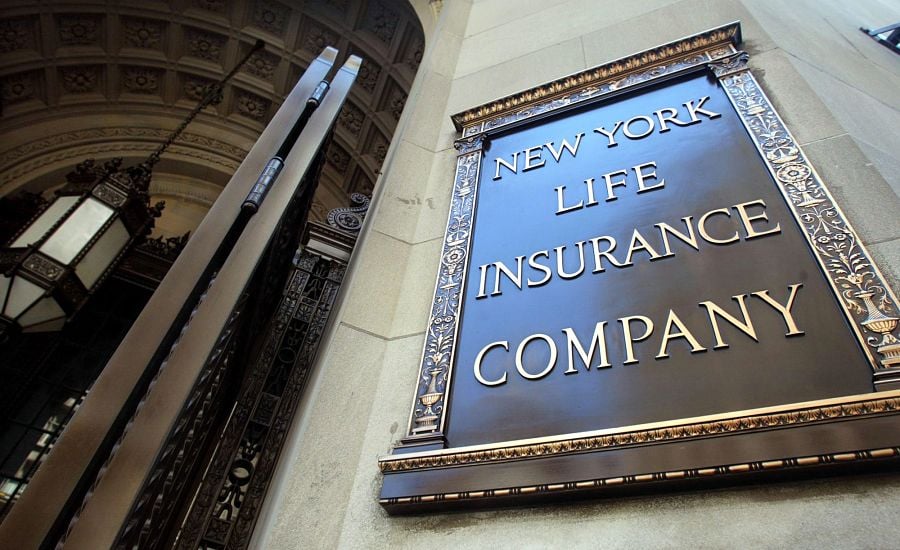
New York Life has agreed to pay $19 million to end a lawsuit over the company's use of its own investment products in its 401(k) plans.
The agreement, submitted Monday in U.S. District Court in the Southern District of New York, will bring to a close a three-year old case that accused the insurance company of breaching its fiduciary duty to its employees.
The monetary amount is far from the biggest in the young history of 401(k) litigation, but it’s much more than a slap on the wrist. About two-thirds of the $19 million, or $12.7 million, will likely go to an estimated 40,000 individuals who are or were participants in the insurer's $4.1 billion retirement plan for employees or $930 million plan for agents, according to court records and data from the Department of Labor. Lawyers representing plaintiffs and the class will ask the court for as much as a third of the total settlement, or $6.3 million.
The settlement follows other developments in lawsuits against financial services companies over the use of in-house products in their retirement plans. Earlier this month, a US appeals court upheld summary judgment in favor of Goldman Sachs in a 2019 case over that company’s inclusion of Goldman Sachs Asset Management funds within its 401(k).
The Employee Retirement Income Security Act doesn't forbid financial services companies from including their own products in their retirement plans. After all, doing so is one way that investment providers arguably could show that they believe in the quality of their products.
But, as with any other fiduciaries, having a documented, prudent process showing how and why they selected the investments they did is considered a strong defense against ERISA lawsuits.
“The lesson of the Goldman Sachs decision is that there is nothing wrong with including proprietary investments in the company’s sponsored retirement plan. But the plan fiduciaries must treat the proprietary investments the same as the other investments in the plan,” Daniel Aronowitz, president of Encore Fiduciary, a firm that providers fiduciary insurance, said in an email. “Applying the same fiduciary process and diligence, with the help of an independent advisor, will eliminate any potential conflict.”
Late last year, MetLife agreed to a $4.5 million settlement in a lawsuit over the inclusion of its own products in the company’s 401(k) plan.
The case against New York Life, which was filed in 2021, alleged that the insurer engaged in self-dealing by including the company’s Fixed Dollar Account as the default investment option, as well as several of its MainStay-brand mutual funds.
As of 2022, about $2.6 billion of the plan’s assets were held in the Fixed Dollar Account insurance fund, according to DOL data. However, only one of the MainStay funds remained in the plan, the International Equity Fund, which accounted for more than $87 million in plan assets.
A large portion of the plan’s total assets was invested in funds from Fidelity, T. Rowe Price, and Vanguard, the latter of which provided the target-date series.
Neither New York Life nor a lawyer representing the plaintiffs responded to requests for comment.

Cullen marks the fourth firm the New York-based RIA aggregator has bought in 2026 as deal volume heads for a record year.

The quality of AI ROI measurement depends on pre-deployment decisions around business outcomes, leadership alignment, and establishing trusted information, among other factors.

A state-by-state analysis of retail investor behavior reveals AI-powered research tools are reshaping how clients approach investment decisions.

LPL picks up $1.1B from Wells Fargo's independent channel as the wirehouse gains a $410M family team from UBS.

Most Americans want to age at home but few have a financial plan to pay for it, according to new research.
Knighthead Life entered the market with a competitive MYGA. A strong launch earned advisor confidence and paved the way for FIAs.
As AI makes financial information more accessible than ever, Lana Hock explains why human judgment, trust, and empathy remain the qualities clients value most in a financial advisor

