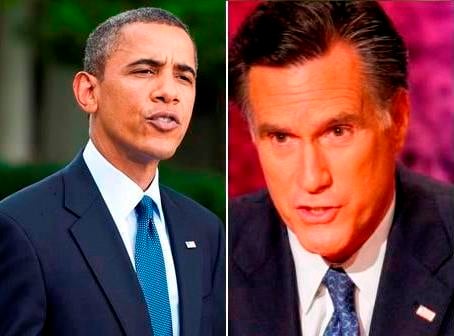
A new survey shows the majority of advisers would like to see Mitt Romney elected President. But those same advisers also believe they're in the minority on that score.
Election Day is still months away, but investment advisers are already convinced that the candidate they want to win the presidency, Republican Mitt Romney, will lose.
In a survey of 125 advisers conducted May 7-8 at the SEI National Strategic Advisor Conference, 74% back Mr. Romney, who effectively wrapped up the Republican presidential nomination with a win in Tuesday's Texas primary.
Their votes for him, though, will probably be for naught, the advisers indicated. By 63% to 37%, they expect Mr. Obama to win re-election. In addition, 59% anticipate that the government will remain split, with the GOP winning the House and the Senate or White House.
On a list of seven issues, the respondents chose “log jams in Congress,” “entitlements” and “tax increases in 2013” as the topics that worry them the most. These areas beat out interest rates, gas prices, unemployment and housing.
“I'm not surprised they want Romney, given their concern over the deficit and entitlements,” said Steve Onofrio, managing director of the SEI Advisor Network, a provider of investment, administrative and practice management services for independent advisers.
But advisers are also politically savvy, according to Mr. Onofrio. They know that Mr. Obama will be hard to beat, if he can reignite the enthusiasm of the political base that propelled him into office in 2008.
“They're saying Obama has the machine and the backing of a number of key constituencies,” Mr. Onofrio said.
The SEI poll rings true to one politically experienced adviser advocate in Washington.
“That could be a very accurate representation of where investment advisers are in general,” said David Tittsworth, executive director of the Investment Adviser Association. “They tend to be more fiscally conservative, and that generally favors a Republican candidate.”
But the financial services universe is far from a political monolith. For instance, Warren Buffett and George Soros are two prominent Democrats who are an exception to the general conservative trajectory.
“I know of specific members of our organization who I would characterize as fairly liberal Democrats,” said Mr. Tittsworth, a former aide to the longtime Democratic chairman of the House Energy and Commerce Committee, former Rep. John Dingell of Michigan.
Advisers who responded to the SEI poll no doubt were bipartisan in their concern about the political gridlock in Washington. At the end of the year, a lame-duck Congress must vote on whether to extend Bush-administration tax cuts, which would affect capital gains, dividends and estate tax rates.
The murky situation in the capital makes it difficult for them to provide investment advice to clients regarding when to take capital gains and how to manage their taxes.
“It's uncertainty,” Mr. Onofrio said. “Uncertainty not in the global economy but in government policy. They get frozen a little bit in their planning.”
Nevertheless, advisers are fairly upbeat about the economy. In the SEI poll, 77% said that there will be a recovery but they “expect it will take time.” For the year, they expect the stock market to gain up to 10%.
“They're optimistic that Europe will sort itself out and calm things down,” Mr. Onofrio said. “They see company earnings as consistent and strong.”
Mr. Tittsworth, however, is less certain about the outcome of the presidential race than the advisers polled by SEI. “My personal view is that it's an absolute toss-up," he said. "It's going to come down to a few key states.”