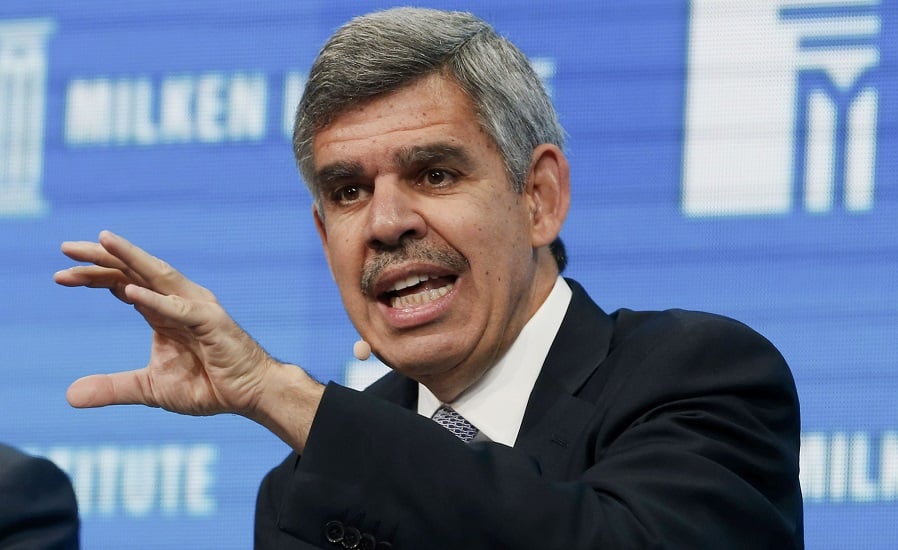

Allianz's Mohamed El-Erian: Fed risks 'collateral damage' by keeping rates low

Allianz's Mohamed El-Erian: Fed risks 'collateral damage' by keeping rates low
AUG 22, 2016
Allianz SE's Mohamed El-Erian said Federal Reserve policymakers must be aware of the diminishing returns of keeping interest rates so low and need to be aware of the possibility of “unintended consequences” from their approach. “If the Fed continues with interest rates being too low, it risks causing collateral damage,” Mr. El-Erian, Allianz's chief economic adviser, said Tuesday in a Bloomberg Television interview. “The more the structural headwinds, the less effective central banks' stimulus is. It's ironic, but this is a recognition that is now spreading within the Fed.” The Fed lowered rates to near zero in 2008 and raised them only once since then, in December, holding off further hikes as geopolitical uncertainty strains global economies. Critics have said fiscal policy is also needed to stimulate growth, and that low borrowing costs can punish savers and distort financial markets. Mr. El-Erian said central bankers could view the weak labor market in May as an outlier when the Fed announces its rate decision Wednesday. Payroll growth accelerated by the most this year in June, according to data released earlier this month. The bond market sees a greater chance than it did weeks ago that the Fed will lift rates this year. It now assigns a 10% probability of an increase this week and about 49% by December, according to pricing in federal funds futures contracts. “The U.S. is having as much structural problems as it is cyclical problems,” said Mr. El-Erian, who is also a Bloomberg View columnist. “The answer to high-growth financial stability is not in the hands of the Fed but is in the hands of the other policymakers.” Mr. El-Erian said there's a 30% chance that the U.S. slips into a recession next year and “well over 50%” probability for the U.K. That's due to uncertainty from trading relationships after a decision by voters to exit the European Union, he said.

Latest News

Merrill Lynch, BofA's brokerage arm, hit with $7.5M SEC fine over missed suspicious activity reports

Regulators found Bank of America's monitoring software had a known flaw Merrill left uncorrected for years.

AI is changing how investors research, not who they trust

While AI has become a go-to research tool for affluent investors, new HSBC research suggests human advisors remain the deciding voice when investment decisions are made.

Supreme Court blocks Trump's bid to fire Fed Governor Lisa Cook

A 5-4 ruling preserves the Federal Reserve's independence for now, but the legal fight over presidential removal power is far from settled.

Morgan Stanley boosts returns on client cash, analyst says

For years, large firms have been facing penalties and questions from regulators over interest rates for clients’ cash accounts.

Volatility has been roiling the markets. But advisors have got the tools to deal with it

Market volatility can be stressful, but it also represents opportunity for advisors and their clients.

SPONSORED Who builds the income when the pension disappears?

Dan Biagini of American Equity says the steady decline of pensions, longer lifespans and a reset in interest rates are rewriting how advisors build retirement income

SPONSORED Why direct indexing stopped being optional

Direct indexing is on pace to outgrow ETFs and mutual funds. Northern Trust's Ken Lassner explains why the advisors who get it wish they had started sooner.




