Federal Reserve officials raised interest rates for the first time this year and forecast a steeper path for borrowing costs in 2017, saying inflation expectations have increased “considerably” and suggesting the labor market is tightening.
The Federal Open Market Committeea cited “realized and expected labor market conditions and inflation” in increasing its benchmark rate 0.25%,
according to a statement Wednesday following a two-day meeting in Washington. New projections show central bankers expect three quarter-point rate increases in 2017, up from the two seen in the previous forecasts in September, based on median estimates.
The central bank said monetary policy supports “some further strengthening in labor market conditions and a return to 2%,” adding the word “some” in an indication that officials see less room for improvement in the job outlook. The word “strengthening” also replaced “improvement.”
Inflation has firmed toward policy makers' 2% target, unemployment has dipped further and President-elect Donald Trump has pledged growth-fueling tax cuts and infrastructure spending that could warrant a faster pace of Fed tightening.
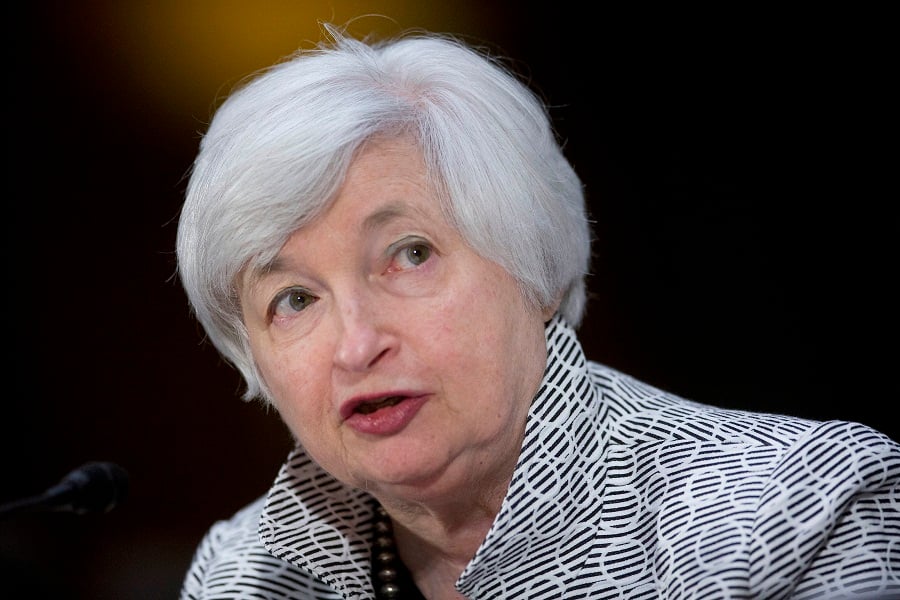
Mr. Trump has accused Fed Chair Janet Yellen of keeping rates low to help Democrats, a charge she denied. Now, higher interest rates have the power to blunt the impact of any fiscal stimulus.
The FOMC didn't include language in its post-meeting statement explicitly referring to changes in fiscal policy.
WIDELY EXPECTED
Wednesday's interest-rate increase, only the second since the central bank cut borrowing costs to near-zero in 2008, was both telegraphed by Fed officials in recent weeks and widely anticipated in financial markets, with futures traders putting the probability at 100 percent.
All 103 analysts surveyed by Bloomberg News had projected a hike on Wednesday. Economists saw two rate increases in 2017, according to the average probability in a separate survey of 41 respondents conducted Dec. 8-12.
(Related read: U.S. equities' bull run limits future upside)
The FOMC's decision was unanimous for the first time since July. The move brings the target for the federal funds rate — the overnight lending rate between banks — to a range of 0.5 percent to 0.75 percent. That will potentially lead to marginally higher borrowing costs for consumers and companies while giving savers a boost.
Recent information shows that “the labor market has continued to strengthen and that economic activity has been expanding at a moderate pace since mid-year,” the central bank said in its statement. Job gains have been “solid,” consumer spending is “rising moderately” and business investment “has remained soft,” the Fed said.
'ROUGHLY BALANCED'
Officials repeated that near-term risks to their outlook are “roughly balanced.”
Fed officials continue to project three quarter-point rate increases in 2018, based on median federal funds forecasts of 1.375% in 2017 and 2.125% the following year.
The Fed's projections show little change from September in the outlooks for growth, unemployment and inflation over the next three years. Policy makers see gross domestic product growing 2.1% in 2017, up from a previous forecast of 2%.
Policy makers slightly reduced their outlook for unemployment in 2017 to a fourth-quarter level of 4.5%. Joblessness sank to 4.6% in November, a nine-year low.
(Related read: Will the Fed's steps lead to a stumble?)
The median projection for the longer-run federal funds rate increased to 3%, a small shift from about 2.9% in September. That projection had been on a downward trend.
The Fed had expected to make four quarter-point increases this year when surveying the outlook in December 2015. But its forecast was thwarted by a range of headwinds including China-spurred turmoil in financial markets and Britain's vote to leave the European Union.
JOBS ADDED
Despite global risks, the domestic economy has moved closer to the Fed's goals. In addition to the drop in unemployment, the country has added 180,000 jobs a month on average this year.
Meanwhile, inflation has steadily approached the Fed's 2% goal. The central bank's preferred index of consumer prices climbed 1.4% in the year through October. Core inflation, which strips out volatile fuel and food, is running at 1.7%.
With bond yields rising sharply since Mr. Trump's Nov. 8 victory in anticipation of higher inflation, the Fed said Wednesday that “market-based measures of inflation compensation have moved up considerably but still are low; most survey-based measures of longer-term inflation expectations are little changed, on balance, in recent months.”
(Related read: Once unheard of, negative interest rates emerge as a viable Fed tool)
Mr. Trump, who will be inaugurated as U.S. president on Jan. 20, has pledged as much as $1 trillion in infrastructure investment and cuts to corporate and individual income taxes. But the plans haven't been thoroughly detailed, and what will actually be backed by Congress is even less clear.
The Fed meets next on Jan. 31 and Feb. 1 in Washington, though that meeting won't be accompanied by economic projections or a press conference. The next gathering with a press briefing takes place March 14-15.