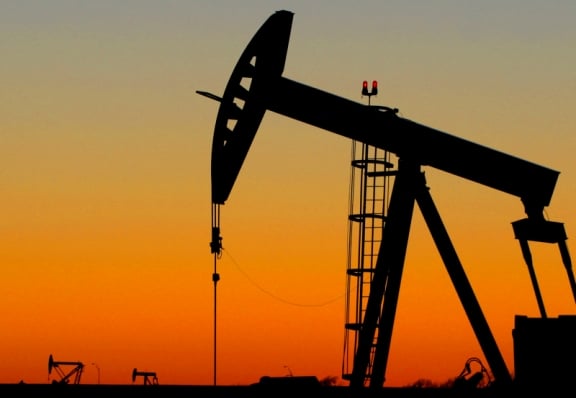
Get a horse: Analyst say cost of crude could top $220 a barrel due to unrest in Libya, Algeria
Oil prices may surge to $220 a barrel if political unrest in North Africa halts exports from Libya and Algeria, Nomura Holdings Inc. said.
Crude futures rose to $97.97 in New York today, the highest in more than two years, as the violence in Libya threatened to disrupt exports from Africa’s third-biggest supplier. Libyan leader Muammar Qaddafivowed yesterday to fight a growing rebellion until his “last drop of blood.” Protests in Algeria led to the ending of a 19-year state of emergency.
“If Libya and Algeria were to halt oil production together, prices could peak above $220 a barrel and OPEC spare capacity will be reduced to 2.1 million barrels a day, similar to levels seen during the Gulf war and when prices hit $147 in 2008,” the Tokyo-based bank said in a note today.
The Organization of Petroleum Exporting Countries has spare production capacity of about 5 million barrels a day, according to the International Energy Agency. Saudi Arabian Oil Minister Ali al-Naimi said yesterday that the organization will boost output if there is a shortage. Algeria produced 1.25 million barrels a day last month, while Libya pumped 1.59 million a day, according to data compiled by Bloomberg.
Crude for April delivery was at $97.40 a barrel as of 10:30 a.m. local time on the New York Mercantile Exchange, the highest since Oct. 2, 2008. Futures are up 24 percent from a year ago. Brent oil for April settlement climbed 4.3 percent, to $110.35, on the ICE Futures Europe exchange.
“The closest comparison is the 1990-1991 Gulf War,” during which OPEC’s spare capacity dropped to 1.8 million barrels a day and prices surged 130 percent in seven months, Nomura analysts led by Michael Lo in Hong Kong said.
Nomura said the $220 prediction may be an underestimate, as speculative investors trading crude oil who were not active in the early 1990s may amplify the price gain in the event of an export halt.
Total SA and OMV AG followed Eni SpA, RWE AG and BASF SE’s Wintershall unit in scaling back their Libyan operations this week. The moves have reduced production by as much as 300,000 barrels a day, Vienna-based researcher JBC Energy GmbH said in a report today.
Protests in Algeria, while not as violent as in Libya, led to the announcement yesterday of an end to the state of emergency. The measure was imposed after the cancellation of the country’s first multiparty elections that Islamists were set to win in 1992.
--Bloomberg News--