
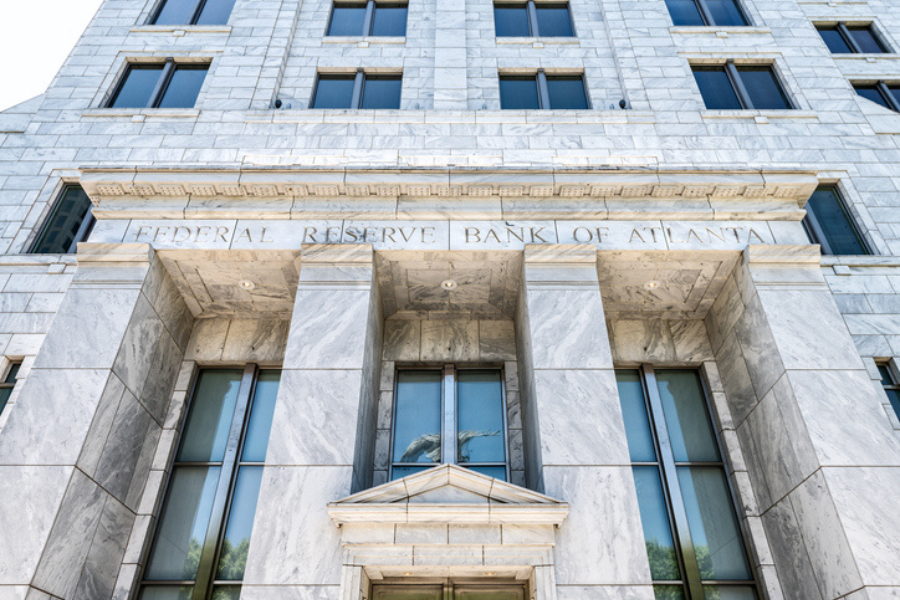
Federal Reserve Bank of Atlanta President Raphael Bostic said it “may be time” to cut but he’s still looking for additional data to support lowering interest rates next month.
Bostic reiterated that his timeline for anticipated cuts had moved up after inflation fell more quickly than he expected and the unemployment rate increased more rapidly. Yet he remained cautious.
“I don’t want us to be in a situation where we cut and then we have to raise rates again,” Bostic said Wednesday during an event organized by the Stanford Club of Georgia and the Stanford Black Alumni Association–Atlanta.
“So, if I’m going to err on one side, it’s going to be waiting longer just to make sure that we don’t have that up and down,” he said, adding that is not his baseline expectation.
Fed Chair Jerome Powell last week said the “time has come” for officials to lower interest rates, firming expectations for a cut at the US central bank’s Sept. 17-18 policy meeting.
Powell, speaking at the Fed’s annual conference in Jackson Hole, Wyoming, didn’t offer specifics on how quickly officials would move, saying the “timing and pace of rate cuts will depend on incoming data, the evolving outlook and the balance of risks.”
He said he was more confident inflation was on a path to 2% and emphasized that officials don’t want to see any further weakening in the labor market.
During an interview in Jackson Hole, Bostic began shifting his position after previously favoring just one quarter-point rate cut by the end of 2024.
On Wednesday, the Atlanta Fed chief said upcoming reports on inflation and employment are going to be “important markers” for policymakers to be sure the trend they’ve been watching is still continuing.
Officials will get a fresh inflation reading Friday when the personal consumption expenditures price index is released and see another update on employment next week when the Labor Department releases the August jobs report on Sept. 6.

LPL Financial and Raymond James also add independent advisors from Osaic and Edward Jones in Michigan and Arizona.

The SEC-registered RIA advises on more than $1 billion in client assets, with no advisory fee through 2027 and no human financial advisors.

95.8% of house trades were winners. For clients? The SEC says just 14.9%.

The complaint says Duolingo added friction on purpose, then lied about it.

The four wirehouse firms lost 1,449 experienced advisors and recruited 932 in the first six months of the year, according to Diamond Consultants.
Knighthead Life entered the market with a competitive MYGA. A strong launch earned advisor confidence and paved the way for FIAs.
As AI makes financial information more accessible than ever, Lana Hock explains why human judgment, trust, and empathy remain the qualities clients value most in a financial advisor

