
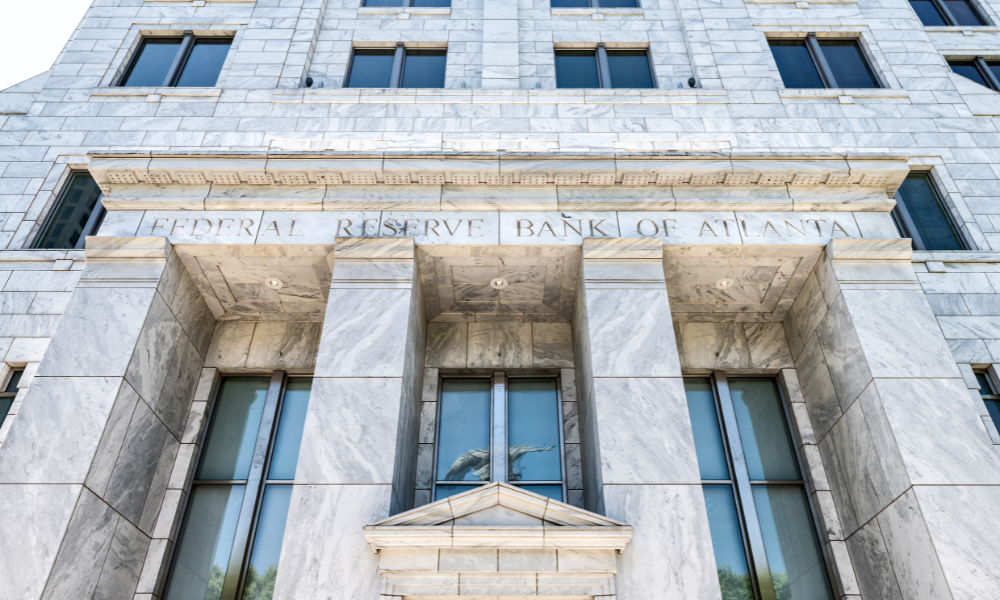
Federal Reserve Bank of Atlanta President Raphael Bostic said there’s no rush to cut interest rates with the US labor market and economy still strong, and cautioned that it’s not yet clear that inflation is heading sustainably to the central bank’s 2% target.
“The evidence from data, our surveys, and our outreach says that victory is not clearly in hand, and leaves me not yet comfortable that inflation is inexorably declining to our 2% objective,” Bostic said in a speech Thursday in New York. “That may be true for some time, even if the January CPI report turns out to be an aberration.”
Fed officials have spent much of the first seven weeks of the year pushing back on market expectations for a rate cut at the central bank’s next policy meeting in March.
Chair Jerome Powell has said the Fed needs more confidence that inflation is on track to return to their target, while other policymakers have warned about several risks that could keep inflation stuck above 2%.
While the stronger-than-expected January advance in the consumer price index could turn out to be an outlier, Bostic said the report was evidence that the Fed’s inflation fight is not finished.
“I require more confidence before declaring victory in this fight for price stability,” said Bostic, who is a voting member on the Fed’s policy-setting committee this year.
The Atlanta Fed chief said last month that he anticipates the first cut to occur in the third quarter of this year. He repeated that position Thursday and noted that he had projected two cuts for 2024 in the central bank’s last quarterly set of economic projections. Market participants are betting the central bank will lower interest rates starting in June.
“My expectation is that the rate of inflation will continue to decline, but more slowly than the pace implied by where the markets signal monetary policy should be,” he said to the Money Marketeers of New York University. “Right now, a strong labor market and macroeconomy offer the chance to execute these policy decisions without oppressive urgency.”
While he said risks to the outlook for inflation and full employment are more balanced, he urged vigilance in the inflation fight. Bostic said inflation pressures are still more broad-based than the Fed would prefer and noted the Dallas Fed’s trimmed mean inflation index, which eliminates outlier prices, suggests underlying inflation remains above 2%.
He also pointed to anecdotal evidence. Business contacts carry the “ring of expectant optimism — perhaps even pent-up exuberance” that could unleash a burst of demand that could reverse the progress made on inflation, Bostic warned.
“This constitutes a new upside risk to my outlook that bears scrutiny in coming months,” he said.
The CPI rose by more than forecast across the board in January — on a monthly and annual basis — as did the core measures, which strip out food and energy costs. A key subset of services prices advanced by the most in nearly two years, and shelter costs heated up, government data showed Tuesday.
Bostic also said he is keeping an eye on balances at the overnight reverse repurchase agreement facility — a key indicator of liquidity — which dropped below $500 billion on Thursday for the first time since June 2021. The draining of the facility will help guide policymakers’ decision as to the appropriate time to start slowing and eventually stopping its balance sheet unwind.
“What I’m trying to pay attention to and get a handle on is to what extent we’re getting close to the edge where there doesn’t appear to be enough liquidity, where there may not be enough liquidity for our money markets to operate the way we need them to operate,” Bostic said. “We’re not there yet.”

Also, Summit Wealth Group nabs a Commonwealth advisor in Tennessee, Oxford Financial adds two managing directors, and Verdence draws an ultra-high-net-worth advisor from Fidelity.

When advisors have tech to handle meeting prep and organization, it frees up time they can reinvest more thoughtfully into helping clients.

LPL Financial and Raymond James also add independent advisors from Osaic and Edward Jones in Michigan and Arizona.

The SEC-registered RIA advises on more than $1 billion in client assets, with no advisory fee through 2027 and no human financial advisors.

95.8% of house trades were winners. For clients? The SEC says just 14.9%.
Knighthead Life entered the market with a competitive MYGA. A strong launch earned advisor confidence and paved the way for FIAs.
As AI makes financial information more accessible than ever, Lana Hock explains why human judgment, trust, and empathy remain the qualities clients value most in a financial advisor

