
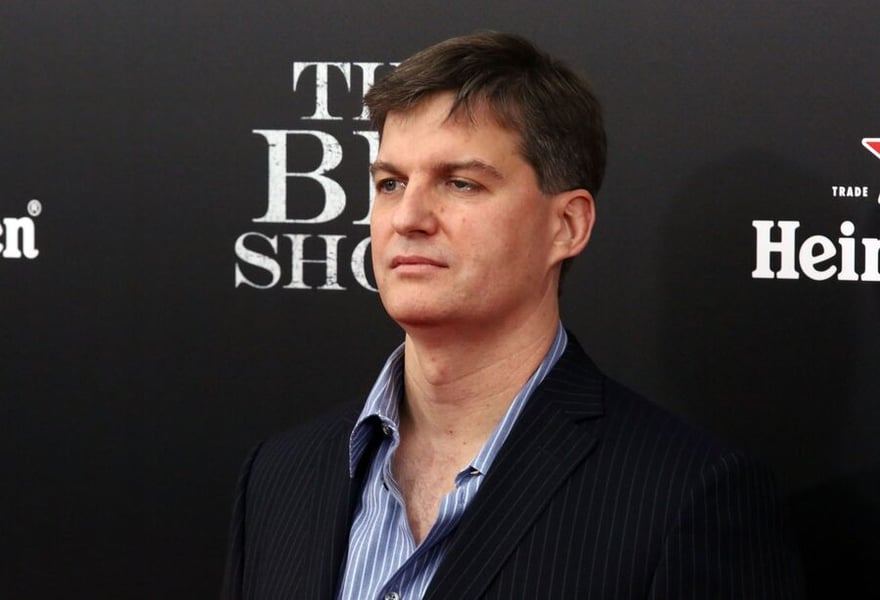
Investor Michael Burry, who famously predicted the 2008 housing market crash and later was played by Christian Bale in the movie "The Big Short," has bet more than $1.6 billion on a Wall Street collapse, according to an SEC filing this week.
Burry is apparently going all-in, or close to it, on his bearish wager. His Scion Asset Management fund purchased $866 million in put options against the S&P 500 index and $739 million in put options against the Nasdaq 100 index. Taken together, Burry’s bets add up to more than 90% of his portfolio.
The S&P 500 is up 15.5% year-to-date, while the Nasdaq 100 has soared 36.5% so far in 2023.
Burry’s status on Wall Street rose following his profitable speculation on the 2008 subprime mortgage crisis that resulted in the collapse of a number of major financial institutions. His fame on Main Street resulted from his profile in the Michael Lewis bestseller “The Big Short: Inside the Doomsday Machine,” which was later adapted into a film.
But while Burry’s “Big Short” call has put him in the spotlight, a number of financial advisors caution investors against blindly following his lead simply because he made one correct bet, no matter how “big” it was.
Kashif Ahmed, president of American Private Wealth, for one, wishes he had “a nickel for every one-hit wonder” hedge fund manager or strategist who made a major market call and lived to tell about it.
“Just like Meredith Whitney, Burry got just one thing right, once. That does not mean he has any special skills giving him correct insight every time,” Ahmed said, adding that Burry’s latest short play is merely “carnival barking to try to remain relevant.”
Along those lines, Dean Tsantes, certified financial planner at VLP Financial Advisors, believes Burry is still “milking the fame” he received from his housing prediction and should be “taken with a grain of salt.”
“He is wildly successful, but I think he should stop trying to predict market crashes and use his influence to teach more sound ways to invest and not try to frighten investors with continued doom-and-gloom predictions which are usually wrong,” Tsantes said.

When advisors have tech to handle meeting prep and organization, it frees up time they can reinvest more thoughtfully into helping clients.

LPL Financial and Raymond James also add independent advisors from Osaic and Edward Jones in Michigan and Arizona.

The SEC-registered RIA advises on more than $1 billion in client assets, with no advisory fee through 2027 and no human financial advisors.

95.8% of house trades were winners. For clients? The SEC says just 14.9%.

The complaint says Duolingo added friction on purpose, then lied about it.
Knighthead Life entered the market with a competitive MYGA. A strong launch earned advisor confidence and paved the way for FIAs.
As AI makes financial information more accessible than ever, Lana Hock explains why human judgment, trust, and empathy remain the qualities clients value most in a financial advisor

