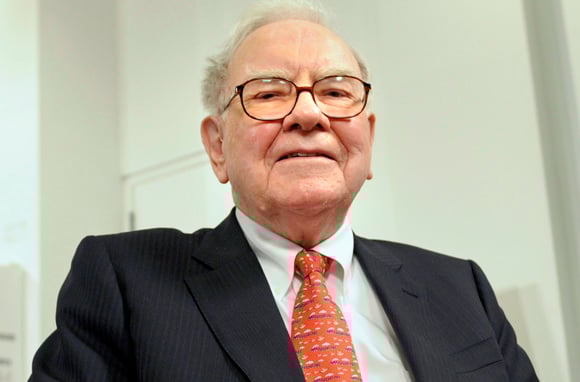
Warren Buffett, the chief executive officer of Berkshire Hathaway Inc. since 1970, told shareholders that the board has decided on his eventual replacement.
Directors are “enthusiastic about my successor as CEO, an individual to whom they have had a great deal of exposure and whose managerial and human qualities they admire,” Buffett said today in his annual letter, without identifying the person. “When a transfer of responsibility is required, it will be seamless.”
Buffett, 81, is under pressure to demonstrate Berkshire is prepared for a transition. The stock trailed the Standard & Poor’s 500 Index last year as Buffett was pushed to apologize for his oversight of David Sokol, a former manager. Sokol, once considered a possible successor, left the company in April and was accused by Berkshire of violating its insider trading policies.
“After the Sokol disaster, he had to settle that issue,” said Jeff Matthews, a Berkshire shareholder and author of “Secrets in Plain Sight: Business and Investing Secrets of Warren Buffett.” It was “painfully obvious they needed to have that locked down.” Berkshire declined 4.7 percent last year, compared with little change in the S&P 500.
Berkshire relies on Buffett, also the chairman and head of investments, to oversee a $77 billion stock portfolio and operating units with more than 270,000 workers. He runs the firm from Omaha, Nebraska, with a staff of 24 people and consults with Vice Chairman Charles Munger, 88, about investments. The quality of Berkshire’s businesses and managers will give the new CEO “a running start,” Buffett said.
‘Excellent Health’
“Do not, however, infer from this discussion that Charlie and I are going anywhere,” Buffett said. “We continue to be in excellent health, and we love what we do.”
Howard Buffett, a Berkshire director, said in October his father wasn’t considering retirement, and plans to lead Berkshire until his death. Warren Buffett, who spent $26.5 billion on a railroad takeover in 2010 and more than $10 billion on stock in International Business Machines Corp. last year, has said it is the board’s job to tell him to leave if his mind deteriorates or if he is no longer able to do the job.
Buffett owns more than $40 billion of Berkshire stock and has committed most of his wealth to charity. Berkshire is valued at about $198 billion.
Berkshire hired former
hedge fund managers Ted Weschler and Todd Combs since the end of 2009 to help Buffett with investments and said last year that it had identified four company executives capable of being CEO. One had board approval to step in “should a replacement be needed currently,” according to a passage in a 2011 regulatory filing.
‘Superb’ Back-Ups
Today Buffett said that in addition to the designee, there are “two superb back-up candidates as well.” The comment was on the first page of his letter.
“It’s more of a commitment, clearly,” said Alice Schroeder, author of “The Snowball, Warren Buffett and the Business of Life” and a Bloomberg View columnist. “This is not the if-I-get-hit-by-a-bus plan. This is the succession plan.”
Weschler and Combs, who are responsible for portions of the securities portfolio under Buffett, will have a role helping the next CEO evaluate possible acquisitions, the billionaire said.
Sokol, who previously ran energy operations for Berkshire and was seen by Buffett biographer Andrew Kilpatrick as a top candidate for CEO, bought stock in Lubrizol Corp. weeks before suggesting Buffett acquire the company. Buffett told shareholders in April he made “a big mistake” by not pressing Sokol about his trades before making the offer. Sokol has denied any wrongdoing.
Jain, Abel
Howard Buffett said in May that his father’s circle of most trusted managers, like insurance executives Tony Nicely, 68, and Ajit Jain, 60, will expand to include railroad head Matthew Rose. Howard Buffett, a 57-year-old farmer and philanthropist, joined the board in 1993 and would preserve the firm’s culture as non-executive chairman, his father has said.
“It would be wise when I am no longer CEO to have a member of the Buffett family serve as the non-paid, non-executive chairman of the board,” Buffett said in Berkshire’s annual report, which was published with the letter. “At my death, the Buffett family will not be involved in managing the business but, as very substantial shareholders, will help in picking and overseeing the managers who do.”
Rose, 52, joined Berkshire in 2010 after selling Burlington Northern Santa Fe, which he runs as CEO. Buffett has overseen Nicely, CEO of car insurer Geico, since 1996 when Berkshire acquired full control of the unit. Buffett hired Jain more than 20 years ago to run a reinsurance business for Berkshire.
Gregory Abel, 49, who joined Berkshire in 2000, replaced Sokol as chairman of MidAmerican Energy Holdings. Buffett introduced Abel to Berkshire shareholders in the billionaire’s annual letter published in 2003, calling the manager Sokol’s “key associate.”
--
Bloomberg