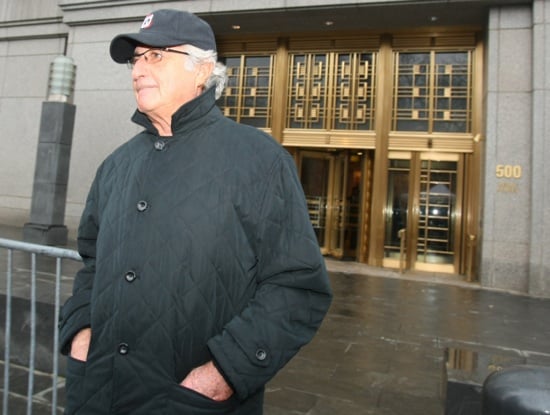
Mark Madoff, a son of convicted con man Bernard Madoff, committed suicide today on the second anniversary of his father's arrest, his attorney confirmed.
“Mark Madoff took his own life today,” Martin Flumenbaum of law firm Paul, Weiss, Rifkind, Wharton & Garrison, said in a statement released by Business Wire.
“This is a terrible and unnecessary tragedy. Mark was an innocent victim of his father's monstrous crime who succumbed to two years of unrelenting pressure from false accusations and innuendo. We are all deeply saddened by this shocking turn of events,” Flumenbaum said in the statement.
Mark Madoff, 46, and his brother, Andrew, were under investigation but hadn't faced any criminal charges in the massive Ponzi scheme that led to their father's jailing. The case came to light in December 2008 after the elder Madoff confessed to his two sons and his brother, who also worked for him in the business, that he had used money from new investors to pay earlier ones.
Sergeant Kevin Hayes, a New York Police Department spokesman, told Bloomberg News that a body was found at 158 Mercer Street in Manhattan, and police were notified by a family member at about 7:30 a.m. FBI spokesman Richard Kolko later confirmed Madoff was found dead of an apparent suicide in his Mercer Street apartment, declining further comment.
Sued by Trustee
The sons, along with Bernard Madoff's brother and five directors of the U.K. arm of Bernard Madoff's investment firm, were sued Dec. 8 by Irving Picard, the court-appointed trustee recovering assets for Madoff's victims.
Picard didn't immediately respond to an e-mail and voicemail message seeking comment.
Bernard Madoff, 72, is serving a 150-year sentence at a federal prison in Butner, North Carolina. At the time of his arrest, Madoff's account statements reflected 4,900 accounts with $65 billion in nonexistent balances. Investors lost about $20 billion in principal.
Mark Madoff's suicide isn't the first connected with the scheme's aftermath. Thierry Magon de La Villehuchet, chief executive officer of Access International Advisors, which managed $3 billion, took his own life in December 2008 after losing funds invested with Madoff's firm, his brother said in an interview at the time.
[More: Madoff sons’ fight over cash continues after their deaths]