
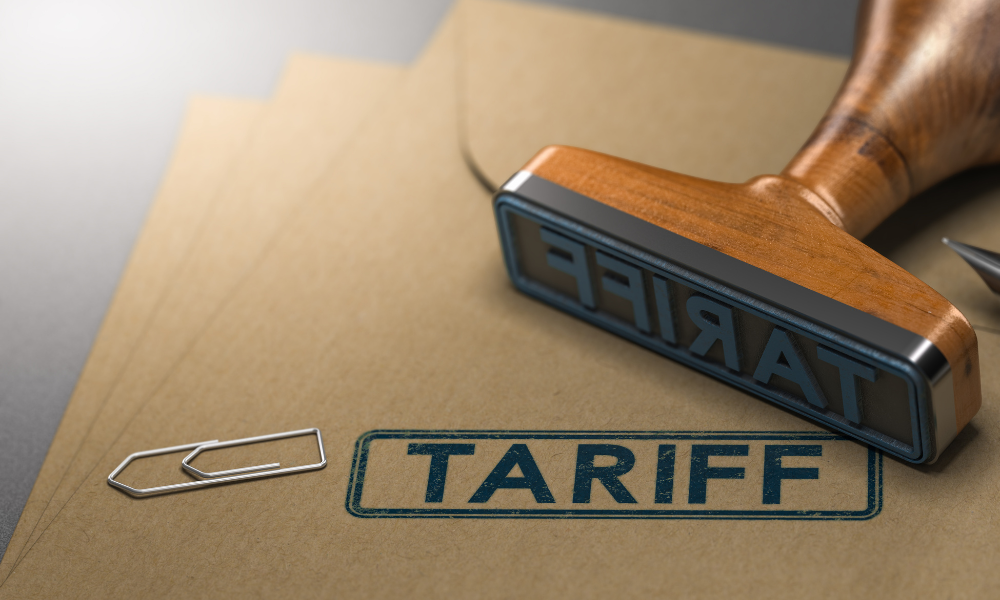
Ross Perot Jr., a billionaire Texas real estate developer and longtime Republican donor, said President Donald Trump’s tariff threats are emerging as a “big concern” and forcing business leaders to think twice before approving investments.
The uncertainty is prompting Perot to weigh putting a “tariff line” in contracts for the industrial buildings he develops around the US. In other words, he would offer one price without tariffs and a higher one if Trump follows through on plans to slap trade duties on key goods such as steel and aluminum.
“It’s inflationary and it’s confusing,” Perot said in an interview, adding that he remains a Trump supporter despite his concerns around tariffs because he thinks the new president will be good for business in the long run. “The business community I’ve talked to, everybody’s kind of on hold to figure what the pricing is going to be.”
Perot’s warning underscores the misgivings of business-oriented Republicans around Trump’s trade threats even as they applaud his push to cut taxes and ease regulations. Perot, founder of Dallas-based developer Hillwood, also expressed worry about the economic fallout if the president intensifies his immigration crackdown and conducts mass deportations.
“If you get rid of that much labor, how are we going to build the homes and how we’re going to build the warehouses, and what will the pricing be when you do that?” Perot said. “There’s a real dilemma coming: Once you deport the criminal element, how much farther can you afford to go if you’re going to try to keep inflation in check?”
The flip side is that Trump’s moves may fuel a “great rebound in US manufacturing,” Perot said, citing discussions with companies interested in building factories in the country. Asked if he was feeling any buyer’s remorse about backing Trump, he said, “No. Are you kidding?”
Trump is threatening a range of tariffs in the coming weeks and months, including reciprocal duties on countries that impose import taxes on US goods, levies on steel and aluminum imports, tariffs on automobiles, duties targeting Mexico and Canada, and potential penalties on Europe. Earlier this month, he also imposed a 10% tariff on Chinese products.
Perot, 66, said he remains bullish on the Texas economy, predicting that swift population growth will enable the Dallas-Fort Worth area to displace Chicago in the coming years as the nation’s No. 3 urban agglomeration.
He said the planned Texas Stock Exchange, which has filed for registration with US regulators, would further Governor Greg Abbott’s push to make the state a bigger financial center.
While higher tariffs would hurt the Texas economy, Perot said he was excited about business prospects in the next four years. He said he expected a “brutal political fight” around budget talks in Washington but predicted that the outlook would clear up by late May.
“I support President Trump because number one, big picture, we know taxes won’t go up, we know regulation is going to go down,” he said. “That is the tailwind business always wants to see to drive business forward.”
Chuck Roberts and Stifel have been facing scrutiny due to sales of structured products and structured notes.

What will financial advice look like 20 years from now? Evan Vladem explores how AI may transform wealth management while reinforcing the enduring value of human guidance, trust, and empathy.

The Boston deal is set to push the PE-backed consolidator past $187 billion amid a broad RIA M&A slowdown and a potential shift in its ownership.

Advisors with clients who own second homes in New York City face fresh uncertainty as the city seeks a stay and plans an appeal.

Meanwhile, a deal in the Midwest gives NorthRock Partners a new office in Wisconsin, while two teams join OnePoint BFG in Georgia and Atlanta.
As AI makes financial information more accessible than ever, Lana Hock explains why human judgment, trust, and empathy remain the qualities clients value most in a financial advisor
Northern Trust’s Ken Lassner shows advisors how to convert volatility into after-tax portfolio gains

