It's been a cruel month for U.S. asset managers.
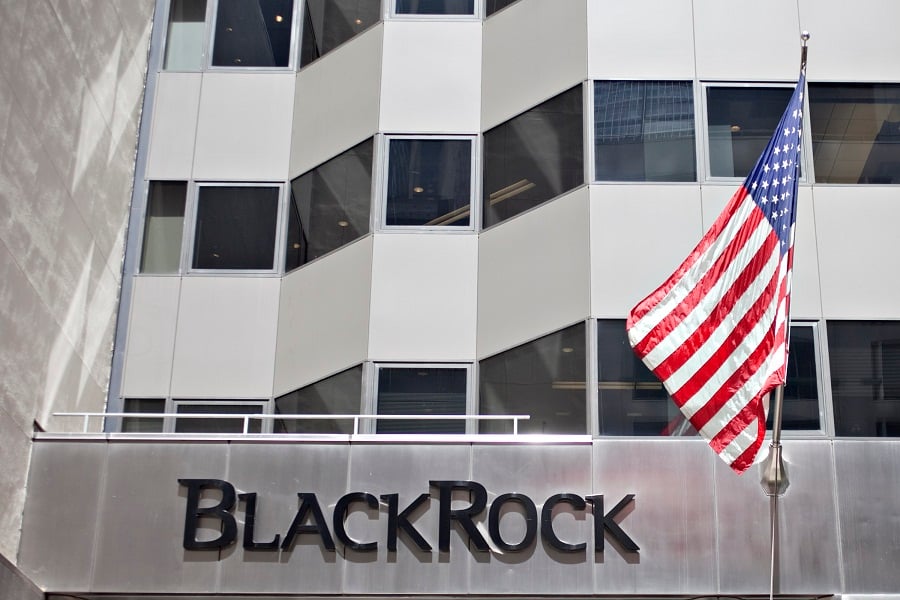
BlackRock Inc.,
State Street Corp. and rivals have seen their shares take a hit as jittery institutional investors have seized up in choppy markets. The other culprits: weak fee revenue and lackluster fund flows that were revealed in less-than-stellar earnings reports.
"For the next stretch it's going to be tough going as investors are likely to shoot first and ask questions later," Glenn Schorr, an analyst with
Evercore ISI, said in a note to investors last week.
An S&P index of asset managers and custody banks is down 14% this month, compared with a 9.3% drop in the S&P 500 Index. Year to date, the
asset managers index has lost almost a quarter of its value and it's headed for the biggest annual loss since 2008.
BlackRock set the tone for the industry's rough earnings season. Its long-term net inflows of $10.6 billion for the third quarter were the lowest quarterly figure since 2016. In an interview, Chief Executive Officer Larry Fink said he was "not particularly happy" with the results.
BlackRock spent most of the year with its share price trading well above $500, but it hasn't closed above that level since July. While the shares rose almost 1% on Monday, the stock is down 17% for October.
Still, analysts at
Credit Suisse and
Edward Jones noted BlackRock's mix of business lines will continue to help it outperform peers, because it has enough variety to withstand different market cycles.
State Street also had to answer for disappointing results. The company's third-quarter revenue and earnings fell short of analysts' estimates in part because fees came under pressure as investors cut back on risk. On the day the company reported earnings, shareholders hammered the stock price, pushing it down 8.5%.
Third-quarter fee revenue fell 3.3% from the previous quarter and increased only 2% from the previous year.
"At the broadest level the de-risking, which began in the second quarter, has only continued,'' State Street CEO Jay Hooley said on the conference call, adding that the pressure was most intense in Europe and the emerging markets.
A spokesman for State Street declined further comment.
At Franklin Resources Inc., fiscal fourth quarter net flows came in worse than some estimates, with $13.6 billion in net redemptions. Revenue decreased from a year earlier to $1.53 billion.
In its third quarter,
T. Rowe Price Group Inc. saw $2.7 billion in net flows, lining up with estimates from Jefferies and
Credit Suisse analysts, but behind last year's $5.9 billion for the period. Net flows may weaken year over year,
Credit Suisse analyst Craig Siegenthaler said in a note. The stock is down 14% this month.
A T. Rowe spokesman declined to comment.https://cdn-res.keymedia.com/investmentnews/uploads/assets/graphics src="/wp-content/uploads2018/10/CI1176681030.PNG"
"Flows aren't very good,'' said Benjamin Phillips, a consultant with Deloitte Consulting's Casey Quirk.
The challenges facing the industry are spurring
consolidation. On Oct. 18,
Invesco Ltd. agreed to
buy OppenheimerFunds, a unit of Massachusetts Mutual Life Insurance Co., for $5.7 billion to gain a business that specializes in picking stocks and bonds, particularly internationally. The deal served as a bet on the future of active management at a time when many investors are leaving stock-pickers for products that track indexes.
Lazard CEO Ken Jacobs said last week that he might consider a sale of his company's $240 billion asset manager if the price were right.
As Casey Quirk's Mr. Phillips puts it: "Shareholders are looking at the industry and saying, 'If you are not growing, you are dying."'
(More: Active money management isn't going to disappear)