
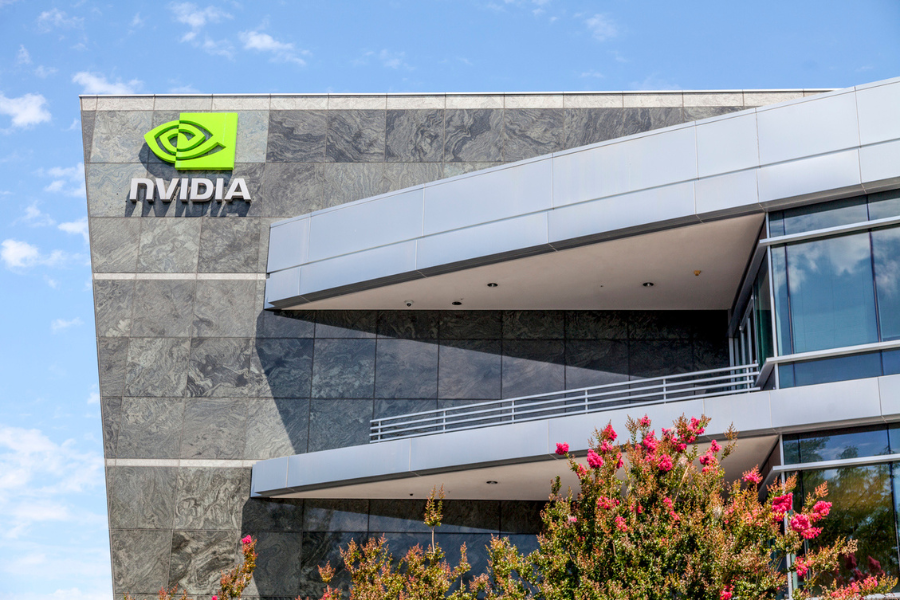
The ongoing artificial intelligence frenzy that briefly made Nvidia Corp. the world’s most valuable company this week also drove record inflows into tech funds, said Bank of America Corp. strategists.
About $8.7 billion flowed into tech funds in the week through June 19, according to a note from the bank citing EPFR Global data.
“The ‘all roads lead to Nvidia’ trade is once again bolstered” as Europe falters amid the political turmoil in France, strategist Michael Hartnett said.
US stocks notched yet another record high this week as Nvidia hit $3.3 trillion in market capitalization, briefly overtaking Microsoft Corp. as the biggest company in the world. A range of Wall Street strategists, including at Goldman Sachs Group Inc., have boosted their year-end targets for the S&P 500 Index in recent days.
Still, while investors still feel they need more exposure to AI-related plays, “all asset allocators are concerned about the equity concentration risk,” said Hartnett.
At the same time, the rally in European stocks has faltered following the snap election call in France. European equity funds recorded a fifth straight week of outflows at $1 billion.
Global equity funds, on the other hand, had additions of $25.6 billion, the biggest since March.

Raymond James, UBS and Prime Capital Financial also announced additions as advisor recruiting stays brisk across wirehouse and independent channels

A new platform turns disputed facts into tradable markets, flipping the prediction market model on its head.

The financial advice industry has been facing inquiries into its cash sweep programs for years now.

Investor money allegedly went to strip clubs, exotic cars, and landscaping

Procyon adds $415 million in assets under management in New Jersey while Savant picks up a $213 million Southern California planning firm
As AI makes financial information more accessible than ever, Lana Hock explains why human judgment, trust, and empathy remain the qualities clients value most in a financial advisor
Northern Trust’s Ken Lassner shows advisors how to convert volatility into after-tax portfolio gains

