

For the first time in more than two decades, some of the world’s most risk-free securities are delivering bigger payouts than a 60/40 portfolio of stocks and bonds.
The yield on six-month U.S. Treasury bills rose as high as 5.14% Tuesday, the most since 2007. That pushed it above the 5.07% yield on the classic mix of U.S. equities and fixed-income securities for the first time since 2001, based on the weighted average earnings yield of the S&P 500 Index and the Bloomberg USAgg Index of bonds.
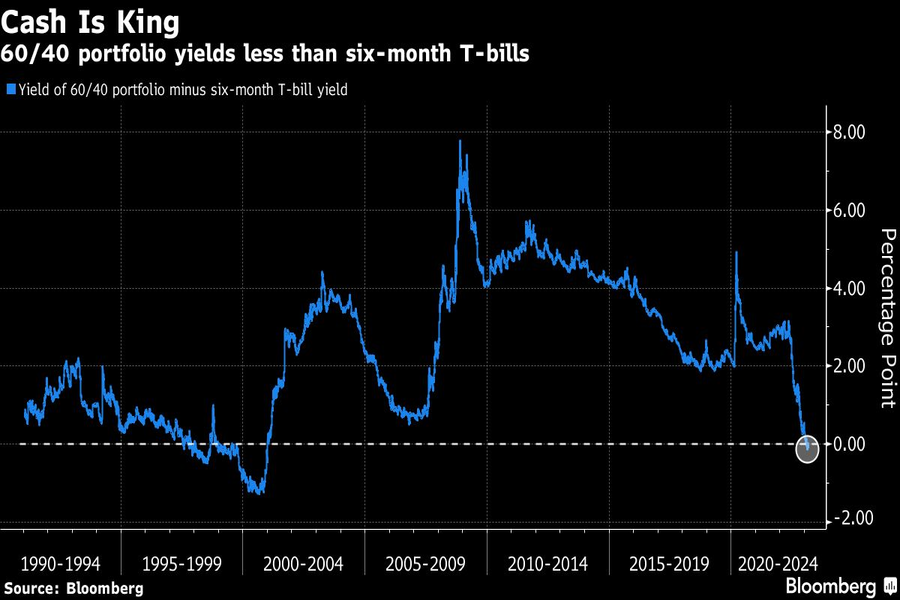
The shift underscores how much the Federal Reserve’s most aggressive monetary tightening since the 1980s has upended the investing world by steadily driving up the “risk-free” interest rates — such as those on short-term Treasuries — that are used as a baseline in world financial markets.
The steep jump in those payouts has reduced the incentive for investors to take risks, marking a break from the post-financial crisis era when persistently low interest rates drove investors into increasingly speculative investments to generate bigger returns. Such short-term securities are typically referred to as cash in investing parlance.
“After a 15-year period often defined by the intense cost of holding cash and not participating in markets, hawkish policy is rewarding caution,” Morgan Stanley strategists led by Andrew Sheets said in a note to clients.
The yield on six-month bills rose above 5% on Feb. 14, making it the first US government obligation to reach that threshold in 16 years. That yield is slightly higher than those on 4-month and one-year bills, reflecting the risk of a political skirmish over the federal debt limit when it comes due.
The 60/40 yield has also risen since stocks cheapened and Treasury yields climbed, but not as fast as the T-bills’. Six-month bills surged 4.5 percentage points over the past year, yielding 1.25 percentage points more than 10-year notes.
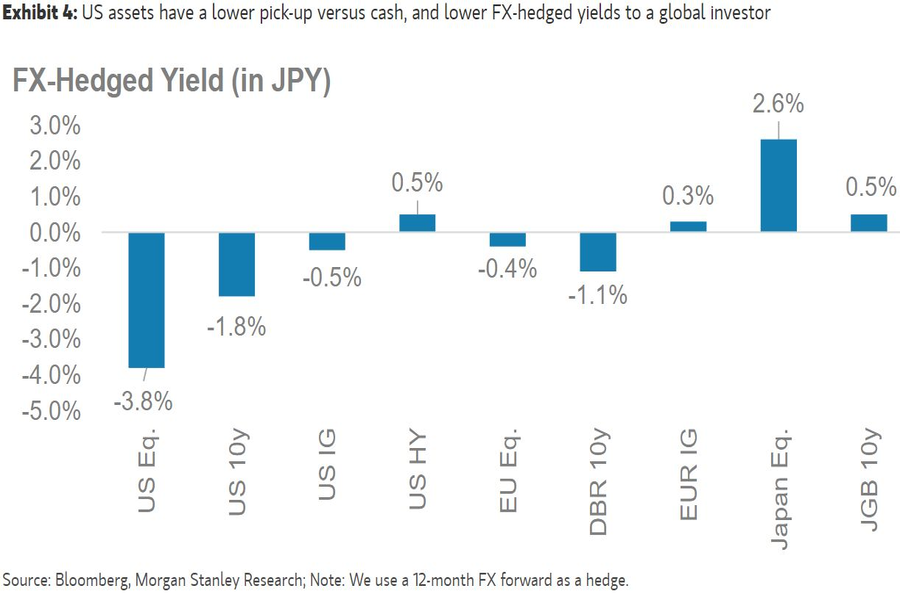
The high rates on short-term Treasuries are casting broad ripples in financial markets, according to Sheets. It has reduced the incentive for typical investors to take on more risk and driven up the cost for those who use leverage — or borrowed money — to boost returns. He said it has also cut the currency-hedged yields for foreign investors and made it more expensive to use options to bet on higher stocks.
Investing in stocks and bonds has also been challenging recently. After a strong start to the year, the 60/40 portfolio has given up most of its gains since a string of strong economic and inflation data prompted investors to bet on a higher peak to the Fed’s policy rate. That sparked a simultaneous selloff in stocks and bonds this month. The 60/40 strategy has returned 2.7% this year, after tumbling 17% in 2022 in its biggest decline since 2008, according to Bloomberg’s index.

Report on Climate Action 100+ signals risk for passive managers' 13G status heading into the 2027 proxy season.

Advisors say record balances aren't a retirement income plan and urge clients to benchmark their lives, not an index

Wealth enterprises are leaving revenue on the table - a new PureFacts and Ascentix partnership aims to help firms take it back.

What if one investment decision could create tax-saving opportunities across your entire portfolio? Chris Vizzi shares how the Stacking Strategy helps investors align tax planning, portfolio construction, and wealth preservation to maximize long-term outcomes while keeping more of what they earn.

Buyers spending on AI may treat less efficient sellers as overstaffed and price the cost of rightsizing into lower offers
Knighthead Life entered the market with a competitive MYGA. A strong launch earned advisor confidence and paved the way for FIAs.
As AI makes financial information more accessible than ever, Lana Hock explains why human judgment, trust, and empathy remain the qualities clients value most in a financial advisor

