
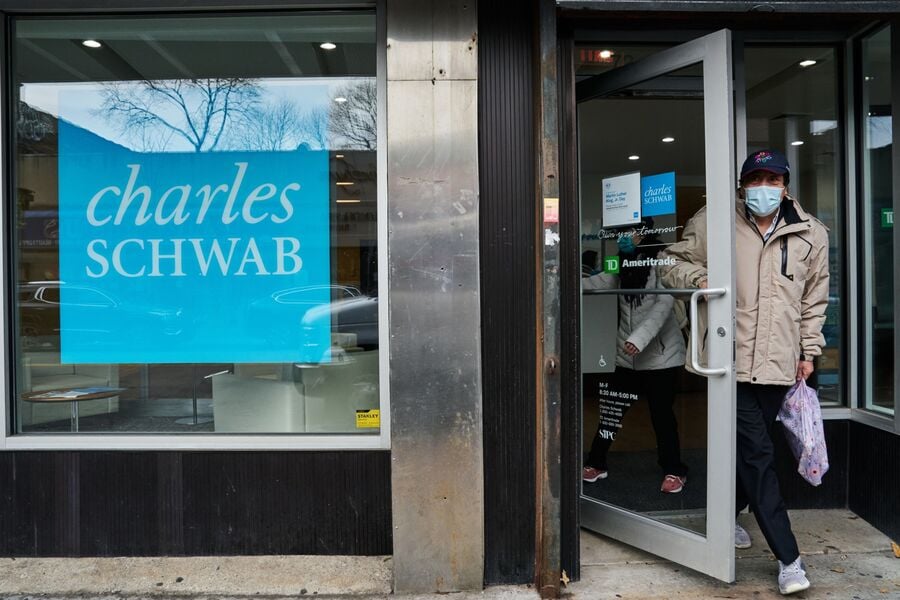
Charles Schwab, the billionaire founder of the eponymous discount brokerage, has seen his wealth plunge the most ever as pain spreads across the banking world in the wake of SVB Financial Group’s collapse.
Schwab, 85, has had $2.9 billion erased from his fortune since March 8, the steepest drop since he appeared on the Bloomberg Billionaires Index a decade ago. The net worth of Charles Schwab is down more than any other U.S. billionaire this year and now stands at $10 billion, making him the world’s 183rd-richest person.
Shares of Charles Schwab Corp. have tumbled 32% since Wednesday’s close, including 12% on Monday, as traders assess which institutions might be at risk from the forces that felled SVB. Similar to the California lender shuttered by regulators on Friday, Schwab has a large investment securities portfolio and significant paper losses in its held-to-maturity books. Unlike SVB, most of Schwab’s customer deposits are insured.
A spokesperson for the Westlake, Texas-based brokerage didn’t reply to a request for comment.
Schwab’s 23% wealth decline since March 8 is rare among billionaires in the typically staid finance industry.
The three-day wipeout has only been exceeded three times by those billionaires who Bloomberg classifies as making their money through finance: Dan Gilbert, the founder of Rocket Cos. who lost 37% in March 2021; Pollyanna Chu, formerly Hong Kong’s richest woman, whose fortune plunged 31% in early 2018; and Leaf Hua Li, the founder of Futu Holdings who saw 24% of his wealth wiped out in April 2021.
The majority of Schwab’s net worth comes from his roughly 6% stake in the brokerage he founded in 1971.

South Carolina estate planning firm joins Osaic’s IBD network, citing succession planning tools and multigenerational growth resources.

A new SIFMA and KPMG study of more than 2,100 US investors finds satisfaction high, AI-only trust falling, and demand for human guidance growing across every generation.

Retail banks and private wealth firms scored 40 in Fitch's AI stress test, signaling possible one-notch downgrade risk under an adverse scenario.

Elsewhere, Wells Fargo Advisors adds a $400 million Morgan Stanley veteran in Naples as an ex-Cetera advisor goes independent with LPL.

According to a federal charges Bradley Heppner, 60, received more than $150 million in payments through funneling money from GWG Holdings to a shell company.
Knighthead Life entered the market with a competitive MYGA. A strong launch earned advisor confidence and paved the way for FIAs.
As AI makes financial information more accessible than ever, Lana Hock explains why human judgment, trust, and empathy remain the qualities clients value most in a financial advisor

