
Conservative streak helped Canada skirt financial crisis: TD's Tomczyk

Conservative streak helped Canada skirt financial crisis: TD's Tomczyk
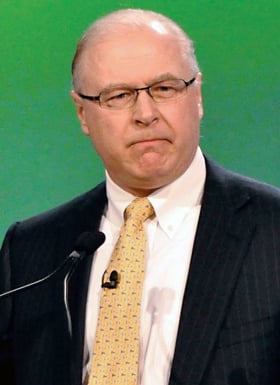
How did Canada avoid the worst of the banking crisis? "Generally speaking, Canadians are more conservative," Fred Tomczyk, president and chief executive of TD Ameritrade Holding Corp., said in an interview Monday.
SEP 21, 2010
How did Canada avoid the worst of the banking crisis? "Generally speaking, Canadians are more conservative," Fred Tomczyk, president and chief executive of TD Ameritrade Holding Corp., said in an interview Monday. "The environment in the U.S. is more competitive," he said. "In Canada, there are five big banks, and three big life insurance companies. They go at it, but no one does anything stupid" enough to get in trouble. TD Ameritrade is 45% owned by Toronto-Dominion Bank. Mr. Tomczyk, a Canadian who now resides in New Jersey, said the mortgage interest deduction enjoyed by U.S. homeowners and the ability to prepay mortgages without penalty, has also distorted the real estate markets here. Canadian mortgage holders can prepay, he said, but not without cost. That helps Canadian banks maintain more diversified holdings of mortgages with different terms and rates. Banks need to hold some of the loans they underwrite, he said. "In Canada, they probably hold 60% of what they write" and never engaged in subprime lending, Mr. Tomczyk said. Mr. Tomczyk also commented on the mortgage marked in the U.S., declaring that Fannie Mae and Freddie Mac need to be reformed. "If mortgages are guaranteed by the government, the government should give a hoot about underwriting standards," he said. TD Ameritrade yesterday released operating metrics for August, reporting total client assets of $332 billion, up 15% year over year. About 30% of the firm's assets come from advisers who hold clients' assets in custody at the firm, Mr. Tomczyk said prior to the release, with the rest being its discount-brokerage assets. By contrast, adviser assets held at The Charles Schwab Corp. now amount to just over half that firm's $1.4 trillion asset base. "This year, both sides [of the business] have performed well," Mr. Tomczyk said, "but the custody business has been the fastest growing for some time." Year-to-date, net new assets at TD Ameritrade Institutional, the custody unit, grew 12%, beating competitors, Mr. Tomczyk said.

Latest News

SEC to lose Hester Peirce, deepening a commissioner crisis

The "Crypto Mom" departure would leave the SEC commission with just two members and no Democratic commissioners on the panel.

Florida B-D, RIA owner pitches bold long-term plan to sell to advisors

IFP Securities’ owner, Bill Hamm, has a long-term plan for the firm and its 279 financial advisors.

Fintech bytes: Vanilla, Wealth.com forge new estate planning partnerships

Meanwhile, a Osaic and Envestnet ink a new adaptive wealthtech partnership to better support the firm's 10,000-plus advisors, and RIA-focused VastAdvisor unveils native integrations with leading CRMs.

Fiduciary failure: Ex-advisor who sold practice fined after clients lost millions

A former Alabama investment advisor and ex-Kestra rep has been permanently barred and penalized after clients he promised to protect got caught in a $2.6 million fraud.

Why the evolution of ETFs is changing the due diligence equation

As more active strategies get packaged into the ETF wrapper, advisors and investors have to look beyond expense ratios as the benchmark for value.

SPONSORED Are hedge funds the missing ingredient?

Wellington explores how multi strategy hedge funds may enhance diversification

SPONSORED Beyond wealth management: Why the future of advice is becoming more human

As technical expertise becomes increasingly commoditized, advisors who can integrate strategy, relationships, and specialized expertise into a cohesive client experience will define the next era of wealth management