
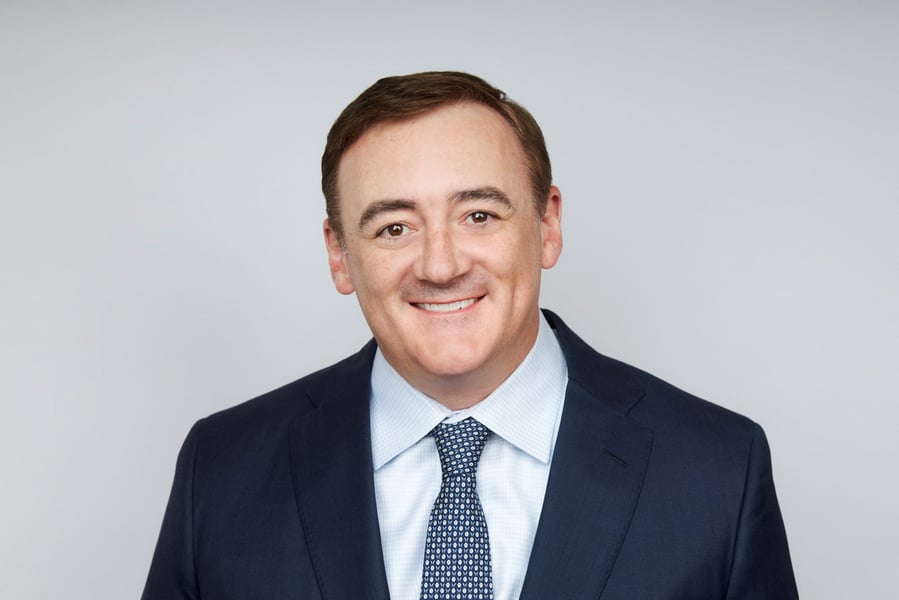
For all the worries in the financial world, from rising credit card delinquencies to commercial real estate vacancies, the current credit environment looks pretty, pretty good at the moment, according to Jayson Bronchetti, chief investment officer at Lincoln Financial.
Bronchetti ticked off all the positive aspects of the economy affecting the bond market in an interview with InvestmentNews earlier this week, starting with inflation, which he sees decelerating over the over the back half of the year. Elsewhere, he expects growth to slow, but employment to remain reasonably strong, resulting in Federal Reverse rate cuts in late 2024.
“Despite the fact that credit spreads are at historical tights, the technical backdrop is fantastic,” said Bronchetti. “We're just seeing a lot of demand and as we look at the fundamentals of corporate borrowers, they still look pretty good. So expect to see some deterioration with the economy, but deteriorating from a high level and a great opportunity for carry in the credit markets.”
When it comes to the private market for loans, Bronchetti says it is not overly crowded right now, despite all the attention it has been receiving since both the bond and stock market cratered in 2022.
“You're seeing bigger companies, bigger issuers, and better broader participation so it's a space we like,” said Bronchetti. “I think you need to be careful, when it comes to private credit.”
He notes that Lincoln is an insurance company, so it favors a “patient type of capital,” and can therefore afford own some less liquid investments.
“We can match assets and liabilities so private credits are fantastic for us to earn incremental yield premiums and pass that through to our customers,” said Bronchetti.
One big area within private credit is commercial real estate. And while a number of Wall Street strategists warned last year that bad commercial real estate loans might bring down the overall economy, or at least the regional banking sector, Bronchetti believes those concerns remain overstated.
“You have office real estate going through a bit of a transition that I think is going to take time. And I do think we'll see some bumps and bruises there,” said Bronchetti. “But when we zoom back out and think about commercial real estate more broadly, there are some great fundamental underlying characteristics around, industrial and apartment and other subsectors there.”
As the CIO of an insurance company, Bronchetti is responsible for investing the premiums that come in from his policy holders, so it is asset/liability matched. It also means he needs to stick with high quality in terms of the firm’s fixed income allocation. Right now, he says the credit quality of his holdings is the highest since he started at Lincoln in 2013.
And while some strategists believe the upcoming Presidential election might shake up the current Goldilocks economic environment, Bronchetti remains sanguine that any political noise won’t be heard too loudly in the bond market.
“I think the election will bring noise, but if you look back through history, if you are a long-term investor, markets are agnostic in terms of which party wins the election,” said Bronchetti, adding, “I'd focus instead on preparedness and having good downside protection.”

LPL Financial and Raymond James also add independent advisors from Osaic and Edward Jones in Michigan and Arizona.

The SEC-registered RIA advises on more than $1 billion in client assets, with no advisory fee through 2027 and no human financial advisors.

95.8% of house trades were winners. For clients? The SEC says just 14.9%.

The complaint says Duolingo added friction on purpose, then lied about it.

The four wirehouse firms lost 1,449 experienced advisors and recruited 932 in the first six months of the year, according to Diamond Consultants.
Knighthead Life entered the market with a competitive MYGA. A strong launch earned advisor confidence and paved the way for FIAs.
As AI makes financial information more accessible than ever, Lana Hock explains why human judgment, trust, and empathy remain the qualities clients value most in a financial advisor

