
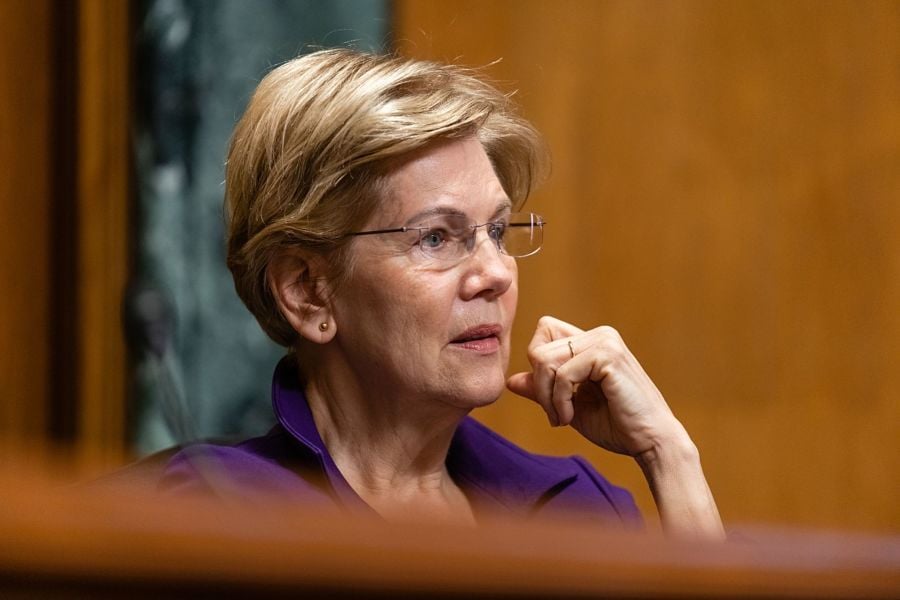
Senator Elizabeth Warren is pressing the nation’s broker-dealer regulator, Finra, on its claim that success in kicking bad actors out of the industry explains why enforcement numbers have plummeted in recent years.
Fines levied by the Financial Industry Regulatory Authority have dwindled to half their recent levels, and the number of enforcement actions last year was the lowest in history, Bloomberg News reported in June. The regulator attributed the decline to improved rules and strategies to weed out repeat offenders.
“The new report appears to indicate that the decline in enforcement is part of a deliberate deregulatory effort,” Warren said in a letter to Finra, a private self-regulatory organization that’s funded by its members.
The Massachusetts Democrat said the enforcement slowdown coincided with the so-called Finra 360 program, launched seven years ago to make the regulator more “effective and efficient.”
That effort saw the integration of two different enforcement divisions at the markets watchdog. It was intended to streamline investigations and information sharing and “enable the organization to vigorously and fairly enforce applicable rules,” Finra spokesperson Ray Pellecchia said in an email.
Warren asked Finra to explain what policy changes were made as a result of that initiative.
“Any suggestion that FINRA360 had the effect of reducing the number of enforcement actions is just dead wrong,” Pellecchia said, adding that such allegations would carry more weight if the industry wasn’t continuing to blast Finra’s enforcement moves.
Industry executives have complained the regulators’ enforcement function “is inflicting unnecessary and excessive costs and uncertainty,” Ann Wagner, a Missouri Republican and senior member of the House Financial Services Committee, said at a December hearing.
Finra barred 3,640 individuals and expelled 130 firms from its membership between 2014 and 2023, according to Pellecchia. Those expulsions included high-risk firms as well as associated individuals who had been the subject of multiple disciplinary actions, moves that would help explain the decline in enforcement actions, Pellecchia said.
“Other high-risk firms withdrew from our membership following considerable regulatory attention,” Pellecchia said. During that period, the regulator’s enforcement actions resulted in $377.9 million ordered to be returned to harmed investors, he said.

$1.7M invested from an inheritance. Then the phone went dead.

The pre-IPO platform sold $430M in units while allegedly rigging prices behind the scenes.

A Nationwide survey finds 47% of GLP-1 users have never discussed the drugs’ financial impact with an advisor, even as many dip into savings.

The hundreds of millions of dollars from a sale of Inspired Healthcare properties does not mean an immediate windfall for investors.

Its SEC filings said one thing - a congressional probe said another.
Knighthead Life entered the market with a competitive MYGA. A strong launch earned advisor confidence and paved the way for FIAs.
As AI makes financial information more accessible than ever, Lana Hock explains why human judgment, trust, and empathy remain the qualities clients value most in a financial advisor

