
U.S. funds that choose stocks based on environmental, social and governance criteria posted outflows for the second consecutive quarter as investors fled to safer assets amid Federal Reserve rate hikes.
Investors yanked $5.2 billion from U.S.-domiciled sustainable funds in the first quarter of this year, according to a report by Morningstar Inc. The exodus was driven by the $13.6 billion iShares ESG Aware MSCI USA ETF (ESGU), which shed $6.5 billion over that period.
A steady drop in fund flows came as Russia’s invasion of Ukraine boosted oil prices and consequently shares of companies involved in the production of fossil fuels, which tend to be excluded from ESG portfolios.
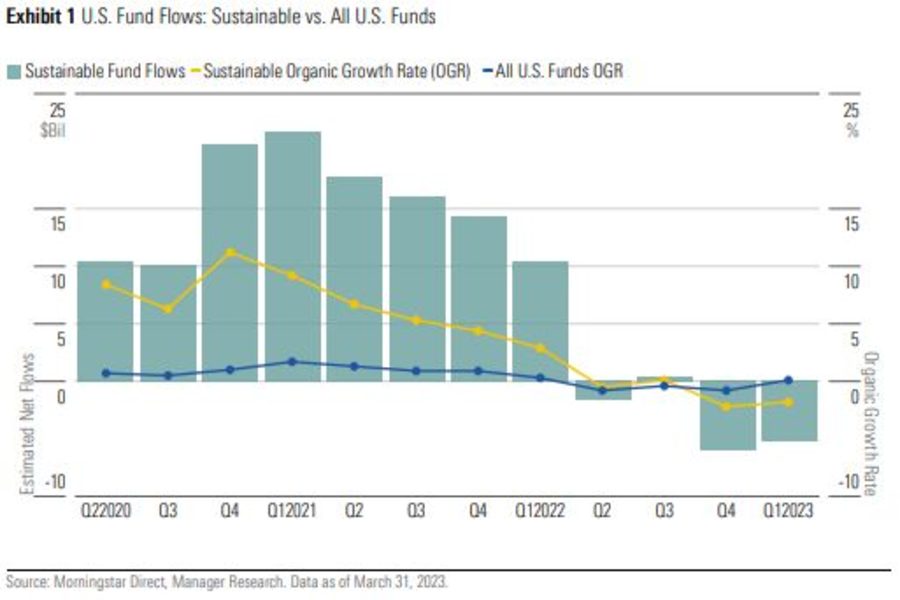
But the outflows didn’t seem to deter asset managers, as 27 sustainable funds debuted in the first quarter, up from the number of launches in the fourth quarter of 2022. And sustainable-fund assets climbed to almost $296 billion — the highest they’ve been since the first quarter of 2022 — thanks, in part, to higher equity and bond valuations, Morningstar’s report said.
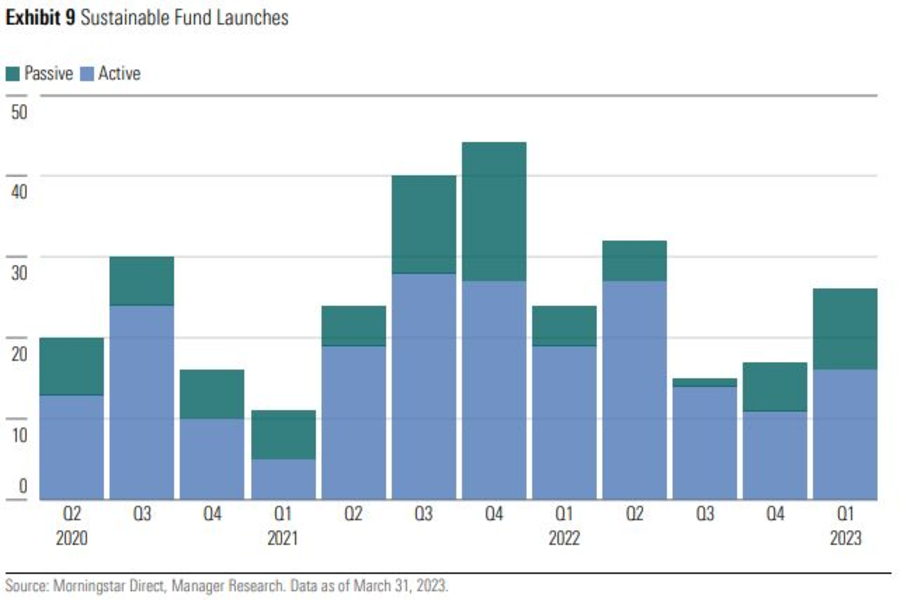
It has still paid to be a stock-picker in the ESG arena during this tough market. Actively managed sustainable funds broke a three-quarter outflow streak to post inflows for the first time in a year. Passive sustainable funds, meanwhile, saw an outflow of $6.1 billion in the first quarter, with ESGU’s losses weighing on the group.

Retiring RIA seller David Laidlaw alleges the Carnegie valued his stake on $11.7 million EBITA while pitching potential buyers on $21.3 million.

New tool gives RIAs and family offices AI help vetting private market deals, with some users reportedly halving review time.

Investors got projected returns dressed up as real ones, SEC says

Parents must still act to get the $1,000 federal seed and employer contributions, giving financial advisors a role in the rollout.

FINRA booted Rudy Anguiano from the industry for “conversion - the intentional and unauthorized taking of another person’s property.”
As AI makes financial information more accessible than ever, Lana Hock explains why human judgment, trust, and empathy remain the qualities clients value most in a financial advisor
Northern Trust’s Ken Lassner shows advisors how to convert volatility into after-tax portfolio gains

