
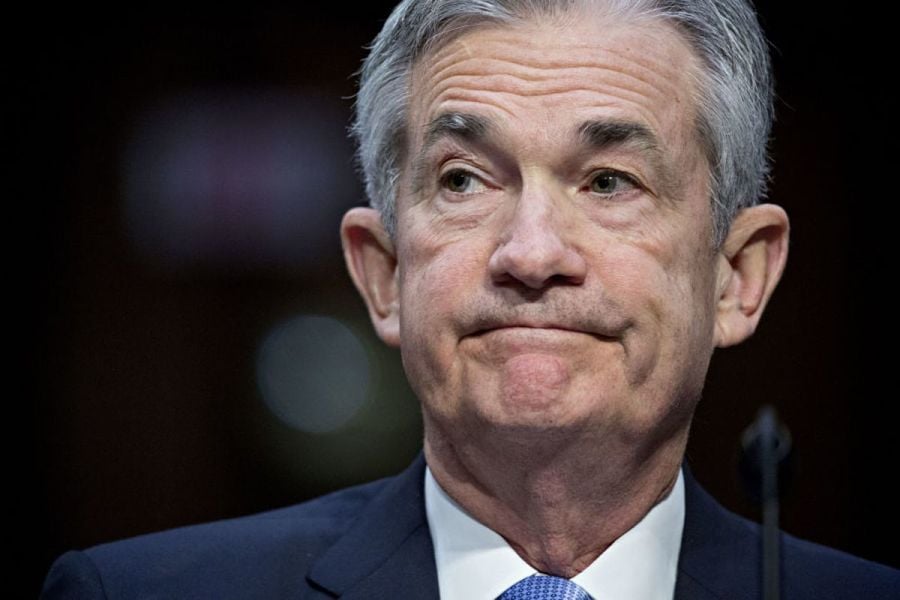
Federal Reserve Chair Jerome Powell said “more good data” would strengthen confidence that inflation is moving down toward the US central bank’s 2% target, and recent readings point to “modest further progress” on prices.
In testimony prepared for a Senate hearing Tuesday, Powell warned that lowering interest rates too little or too late could put the economy and the labor market at risk.
“Elevated inflation is not the only risk we face,” he told lawmakers on the first of two days of congressional testimony. “Reducing policy restraint too late or too little could unduly weaken economic activity and employment.”
The Fed chair also said cutting rates too soon or too much could stall or reverse inflation progress.
“More good data would strengthen our confidence that inflation is moving sustainably toward 2%,” Powell told the Senate Committee on Banking, Housing, and Urban Affairs. He is set to testify Wednesday before the House Financial Services Committee.
US central bankers are aiming to bring inflation back to the 2% goal following a post-pandemic surge in prices. While the labor market has held up under pressure from higher interest rates, an uptick in the unemployment rate has added political pressure on Fed officials to start reducing borrowing costs.
Powell’s remarks suggest the Federal Open Market Committee is unlikely to reduce rates when it meets on July 30-31. The Fed has held its policy rate in a range of 5.25% to 5.5%, a more than two-decade high, for nearly a year.
Markets are focused on whether officials will provide more clues after that gathering about a possible rate cut in September.
Treasury yields oscillated but were higher on the day and the S&P 500 index remained higher after Powell’s testimony was released.
Traders are pricing in a just over 70% probability that the Fed first cuts rates at their Sept. 17-18 gathering. They see two quarter-point rate reductions in 2024.
Powell said while it is possible the Fed could increase rates if the data warrant, “the likely direction does seem to be as we make more progress in inflation and as the labor market remains strong, we begin to loosen policy at the right moment.”
Fed officials have welcomed recent data indicating inflation is decelerating again following a jump in prices at the start of the year, though several other policymakers have also said they need more confidence that the trend will continue before reducing borrowing costs.
Powell said the labor market “appears to be fully back in balance,” adding that recent data send “a pretty clear signal that labor market conditions have cooled considerably.”
The Fed’s preferred inflation measure rose 2.6% in the 12 months through May, down from 7.1% in June 2022. While unemployment remains low at 4.1%, it has ticked up in each of the last three months.
A number of economists are warning that there’s a slowdown afoot in the job market that could worsen. The number of people who have been looking for a job for 15 weeks or more rose in June to the highest level since early 2022, when that measure was rapidly declining.
Powell called the labor market “strong, but not overheated,” adding that the central bank’s restrictive stance is working to bring supply and demand into better balance.
Asked separately about a plan to boost capital requirements for the biggest banks, Powell said the Fed and other regulators are close to finalizing changes to the proposal released in July 2023, and would likely need to seek public comment on the revised plan before finalizing it.
The Fed chief told lawmakers in March that he expected “broad and material changes” to the proposal that could require the eight largest US banks to hold about 19% more in capital as a cushion against financial shocks.
Republican lawmakers blasted the original plan, and have urged regulators to withdraw the plan, arguing that it had “fatal problems” and could pose a risk to the financial system.

LPL Financial and Raymond James also add independent advisors from Osaic and Edward Jones in Michigan and Arizona.

The SEC-registered RIA advises on more than $1 billion in client assets, with no advisory fee through 2027 and no human financial advisors.

95.8% of house trades were winners. For clients? The SEC says just 14.9%.

The complaint says Duolingo added friction on purpose, then lied about it.

The four wirehouse firms lost 1,449 experienced advisors and recruited 932 in the first six months of the year, according to Diamond Consultants.
Knighthead Life entered the market with a competitive MYGA. A strong launch earned advisor confidence and paved the way for FIAs.
As AI makes financial information more accessible than ever, Lana Hock explains why human judgment, trust, and empathy remain the qualities clients value most in a financial advisor

