

The asset management industry is facing significant consolidation, with a prediction that one in six companies may disappear within the next four years as a result of market volatility, high interest rates and fee pressures.
According to a recent survey conducted by PwC, 16% of existing asset and wealth managers are expected to either go out of business or be acquired by larger groups by 2027. This trend is driven by the challenging market environment, prompting nearly three-quarters of asset managers to consider acquiring or merging with competitors.
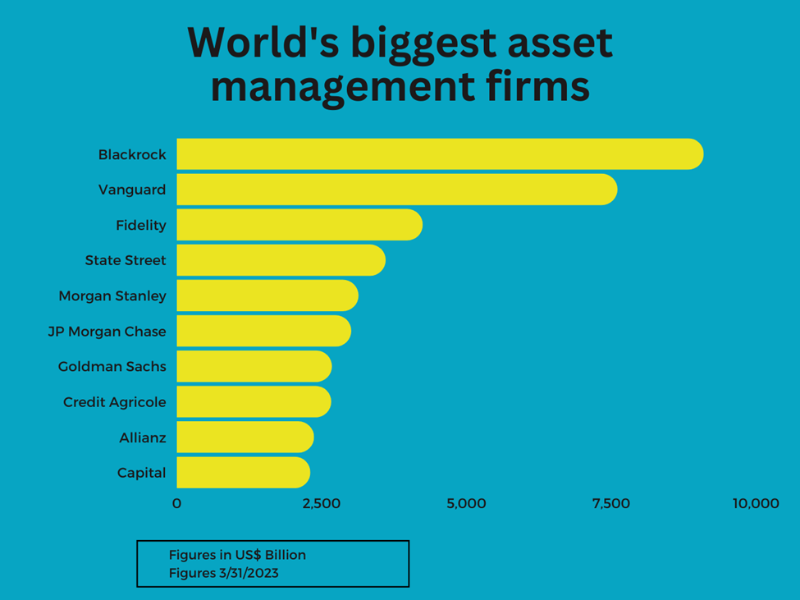
"The big managers are getting bigger," said Olwyn Alexander, PwC's global asset and wealth management leader.
The industry is currently facing cost pressure and margin constraints, forcing managers to evaluate their critical mass and ability to withstand the pressures from larger players while maintaining profitability.
“If interest rates linger around 4% through 2024 and beyond, private markets managers will need to significantly raise their target internal rates of return (IRR) simply to compete, just as tough economic conditions and the end of cheap funding make this more difficult,” according to the report.
This outlook comes as fund managers grapple with the largest decline in assets in a decade. According to PwC's findings, the assets managed by asset managers fell by 10% between 2021 and 2022, dropping from a high of $127.5 trillion to $115.1 trillion. Falling markets across various asset classes have negatively impacted management and performance fees. Factors such as inflation, market volatility and interest rates were cited as the primary drivers of this decline. Additionally, nearly half of the managers surveyed predict that their assets under management will be further affected by environmental risks and geopolitical factors.
To respond to these challenges, the global asset management industry has been actively engaging in mergers and acquisitions to tap into new clients or areas of growth. For example, Franklin Templeton, based in California, recently agreed to acquire rival Putnam Investments for more than $1 billion as part of its expansion into alternative products and retirement plans. In May, Brookfield Asset Management, based in Toronto and managing $834 billion in assets, predicted that the challenging economic environment will lead to consolidation among the top 10 industry players.
AWM deals over the last 12 months include:
PwC forecasts that the top 10 traditional asset managers will control 50% of all assets going into mutual funds by 2027, up from 42.5% in 2020. Additionally, the use of robo-advice, which utilizes algorithms to provide financial services, is expected to grow significantly, with robo-advisors managing $6 trillion by 2027. Robo-advice offers low-cost personalized advice. In 2021, JPMorgan acquired UK robo-advisor Nutmeg for $700 million.
The survey conducted by PwC also revealed that 90% of managers believe that disruptive technologies such as generative AI and blockchain will enhance returns and attract young investors. The importance of young investors is expected to grow further as they inherit $68 trillion from the previous generation.
As consolidation reshapes the industry, fees have already experienced a decline of 20% to 25% for both active and passive investment funds between 2017 and 2022. It is forecasted that fees will continue to decrease, benefiting larger players who can absorb lower fees as a result of their scale. This race to gather assets under management is intensifying competition and putting significant pressure on fees, ultimately benefiting investors.

Goldman's president and COO is expected to replace David Solomon as CEO as soon as 2027, ending a near-decade at the firm's helm.

A state-by-state Medicaid report card, federal cuts starting in January and a home-equity cap due in 2028 are pushing a program most affluent families ignore into the planning conversation.

New model blends public and private markets as demand for alternatives among wealthy clients accelerates.

Salespeople at the firm often went beyond the matching algorithm to recommend network advisors on its Zoe Wealth platform, according to the regulator.

The Protect College Sports Act would cap school payments and codify NIL rights, with implications for advisors guiding young athletes.
As AI makes financial information more accessible than ever, Lana Hock explains why human judgment, trust, and empathy remain the qualities clients value most in a financial advisor
Northern Trust’s Ken Lassner shows advisors how to convert volatility into after-tax portfolio gains

